
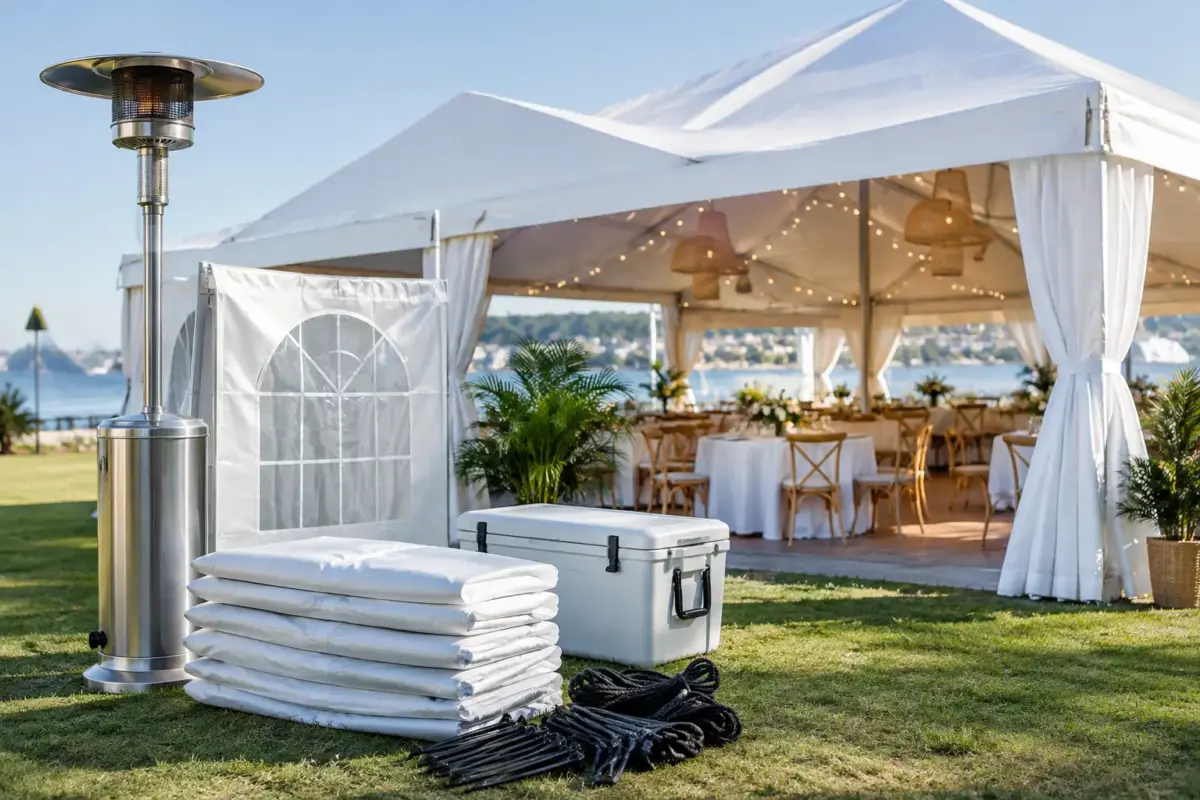
A quality marquee earns its keep when the weather turns, the crowd builds and your team needs a professional setup without fuss. The best event tent accessories are not decorative add-ons. They are the gear that keeps your shelter stable, extends its usable footprint, protects stock and staff, and makes your brand impossible to miss from across the event grounds.
For Australian markets, sporting days, trade activations and community events, the right accessories should be selected around the site, the frame grade, expected wind and how often the structure will be used. A lightweight gazebo with a few generic extras is one thing. A commercial event setup designed to work hard year after year needs a more deliberate approach.
Best Event Tent Accessories Start With Safety
A marquee is only as secure as its anchoring system. This is where buyers should spend first, particularly when operating on exposed ovals, foreshore sites, car parks or hard-packed showgrounds. Wind does not need to be dramatic to create movement in a canopy. Repeated gusts can loosen fittings, stress the frame and make the entire activation look unprofessional.
Weights for hard surfaces
When pegs cannot be used, purpose-built leg weights are essential. Concrete, asphalt, pavers and indoor exhibition floors all require weight at each leg rather than a hopeful rope tied to nearby furniture. Choose weights that sit securely around or against the leg and are practical for your crew to transport and position.
The amount of weight required depends on the marquee size, frame, canopy area, site exposure and weather forecast. Larger structures and printed walls catch more wind, so they need more restraint. Do not assume one small weight per corner is enough simply because it keeps the tent standing in calm conditions. Your setup needs a safety margin for the conditions it may actually face.
Pegs, ropes and tie-down kits for grass
On grass, dirt and other penetrable surfaces, heavy-duty pegs and adjustable tie-downs provide a far stronger result than weights alone. The key is using suitable pegs driven into sound ground, with ropes set at an effective angle and tensioned evenly from each corner.
A complete tie-down system also gives staff a repeatable setup process. Instead of improvising with thin rope or mixed hardware from the ute, each event begins with equipment designed to work together. That saves time at bump-in and helps protect a valuable frame from avoidable strain.
Always follow venue requirements and local event safety directions. If wind conditions become unsafe, no accessory replaces a sensible decision to pack down.
Walls and Awning Kits That Work Harder
Once the marquee is secure, walls are among the most useful accessories you can add. They turn an open canopy into a more controlled work area, giving your team protection from sun, wind and light rain while creating valuable space for product displays, registration desks, medical supplies or hospitality service.
A full wall set suits a wet market morning, a portable workspace or any activation where stock needs shelter. Half walls are useful when you want separation and branding without losing visibility. They create a clean front counter effect for sampling, merchandise or customer enquiries, while leaving the stand open and inviting.
There is a trade-off: walls increase wind load. On a breezy site, they must be used with the right tie-downs, weights and sound judgement. If the forecast is unsettled, a single rear wall or side wall may offer the protection you need without turning the marquee into a sail.
Awning kits are another high-value upgrade for busy public-facing sites. They extend shade beyond the main roofline and provide a natural point for queues, product browsing or event sign-in. For food vendors, race teams and club stalls, that extra covered space can make a compact footprint feel far more capable.
Branded Accessories That Improve Visibility
Your event tent is often the largest branded object at the site. The accessories around it should support that job, not dilute it. Custom-printed walls, valances and awnings build a stronger visual block than a logo placed only on the roof. They also give visitors more than one angle from which to recognise your organisation.
This matters at crowded events where dozens of canopies compete for attention. A well-designed printed marquee should be easy to identify at a glance, whether people are walking down an aisle, arriving from the car park or looking for their team from the other side of the grounds.
Pair the tent with complementary display equipment where it makes commercial sense. Teardrop flags can help direct people towards your site, while a branded table cover keeps the presentation sharp at eye level. A media wall is effective for launches, awards, sponsor photos and community events where social content is part of the return on investment.
Avoid cluttering every surface with separate messages. Use the roof and walls for your core brand, then let flags, banners and tables carry simple calls to action, locations or campaign details. Strong event branding is clear before it is clever.
Transport and Storage Accessories Protect the Investment
Commercial event gear spends a lot of time in transit. It gets loaded into trailers, vans and utes, rolled across car parks, stored in sheds and unpacked under time pressure. A proper wheely bag is not a luxury when your marquee is used regularly. It protects the frame, makes moving it easier for staff and helps prevent the knocks that shorten the life of joints, feet and fabric.
Choose a bag that matches the folded frame size and has room for the components your crew needs to carry. If the roof, walls and hardware travel separately, label each bag or container clearly. Small organisation habits make a major difference when a volunteer group, casual event crew or rotating marketing team is responsible for setup.
Spare parts also deserve a place in the kit. Pins, feet, roof straps, wall connectors and replacement components can be the difference between a quick on-site fix and a missed event. For organisations running a packed calendar, keeping common spares available is simply good operational planning.
Choose Accessories for the Job, Not the Catalogue
The best combination depends on how and where you work. A weekend market operator may prioritise a wheely bag, weights, a rear wall and a branded table cover. A council activation team may need multiple wall configurations, flags, signage and secure anchoring for different surfaces. A sporting club may get the greatest return from durable tie-downs, shade extensions and replacement parts that keep its marquee active through an entire season.
Before buying, assess four practical questions:
- What surfaces will the tent be installed on most often?
- How exposed is the site to wind, rain and harsh sun?
- Which accessories need to carry branding, and which simply need to perform?
- Who will transport, erect and pack down the equipment?
These answers should guide the package. They can also prevent the common mistake of buying a premium canopy, then supporting it with undersized weights, low-grade ropes and no protection in transit.
Frame class matters too. A heavy-duty commercial frame has the capacity for demanding event use, but it still needs compatible accessories and correct setup. Check that wall kits, awnings, weights and replacement parts are made for your marquee model and size. A 3 x 3 m structure, for example, has different requirements from a larger 3 x 6 m event tent.
Mountain Shade builds packages around commercial-grade frames, custom print requirements and the accessories needed for Australian outdoor conditions. That approach gives teams a setup that looks consistent, performs properly and can be expanded as their event program grows.
A marquee should never arrive at an event as a bare roof with a last-minute plan. Set it up with anchoring you trust, shelter that suits the site, transport protection that preserves the frame and branding that makes every square metre work for your organisation.
