
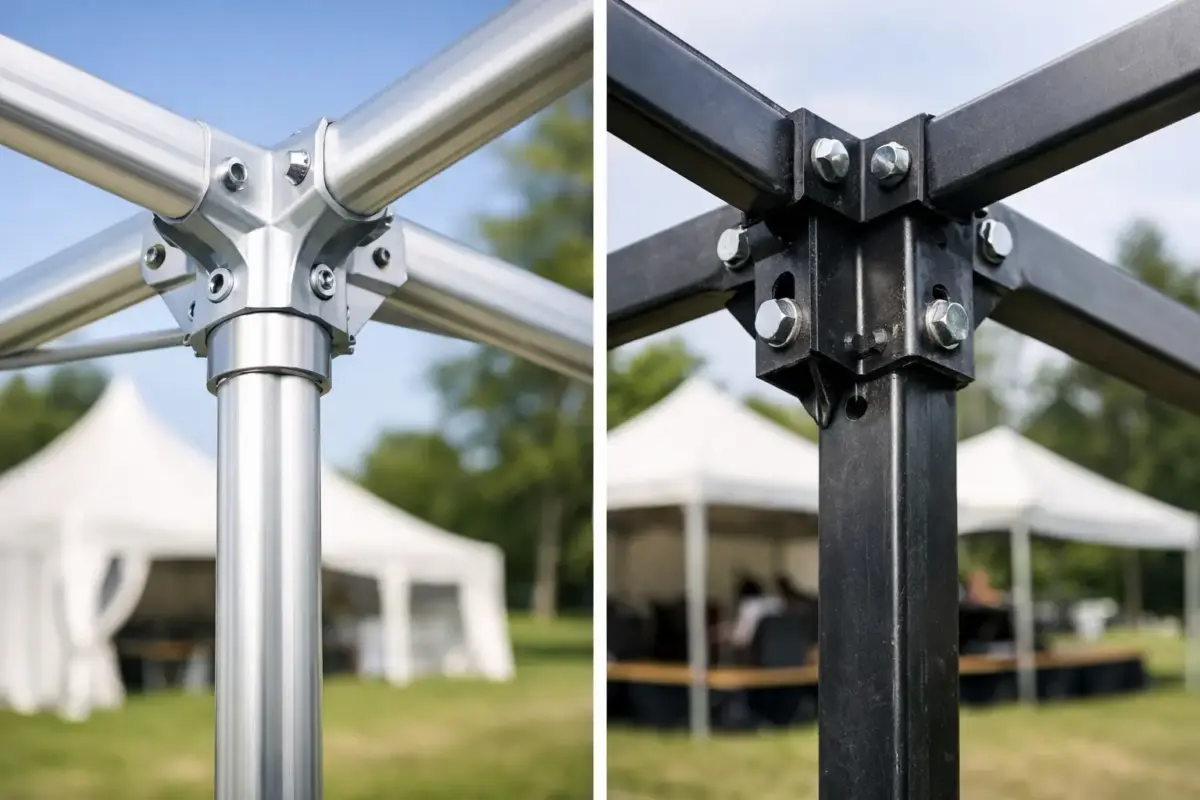
A 3 x 3 marquee is only useful if your team can get it from the ute to the event site, put it up quickly and trust it when the weather turns. That is why aluminium versus steel frames is not a minor product detail. It directly affects setup, transport, longevity, safety and how confidently your brand shows up outdoors.
For market operators, councils, sporting clubs, trade teams and event marketers, the right answer depends on the job. Aluminium makes sense when frequent transport and fast deployment matter. Steel can be the practical choice where maximum weight, fixed-site use or a tighter initial budget is the priority. The smart buy is the frame grade that matches your real operating conditions, not simply the material named on the product page.
Aluminium versus steel frames: the practical difference
Aluminium and steel can both be used to build capable folding marquees, but they behave very differently in day-to-day use. Aluminium is significantly lighter, naturally corrosion resistant and easier for one or two people to handle. Steel is heavier, generally more rigid for its price point and can feel planted under a structure, particularly in calmer, more static applications.
Material alone does not tell the whole story. A thin, light frame with basic plastic connectors is not comparable with a commercial-grade aluminium frame using reinforced legs, strong truss bars and quality connection points. Likewise, a steel frame needs suitable protective coating, sound welds and reliable joints to stand up to repeated use. Look at the complete engineering package, not just the headline material.
Why aluminium is the go-to for commercial marquees
For organisations that work events every weekend, aluminium is often the stronger operational choice. A lighter frame is faster to load, easier to carry across an oval or through a convention centre, and less punishing on staff who are setting up before sunrise and packing down after dark.
That lower weight does not mean aluminium is automatically light-duty. Well-designed commercial aluminium frames use larger leg profiles, reinforced cross sections and durable connectors to produce serious strength without making the marquee difficult to manage. This is the sweet spot for branded activations, touring displays, race teams, food vendors, school events and market stalls.
Aluminium also performs well in Australian conditions because it does not rust in the way untreated or damaged steel can. Coastal locations, wet grass, overnight dew and regular wash-downs all place pressure on frame finishes. Aluminium still needs care, particularly around moving parts and hardware, but corrosion is generally less of a concern over the life of the unit.
The main trade-off is cost. Premium aluminium structures usually command a higher upfront price than entry-level steel alternatives. For a business using the marquee repeatedly, however, the return is often found in easier transport, quicker setup and a longer useful working life.
Weight changes the whole setup experience
Frame weight matters beyond carrying the bag. A lighter aluminium marquee can reduce bump-in time, make stairs and tight access points less of a headache, and allow smaller teams to manage larger event schedules. When the same branded shelter is travelling between regional shows, sports grounds, shopping-centre activations and trade days, those saved minutes add up.
There is another side to this. A lighter frame does not remove the need for proper anchoring. Every outdoor marquee needs suitable weights, pegs or tie-down systems based on the surface, forecast and event rules. Never rely on the frame’s own weight to secure a structure in wind.
Where steel frames make sense
Steel frames have a place, especially for buyers who need dependable cover for occasional use or for applications where the structure will not be moved often. The added mass can make a steel marquee feel substantial, and steel can provide good value when a premium commercial aluminium build is not required.
A steel-frame gazebo may suit a community fundraiser, a backyard event, a temporary work area or an organisation that deploys shelter only a few times a year. It can also be a sensible option where the buyer has enough people and vehicle capacity to manage the extra weight without slowing down the operation.
The limitation is mobility. Steel is heavier to lift, bulkier to move and more demanding on bags, wheels and staff. Over a full events calendar, that can become a real operational cost. Steel also needs greater attention to finish quality. Scratches, chips and damaged coating should be addressed promptly, particularly near the coast or where equipment is stored wet.
Strength is more than the metal
The strongest frame for your event is not determined by aluminium or steel in isolation. It comes down to engineering. Leg profile, wall thickness, truss design, connector construction, foot plates, locking mechanisms and the load placed on the roof all influence performance.
A commercial frame should feel positive when it locks open, with no vague movement through the roof trusses or leg adjusters. Check whether the frame uses reinforced corners and quality metal connectors in high-stress areas. Ask how spare parts are supplied as well. A replaceable leg, truss bar or slider can keep a valuable branded asset in service rather than sending it to storage after one damaged component.
Wind performance deserves the same level of scrutiny. A stated wind rating applies only under specified conditions and with the correct tie-down equipment, surface and setup method. It is not permission to leave a marquee unattended in rising winds. Selected 3 x 3 commercial structures can be rated up to 100 km/h when correctly configured, but weather, site exposure and local event requirements must always guide the decision to operate, lower or pack down.
Roof size and accessories change the load
A frame that performs well with a standard roof can be placed under greater stress once walls, awnings, gutters, flags or banners are added. These accessories can catch wind and change how forces move through the structure. They are valuable for branding and weather protection, but they must be matched with the right anchoring plan.
For hard-standing sites, purpose-built weight systems are usually essential. On grass, suitable pegs and ratchet tie-downs may be appropriate where ground conditions and venue rules allow. For exposed sites, use both where practical and follow the product instructions. Good anchoring is part of the structure, not an optional add-on.
Choose based on how often you use it
If your marquee spends most of its life in a warehouse and comes out for the odd annual event, a steel frame may deliver sensible value. If it is a regular part of your sales, service or event operation, aluminium usually earns its place quickly.
Think about the full ownership picture: who sets it up, how far it travels, whether it goes into a ute or courier vehicle, how often it is branded, and what happens when a part is damaged. A cheap frame that is awkward to deploy or impossible to repair is rarely cheap for long.
For high-visibility brands, the frame also protects the print investment. A custom-printed roof, walls and banners make a strong impression only when they are held taut and presented neatly. A stable commercial structure helps your colours, logos and messaging look sharp from the first customer through to pack-down.
The right call for Australian outdoor work
Choose aluminium when your priority is repeated use, efficient transport, corrosion resistance and commercial event performance. Choose steel when the structure is used less often, weight is not an issue and initial purchase cost carries more weight in the decision.
For demanding schedules, do not compromise on the details that keep equipment working: reinforced construction, a suitable leg profile, dependable connectors, a quality wheely bag and proper tie-down equipment. Mountain Shade can help match these details to your event program, branding requirements and operating conditions.
Before ordering, picture the windiest, busiest and most time-pressured day your team will face. Buy the frame that will still make setup feel controlled, keep your shelter secure and make your brand look the part when that day arrives.
