
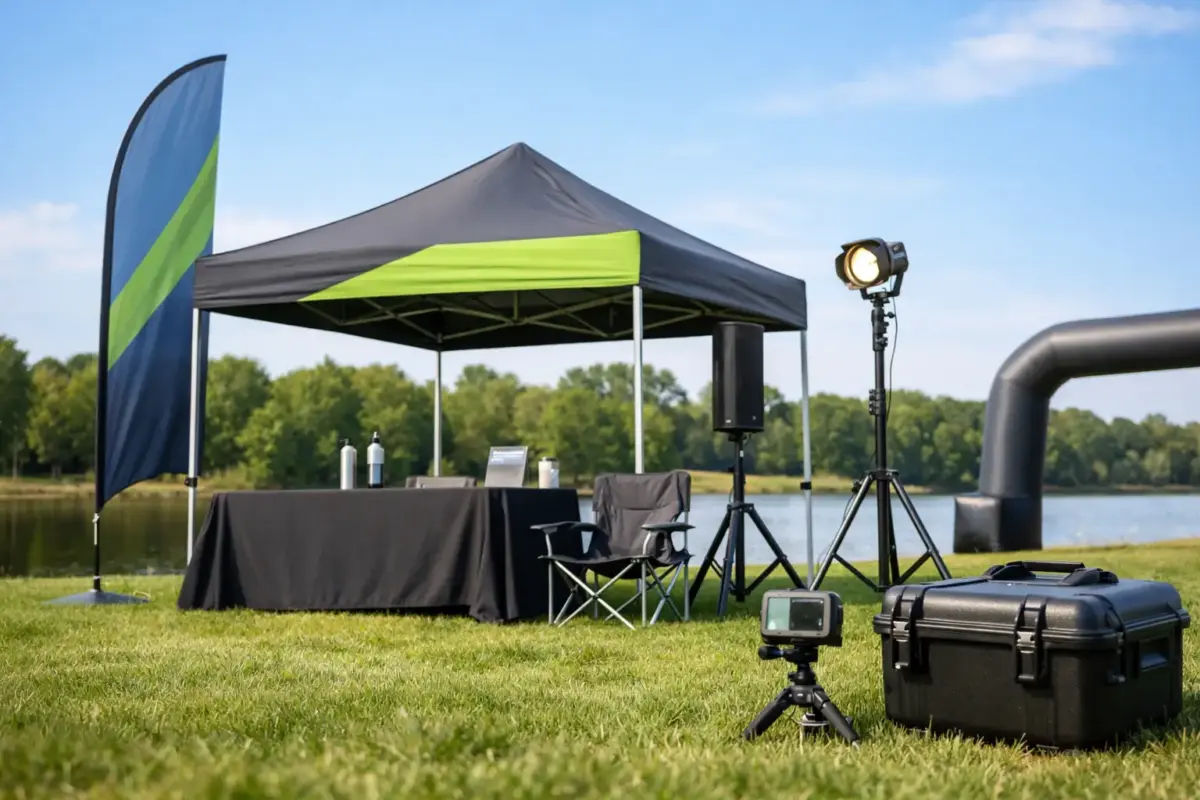
A busy activation site has seconds to make an impression. From a council festival to a regional field day or a packed race meeting, your outdoor activation equipment needs to do two jobs at once: put your brand in full view and give your crew dependable shelter to work from. If the frame flexes, the roof leaks or the signage disappears into the background, the whole setup starts working against you.
The right equipment is not disposable event merchandise. It is operational infrastructure you can deploy repeatedly, pack down quickly and trust when the weather turns. That calls for more than selecting a marquee in your brand colours. It means choosing the right structure, print method, anchoring plan and accessories for how your team actually works outdoors.
Start with the activation, not the product
The best setup depends on what is happening under it. A sampling team needs clear customer flow, stock storage and a counter-height engagement point. A sporting club may need registration cover, sponsor visibility and weather protection for officials. A trade crew might prioritise a fast-deploy shelter that fits in the ute and provides practical cover across changing job sites.
Begin by mapping the footprint. Consider where visitors arrive, where staff stand, where queues form and which direction your branding faces from the main pedestrian approach. A 3 x 3 m marquee is a proven all-round activation size because it creates useful covered space without demanding a huge site. Larger footprints suit product displays, consultation areas, medical stations and multi-person teams, but they also need more careful ballast, transport planning and crew time.
Height matters as much as floor area. A printed canopy seen above a crowd can do more brand work than a sign at ground level. Pair it with flags or banners placed on the approach to create a visible path into the activation, rather than relying on one structure to carry every message.
Outdoor activation equipment must earn its place
Australian events can move from harsh sun to a gusty cool change in a single afternoon. Equipment needs to be chosen for those conditions, not for a calm product photo. Commercial-grade aluminium or steel frames, reinforced connectors and properly specified roof fabrics provide a far stronger foundation than lightweight promotional structures designed for occasional backyard use.
Ask direct questions about frame profile, connector construction, fabric weight, replacement-part availability and stated wind ratings. For selected 3 x 3 m structures, wind ratings of up to 100 km/h may be available when the marquee is correctly secured with the required tie-down equipment. That rating does not remove the need for event-specific risk controls, site checks or sensible decision-making in dangerous weather. It does show why frame engineering and anchoring are central to the purchase, not optional extras.
A heavy-duty frame costs more upfront than a basic unit, but recurring activations change the equation. A structure that survives frequent transport, wet pack-downs, busy bump-ins and years of use can protect the value of your print investment. Spare parts also matter. Being able to replace a roof, wall, leg component or wheely bag is far better than writing off an entire branded setup after one damaged part.
Secure the site properly
A marquee is only as capable as its anchoring system. Pegs can be highly effective on grass or compacted ground where event rules allow them. On hardstand, use correctly sized weights and tie-downs. On exposed sites, combine methods where appropriate and follow the structure’s instructions.
Do not treat weights as an afterthought added once the wind arrives. Build them into the transport and set-up plan from the beginning. Your crew should know the ballast requirement, where it sits, how straps are tensioned and who has authority to pause operations if conditions become unsafe.
Make custom print work at a distance
Custom-printed marquees, walls, flags and table covers give an activation a consistent, professional presence. But a full-colour roof is not automatically effective branding. The strongest designs are legible from the distances that matter.
Keep the primary logo large, use high-contrast colours and limit the roof message to what people can take in while walking past. Fine print, long URLs and crowded artwork rarely perform on a moving event floor. If visitors need details, give staff a simple handout, display panel or conversation prompt once they are under the canopy.
Dye-sublimation printing is particularly suited to branded event structures because colour is integrated into the fabric rather than sitting as a surface layer. It supports bold all-over artwork and a polished finish that looks built for the event, not added at the last minute. Request a visual mock-up before production so your team can check logo placement, sightlines, colour balance and how the design works across roof panels and walls.
Side walls deserve planning too. A full back wall can create a clean branded backdrop for photos, demonstrations or interviews. Half walls can define a service counter while keeping the site open. In hot conditions, too many closed walls can reduce airflow. In rain or a cold crosswind, they can make the working area dramatically more usable. The practical choice depends on season, site orientation and the type of engagement you are running.
Build a system, not a one-off marquee
A strong activation looks coordinated because every piece has a role. The marquee provides shelter and high-level visibility. Teardrop or feather flags catch attention from a distance and help visitors find you. Branded table covers clean up the work area while concealing cartons, stock and cables. A media wall gives partners, presenters and guests a controlled photo background.
For larger campaigns, inflatable tents and arches can create a clear entry point or turn an open field into a branded destination. Portable offices and medical facilities solve a different problem: they establish a protected, recognisable operational base where staff need more than a temporary display.
Consider these five components when building your package:
- a heavy-duty shelter sized for staff, visitors and stock;
- visible directional signage for approaches and queue points;
- branded work surfaces that keep the site tidy;
- anchoring, weights and tie-downs matched to the ground surface; and
- transport protection, including wheely bags, so the equipment remains deployable.
Buying the package together improves consistency and reduces the common problem of arriving on site with a good marquee but no reliable way to secure, transport or operate it.
Plan for bump-in, pack-down and repeat use
Event teams appreciate equipment that looks sharp at 9 am, but they remember what happened at 5 am bump-in and during a rushed wet-weather pack-down. Check the packed dimensions, overall weight, number of people needed for set-up and whether the structure can be handled safely by the crew you will actually have on site.
A folding marquee is fast to deploy, yet bigger or heavier commercial frames still benefit from a trained two-person set-up. Give your team a simple process: inspect the site, extend the frame evenly, fit the roof without forcing it, secure the structure before dressing the interior, then install flags and walls. Keep a small kit with straps, pegs, repair tape, spare connectors and cleaning cloths in the wheely bag.
After each activation, allow the fabric to dry before long-term storage wherever possible. Remove dirt, check stress points and replace damaged hardware promptly. This is basic maintenance, but it protects print quality, makes the next deployment faster and keeps the equipment presentation-ready for high-value events.
Buy for the conditions you cannot control
The cheapest option can make sense for a single, sheltered school fundraiser. For a business touring markets, regional shows, sporting fixtures and outdoor promotions, it is usually false economy. Wind exposure, transport frequency, crew use and brand visibility should drive the specification.
Mountain Shade can help turn those requirements into a practical package, from commercial marquees and premium print through to flags, walls, weights and replacement parts. Start with the site, the job and the conditions, then choose equipment built to show up hard and keep performing long after the first activation.
