
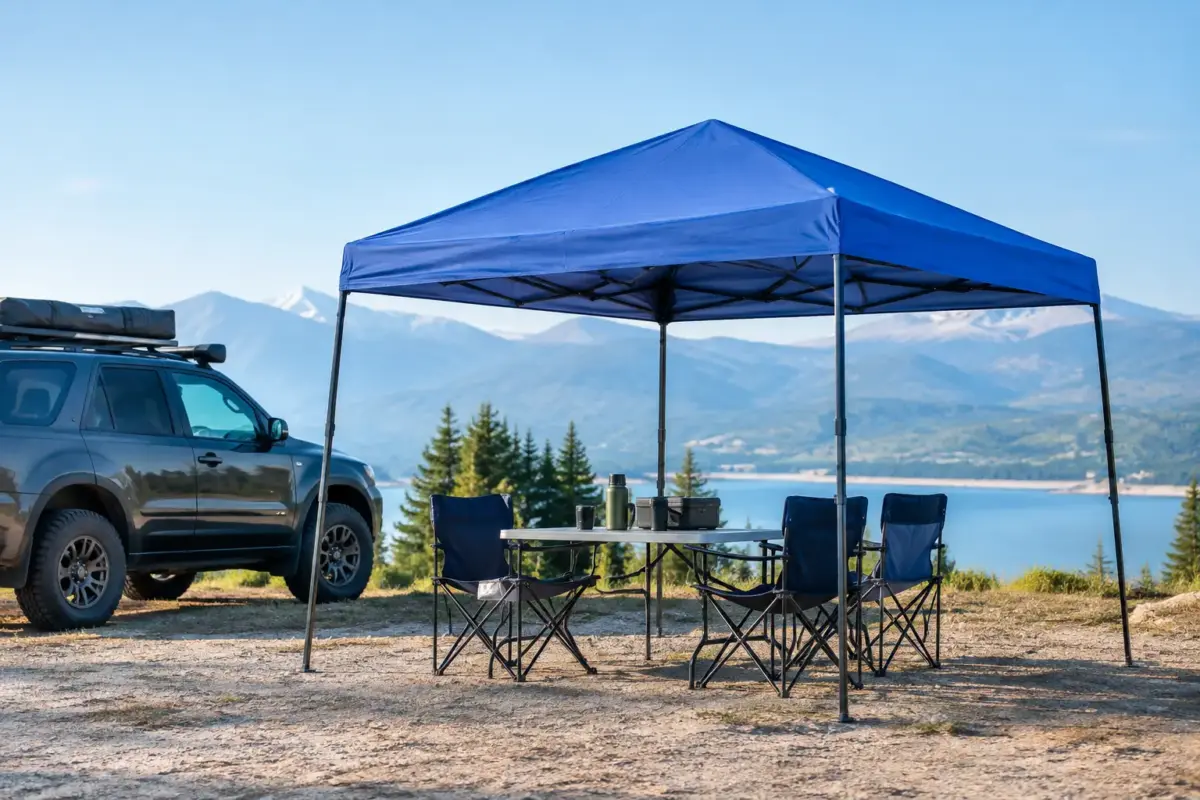
A canopy that is too small leaves stock, staff and customers exposed. One that is too large can block access, exceed your allocated site or become difficult to transport and secure. Getting pop up canopy sizing right means matching the usable covered area, packed size, frame strength and branding space to the work your shelter needs to do.
For Australian markets, sporting events, outdoor activations and mobile worksites, size is not simply a matter of choosing the biggest marquee you can fit. Your setup needs to perform in changing weather, look sharp from a distance and pack down efficiently when the day is done.
Start with the site, not the canopy
Most organisers allocate event sites in metre-based bays. A standard market or activation site is often 3 m x 3 m, which makes a 3 m x 3 m pop-up gazebo the practical starting point. It gives you a recognisable, contained footprint without spilling into neighbouring traders’ space.
Before ordering, confirm the exact bay dimensions and ask whether guy ropes, awnings or signage may extend outside them. A 3 m x 3 m canopy covers 9 square metres overhead, but the operational footprint can be larger once you add leg weights, roof overhangs, wall anchors and customer space at the front.
Access matters just as much. Measure gates, laneways, lift access and the space available beside your ute, van or trailer. A larger folding marquee may fit the event site perfectly but be the wrong choice if two people cannot safely manoeuvre it from the vehicle to the setup area.
Pop up canopy sizing by common footprint
2 m x 2 m: compact branding and tight sites
A 2 m x 2 m canopy suits sampling stations, registration points, small retail displays and tight indoor-outdoor spaces. It is easy to place along a footpath activation or beside a sporting field, and it gives a compact team a clean branded base.
The trade-off is limited working room. Add a table, two staff members and a product display, and the shelter fills quickly. It is best treated as a focused brand or service point rather than a full market stall.
3 m x 3 m: the all-round commercial standard
For many Australian businesses, clubs and event teams, the 3 m x 3 m format is the workhorse. It provides enough room for a trestle table, point-of-sale setup, stock tubs and two to four staff, depending on the layout. It also offers strong roof and wall print area, so your branding remains visible from multiple approaches.
This size works across markets, trade displays, race days, school events and community programs because it balances coverage with portability. Selected heavy-duty 3 m x 3 m structures can also achieve wind ratings up to 100 km/h when specified, correctly anchored and used within the manufacturer’s conditions. That rating does not eliminate the need for good judgement. Severe weather, unsuitable ground and poor setup can make any canopy unsafe.
3 m x 4.5 m: extra counter space without going oversized
A 3 m x 4.5 m canopy is a strong middle ground for food service, merchandise, signing stations and teams that need separate customer and storage zones. The extra 1.5 metres makes a real difference when you need a long serving counter or space for several tables.
It is a smart option when a 3 m x 3 m setup feels cramped but a 3 m x 6 m structure would dominate the site. Check the event allocation carefully, as many standard bays will not accommodate it without booking additional space.
3 m x 6 m: high-capacity shelter for active teams
A 3 m x 6 m folding marquee creates 18 square metres of cover. That makes it well suited to sporting clubs, race teams, larger market operations, outdoor catering, first-aid points and promotional roadshows. You can establish distinct areas for service, staff, stock and equipment rather than forcing everything into one crowded zone.
The larger roof also creates a major branded billboard. Full-colour dye-sublimation printing across the valance, roof and walls can make the structure visible well before visitors reach your stand.
The compromise is weight, packed length and setup planning. A canopy this size is generally a two-person job, needs more secure anchoring and requires a larger clear area around it. It is commercial equipment, not something to set up casually in a crowded car park.
4 m x 4 m and larger: when coverage is the priority
Larger square marquees suit operational shelters, command posts, outdoor classrooms, medical facilities, equipment protection and high-volume event spaces. They provide generous coverage, but they place more demand on the frame, roof fabric, connectors and tie-down system.
When the footprint grows, do not save money by stepping down in frame grade. Large shelters catch more wind and carry greater forces through the legs and joints. Commercial-grade aluminium or steel construction, quality connectors and properly matched weights become essential rather than optional.
Allow for what happens under the roof
The stated canopy dimensions only tell part of the story. The right size depends on how people, furniture and equipment move through the space.
A retail stall needs room for customers to browse without standing in the aisle. A food outlet needs a clear service edge, handwashing equipment and space behind the counter. A sporting club may need chairs, an esky, recovery gear and a protected spot for players. A worksite shelter needs safe access around tools and materials, not just enough cover to keep them dry.
As a rough planning rule, map the setup on the ground before buying. Mark out the canopy footprint with tape or cones, then place tables, displays, chairs and storage boxes within it. If the layout only works when nothing moves and no customers enter, step up a size or reduce what travels with you.
Wall options also affect usability. Full walls provide weather protection and extra print area, while half walls keep the site open and define the counter line. Sidewalls need clearance outside the legs for anchoring and tensioning, particularly on grass or uneven ground.
Choose branding area with purpose
Bigger canopies offer more printable fabric, but visual impact comes from legibility, not filling every panel with logos. A 3 m x 3 m canopy with a strong roof logo, readable valance text and branded rear wall can outperform a cluttered 3 m x 6 m display.
Think about viewing distance. Roof peaks and valances do the heavy lifting across a busy oval, market lane or festival entrance. Walls work harder when people are close to your stand, especially when they carry service information, product imagery or sponsor recognition.
If you attend varied events, a 3 m x 3 m branded canopy with interchangeable walls can be a commercially smart system. Use it as a complete enclosed stall at markets, then run it open-sided with a table cover and flags for a fast corporate activation. Mountain Shade’s custom print process can help turn the structure into a reusable brand asset rather than a one-event expense.
Size the frame and anchoring system to the job
A pop-up canopy is only as capable as the frame holding it up. The same roof dimension can be available with very different leg profiles, wall thicknesses, truss designs and connector systems. For recurring commercial use, choose a heavy-duty frame that matches the frequency, conditions and consequences of failure.
Do not treat weights and tie-downs as add-ons to decide on later. Every leg should be secured using appropriate canopy weights, pegs, straps or a combination suited to the surface and conditions. Hardstand sites need a different plan from grass, sand or compacted dirt. If the weather deteriorates beyond safe operating conditions, pack down early. A wind rating is a tested specification with setup requirements, not permission to leave a canopy unattended in a storm.
For a reliable buying decision, confirm these practical details before you commit:
- the allocated site width, depth and permitted overhang;
- the number of staff and the equipment that must fit under cover;
- packed dimensions, vehicle space and who will carry the frame;
- the frame class, roof material and anchoring equipment included;
- where logos, messages and sponsor branding need to be seen.
Plan for repeat use, not one event
The right canopy size should support your calendar, not just next Saturday’s event. A small start-up may get excellent value from a 3 m x 3 m commercial marquee that can travel to markets, expos and community days. A club with multiple teams may be better served by a 3 m x 6 m structure that becomes the dependable hub on game day.
There is no universal best size. The strongest choice is the one that fits your allocated space, carries your brand clearly, protects the people and equipment beneath it, and can be secured properly in the conditions you actually face. Measure the site, map the layout and choose the frame and tie-down system with the same care as the roof itself. That is how a canopy keeps earning its place event after event.
