
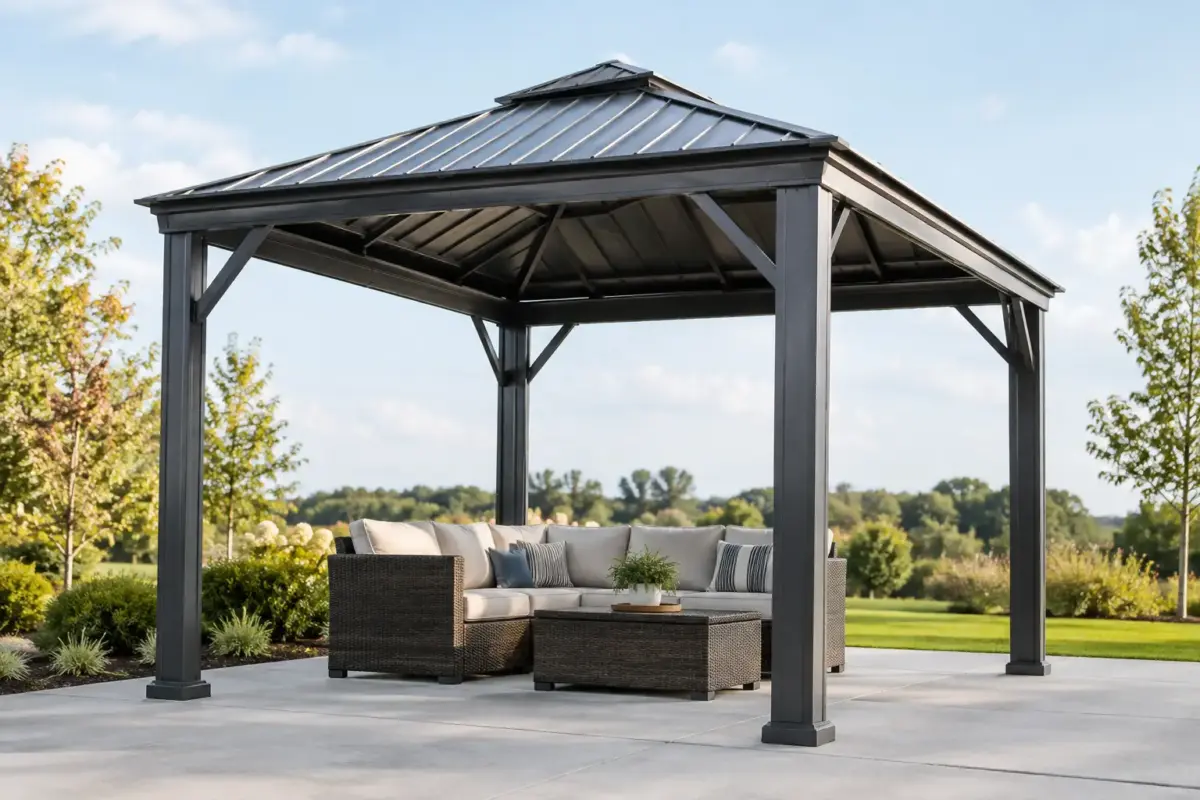
A marquee that looks sharp at 8 am can become a liability by lunchtime if its frame is not built for the job. Gazebo frame grades are the practical way to separate a light-use shelter from a commercial structure that can keep working through recurring markets, sporting fixtures, trade days and outdoor activations.
The roof fabric gets attention because it carries your logo, but the frame carries everything else. It takes the load of the canopy, resists movement in wind, absorbs the wear of transport and repeated setup, and determines whether replacement parts can keep the asset in service for years. For Australian organisations operating outdoors, choosing a frame grade is not a minor upgrade. It is a decision about safety, presentation and long-term value.
What gazebo frame grades actually mean
There is no single Australia-wide standard that forces every supplier to label frames in the same way. A “heavy-duty” gazebo from one seller may be lighter than a commercial frame from another. Treat grade names as a starting point, then look at the specifications behind them: leg profile, wall thickness, truss design, connector construction, materials, warranty, wind rating and tie-down requirements.
Light-use and occasional frames
Entry-level frames are suited to infrequent, fair-weather use where low purchase cost and easy storage matter most. Think a family gathering, a once-a-year school stall or shelter used briefly on a calm day. These frames are generally lighter, use smaller leg sections and may have more plastic components through the joints and sliders.
They can be appropriate in the right conditions, but they are not designed to be packed into a ute every weekend, raised and lowered by a market team, or left exposed through a full day of changing weather. A printed roof can make any gazebo look professional from a distance. The frame grade decides whether it continues to look professional after a season of work.
Heavy-duty commercial frames
A heavy-duty or commercial-grade frame is built for regular deployment. It should use substantial aluminium or steel sections, reinforced trusses, durable connectors and positive locking points that hold the structure square under normal operating loads. This is the sensible starting point for market operators, clubs, councils, trade crews, event suppliers and brands that attend multiple activations each year.
Commercial frames cost more up front because there is more material, better engineering and stronger hardware in the structure. That extra investment is often recovered through fewer replacements, faster setup, a tidier presentation and access to spare parts rather than an entire new gazebo after one damaged component.
Specialist high-performance frames
At the top end, selected frames are designed for demanding operational use, larger crews and sites where wind exposure is a genuine factor. These structures usually pair larger leg profiles with stronger truss geometry, metal connector systems and purpose-built tie-down points. They are the right conversation for race teams, emergency and medical operations, roadshows, high-traffic events and organisations that need a shelter they can deploy with confidence over and over.
A stated wind rating is valuable, but read it properly. It applies only when the gazebo is correctly secured, assembled on suitable ground and operated within the manufacturer’s conditions. No pop-up structure should be left unattended in severe weather. Wind can change direction quickly around buildings, ovals, beaches and open showgrounds.
Match the frame grade to the work, not the occasion
The easiest buying mistake is choosing by size alone. A 3 x 3 m gazebo can be a basic weekend shelter or a serious branded work station, depending on its frame. Start with how often it will be used, who will set it up, how far it will travel and the conditions it will face.
For a community group doing a handful of indoor or sheltered events each year, a lighter frame may be enough if it is stored carefully and always weighted. For weekly markets, promotional tours and sporting events, a commercial frame makes more sense. Repeated opening, packing, transport and exposure are what test joints and trusses.
If your team works in open locations, do not rely on frame grade alone. Budget for the full stability system from the outset. Properly sized weights, pegs where ground conditions allow, ratchet tie-downs and awnings designed for the frame all play a role. A strong frame without proper anchoring is not a complete outdoor solution.
The specifications that reveal real frame strength
Leg profile and wall thickness
The legs do most of the visible work. Larger, thicker-walled profiles generally resist flex better and provide a more stable base, particularly on frequent setups. Square or hexagonal profiles can both perform well, but the dimensions and material thickness matter more than the shape by itself.
Do not compare legs by one measurement alone. A wide profile with thin material may not outperform a slightly smaller profile with a well-engineered wall thickness and reinforced corner assembly. Ask for the complete frame specification rather than accepting broad claims.
Truss design and connectors
The roof truss is the folding skeleton that supports the canopy. Its job is to distribute load across the roof while keeping the structure aligned. Look for strong cross-bracing, secure locking points and connector components made for repeated use. Metal connectors are generally preferred for commercial applications because high-stress joints are where lesser frames often show fatigue first.
A frame should open smoothly without forcing it. If the mechanism is hard to operate, stop and check alignment, sliders and locking points rather than muscling it into place. Correct setup protects both the frame and the people using it.
Material choice: aluminium or steel
Aluminium is popular for commercial pop-up gazebos because it offers a strong strength-to-weight balance and resists corrosion. It is easier for a small team to handle during regular transport and setup. For branded event equipment moving between venues, that weight saving matters.
Steel can provide excellent stiffness and is often used where additional mass is beneficial. The trade-off is weight and the need to protect the finish from chips and corrosion, especially in coastal areas or when equipment is stored wet. Neither material is automatically better. The right choice depends on the engineered design, site conditions and how your crew will use it.
Wind rating and anchoring system
A wind rating should never be treated as permission to ignore conditions. It is a performance figure tied to a specific configuration. Check whether it requires weights, pegs, straps or all three, and confirm that the rating applies to your gazebo size. Larger roofs present more surface area to wind and need a more considered anchoring plan.
Use the manufacturer’s recommended tie-down equipment every time. On hard surfaces, weights and straps are usually the practical answer. On grass, pegs and straps can add security when permitted and correctly installed. If weather deteriorates beyond the structure’s operating conditions, pack down early. Protecting the team matters more than squeezing out another hour of brand exposure.
Buy a complete commercial setup
A gazebo frame is only one part of the asset. The best buying decision considers the full package: a roof built to suit the frame, branded walls for visibility and shelter, a wheely bag for transport, and anchoring equipment matched to typical sites. If you are investing in custom printing, the frame underneath should be capable of delivering a taut, professional display through many events.
Before approving a purchase, ask these five questions:
- How many times each year will the gazebo be opened, transported and packed away?
- What leg profile, frame material and connector system does it use?
- What wind rating applies, and what weights and tie-downs are required to achieve it?
- Can individual components such as trusses, feet, sliders, roofs and walls be replaced?
- Is the structure suited to the size, exposure and operational demands of our usual sites?
Mountain Shade supplies commercial outdoor structures for organisations that need their equipment to look better, stand out and keep performing in harsh Australian conditions. That means choosing a frame with enough capacity for the work ahead, rather than buying the cheapest frame for a single quiet day.
Your gazebo should earn its place in the vehicle, the storeroom and the event kit. Choose the grade that matches your busiest season, secure it properly at every site, and you will have a reliable platform for shelter, staff and brand visibility when it counts.
