
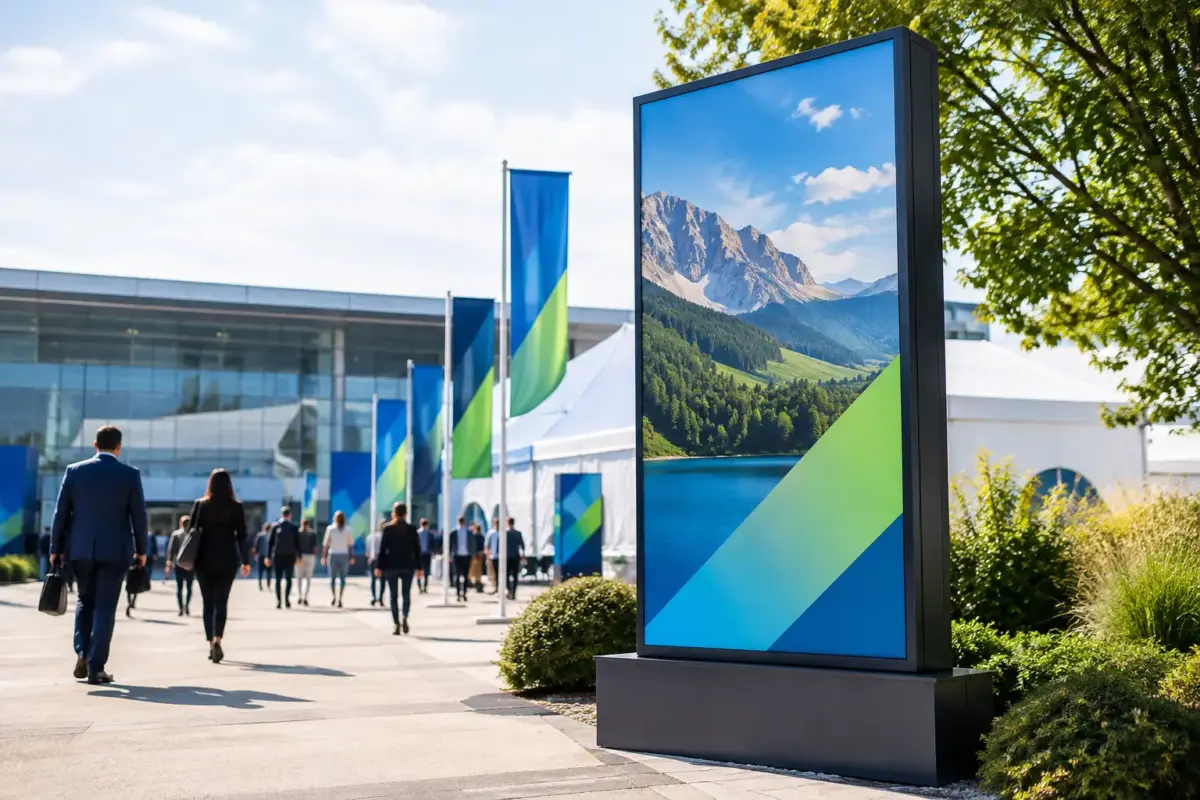
A busy exhibition floor gives you only seconds to earn attention. Outside, the job gets harder: wind catches loose hardware, sun washes out weak graphics and a basic banner can disappear behind a queue, ute or neighbouring stand. Effective exhibition signage does more than show a logo. It tells people where to stop, what you do and why they should speak with your team – while holding its ground through a long Australian event day.
For businesses, councils, clubs and event operators, the best display setup combines high-impact branding with practical shelter, safe anchoring and gear that can be used again next weekend. That is the difference between buying throwaway event merchandise and investing in a display system that keeps performing.
Start With the Job Your Signage Must Do
Not every event needs the same equipment. A trade show inside a convention centre calls for clean presentation and compact transport. A weekend market, motorsport paddock or community sports day needs visible branding that also handles weather, uneven ground and frequent pack-downs.
Start by deciding what visitors need to do when they see your site. If they need to find you from across an oval, a tall teardrop or feather flag creates a clear marker above the crowd. If they need to understand an offer at close range, a printed table cover, banner or media wall can carry the detail. If your team is speaking with customers for hours, a branded pop-up marquee gives you a recognisable headquarters as well as useful cover.
The strongest setups use these jobs together. Flags attract attention from a distance, a printed roof establishes the brand footprint, walls and banners provide the message, and the counter or table turns interest into a conversation. You do not need every product at every event. You do need each piece to have a clear purpose.
Exhibition Signage Needs Scale, Not Just a Logo
One of the most common mistakes is designing graphics from a desk without considering viewing distance. A logo that looks substantial on a laptop can appear tiny on a 3 x 3 m marquee roof. A line of body copy that is readable at arm’s length will not work from ten metres away.
For primary signage, lead with one clear message. Your business name, the product category or a short call to action should be understood quickly. Contact details, service lists and QR codes belong lower down the hierarchy, where people can read them once they have approached.
Keep contrast high. Dark text on a light background or light text on a deep, solid colour generally travels further than low-contrast tones. Fine type, busy backgrounds and large blocks of text lose impact in bright daylight. Strong brand colour is valuable, but legibility has to win when the site is crowded.
Print placement matters too. A roof valance is excellent for business names and short messages because it sits at eye level around the marquee. The canopy peak gives your brand presence from further away. Full printed walls offer the largest canvas for imagery, sponsor recognition or campaign graphics, but they can reduce visibility into the stand if used on every side. Often, a back wall and one side wall give enough branding while leaving the front open and inviting.
Build a Display System for the Conditions
An exhibition sign that works indoors may not be suitable for an exposed showground. Outdoor equipment needs more than attractive print. It needs frames, poles, bases, connectors and tie-down points designed for repeated use.
A commercial-grade pop-up marquee is often the backbone of an outdoor site. Look closely at frame material, leg profile, truss design and connection points rather than judging strength by fabric weight alone. Reinforced aluminium or steel frame options give you a better platform for regular activations, especially when the marquee will be opened and packed away by different staff members over several years.
Wind is the non-negotiable part of outdoor display planning. A stated wind rating is useful, but only when the structure is correctly secured and conditions remain within its operating guidance. Weights, pegs, ratchet straps and tie-down systems are not optional add-ons to leave in the warehouse. They are part of the installation.
Hard surfaces require suitable weighted bases. Grass and soil may allow pegging, but ground conditions and event rules still apply. Flags also need the right base for the surface and flag size. If wind strengthens beyond what your setup can safely handle, reduce the sail area, remove flags or pack down. Looking professional never comes ahead of protecting people, staff and equipment.
Choose the Right Mix of Signage Formats
A few well-selected pieces usually outperform a cluttered site. Choose your format based on audience movement, available footprint and the amount of information you need to show.
Branded marquees for shelter and authority
A custom-printed marquee does two jobs at once: it gives your team shade or rain cover and puts your brand above the event crowd. For regular markets, promotional tours, school events or sporting programs, that dual purpose makes it one of the highest-value assets in the kit.
A 3 x 3 m footprint suits many single-team sites, sampling stands and market stalls. Larger structures make sense for multiple staff, product displays, registrations or hospitality. The trade-off is transport, setup time and the anchoring required. Select a size your crew can operate confidently, not simply the largest option that fits the site plan.
Flags for distance and movement
Teardrop and feather flags are made to be seen above heads, vehicles and other structures. Their movement helps pull the eye, making them useful for entrances, roadside promotions and sites spread across a larger venue.
Use them to direct traffic or mark key zones rather than loading every flag with paragraphs of copy. One message per flag is generally enough. Place them where approaching visitors can see them before they reach your stand, while keeping bases out of pedestrian paths and accessways.
Banners, media walls and table covers for close-up detail
Pull-up banners, fabric banners and media walls are effective once visitors are near your space. They can explain services, display partner logos, frame a photo opportunity or create a tidy branded backdrop behind your team.
Printed table covers are often overlooked, yet they turn a standard trestle table into a professional point of sale or registration desk. They also hide stock boxes, paperwork and the everyday gear that can make a stand look untidy. For product demonstrations and lead collection, that cleaner presentation matters.
Design for Repeat Events, Not a Single Weekend
A good event graphic should have a long working life. Avoid date-specific promotions, temporary phone numbers or campaign language unless the display is intended for a one-off activation. Build your core assets around durable information: your logo, what you offer, key service areas and a message that remains relevant.
That does not mean your display has to be generic. Removable banners, interchangeable walls and replacement printed roofs let you update a campaign without replacing the entire structure. This modular approach is particularly useful for organisations that attend markets one month, trade exhibitions the next and regional field days later in the year.
Store the gear properly between events. Let wet fabric dry before packing it away, check frames for damage, keep spare pins and components on hand, and use wheely bags to protect equipment during transport. A replacement roof or wall is far easier to arrange when the frame itself has been looked after.
Plan the Site Before You Arrive
The best exhibition signage can still underperform if it is set up in the wrong place. Ask for the site plan early and consider the direction visitors will approach from, the sun through the day, vehicle access, power requirements and nearby competitors.
Keep the front of your stand open where possible. Put the clearest message facing the main flow of people, then position flags or directional signs to catch visitors further out. If strong afternoon sun will hit the front of the site, consider whether your graphics will be readable and whether staff will have enough shade to work comfortably.
Allow time for a proper setup. Rushing leads to creased graphics, unsecured bases and a stand that looks improvised. Brief the team on how the frame locks, where the weights go and who checks the site as weather changes. For large event programs, a documented pack list prevents the familiar problem of arriving with the marquee but leaving the wall hardware or tie-down kit behind.
Mountain Shade can help turn those requirements into a practical branded package, with custom printing, free visual mock-ups and commercial display options built for hard outdoor use.
Your exhibition presence should make it easy for people to find you, trust you and remember you after the event. Choose signage that looks sharp at first glance, stands up to real conditions and gives your crew a site they are proud to work from.
