
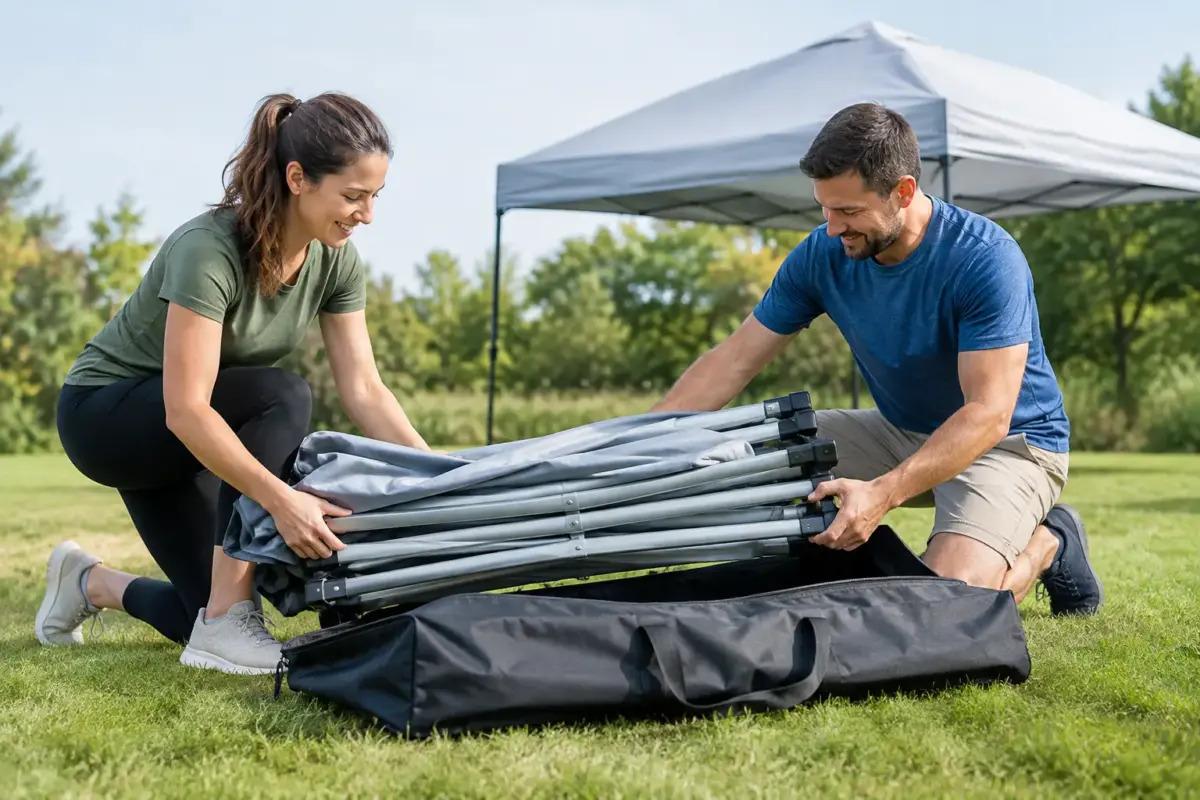
A folding gazebo is quickest to pack when you treat the job as part of the event bump-out, not an afterthought once everyone is tired and the weather has turned. Knowing how to pack a folding gazebo properly protects the roof fabric, prevents bent truss bars and keeps your commercial shelter ready for the next market, race day, council activation or trade event.
The goal is not simply to get it back into the bag. A well-packed gazebo is dry where possible, free of tension, secured with its correct straps and loaded so it cannot slide around in the ute, trailer or van. That matters even more with heavy-duty commercial frames and custom-printed roofs, where replacement costs and downtime are worth avoiding.
Start by clearing the site safely
Before touching the frame, remove anything hanging from or attached to the gazebo. Take down flags, banners, lights, sidewalls, awnings, counters and signage first. Pack each item separately rather than trying to fold it into the roof bundle. Bulky accessories caught in the truss system are a common cause of fabric tears and damaged connectors.
If the gazebo is weighted or pegged down, keep it secured until the roof, walls and internal equipment are removed. Never start collapsing a structure while it is still carrying wind load on one side. In gusty conditions, assign at least two people to the frame and work from the leeward side where practical.
Check the roofline for pooled water before packing. Even a small amount of water can become a heavy load when the canopy folds inward. Push water off carefully using a soft broom or by lifting the fabric from underneath – never jab it with a sharp object. If weather allows, give the roof a few minutes to drain before moving on.
Remove walls and roof accessories first
Sidewalls should come off before the frame is collapsed. Unzip adjoining walls, release Velcro attachments and remove any lower straps or pegs. Fold each wall loosely with the printed side protected, especially if it is wet or dusty. Do not force damp walls into an airtight bag for days at a time. Moisture can mark fabric, create odour and eventually encourage mould.
A standard roof can often stay fitted to a pop-up gazebo while it is folded down. That is one of the major time savers of a folding frame. However, it depends on the roof design, frame size and whether the canopy is dry enough to store. If the roof is soaked, muddy, damaged or needs a proper clean, remove it and dry it before long-term storage.
For custom-printed roofs, take extra care around valances, logos and reinforced corners. Printing is built to perform outdoors, but folding fabric sharply around dirty frame edges is unnecessary wear. Keep the material away from abrasive pegs, ratchet straps and metal weights.
How to pack a folding gazebo step by step
Once the site is clear, lower the legs fully before collapsing the scissor frame. This creates a manageable working height and reduces the chance of pinched fingers or overextended truss bars.
With two people positioned at opposite sides, release the frame locks according to the gazebo’s design. Keep hands clear of hinge points. One person should guide the roof fabric inward as the other begins bringing the legs together. Do not pull the gazebo closed from only one corner, as this twists the structure and puts uneven pressure through the frame.
Walk the frame inward slowly. The aim is to compress the scissor trusses evenly until the gazebo forms its narrow folded profile. If it jams, stop immediately. Check for trapped roof fabric, a locked slider, a wall strap still attached or debris caught near a joint. Forcing a commercial-grade frame can damage parts that were designed to take wind load, not sideways abuse.
As the frame closes, tuck loose roof material into the centre. The roof should sit neatly between the legs rather than hanging over the wheels or dragging across the ground. This is particularly important after a dusty sports day or regional market, where grit can rub into wet fabric during transport.
Once folded, secure the frame using the built-in straps or the straps supplied with the wheely bag. A tight but sensible hold stops the legs opening during loading. Avoid overtightening straps across sharp frame corners or printed surfaces.
Use the right bag and load it properly
A heavy-duty wheely bag is more than a storage cover. It protects the frame during transport, makes a heavy gazebo easier to move across bitumen or grass and helps prevent components going missing between events.
Before lifting, open the bag fully and position it close to the folded gazebo. Two people should lift from the frame, not from the roof fabric or bag handles. Slide the gazebo into the bag with the wheel end correctly aligned. If the bag has internal compartments or straps, use them to keep the frame stable.
For larger gazebos or steel-frame units, a two-person lift is the sensible minimum. A 3 x 6 m or 4 x 8 m structure can be awkward even when folded, and trying to wrestle it solo at the end of a long event is how shoulders, bags and frames get damaged.
In a van or trailer, lay the packed gazebo flat where possible and secure it against movement. In a ute, position it away from standing water and use rated tie-downs. Do not leave a wheely bag flapping in the wind or allow metal weights to roll into the frame. Keep pegs, ropes and ratchets in a separate accessory bag so their edges cannot abrade the canopy.
Drying and cleaning after a wet event
Sometimes a wet pack-down cannot be avoided. Australian events do not always give you a clear weather window, and operationally the gazebo may need to leave site straight away. In that case, pack it carefully, transport it home or back to the depot, then reopen it as soon as practical to dry.
Set the gazebo up in a ventilated covered area, or at minimum open the roof and walls enough for airflow. Brush off dry dirt with a soft brush. For mud or marks, use mild soapy water and a soft cloth, then rinse gently. Harsh chemicals, pressure washers and abrasive scrubbers can damage coatings, stitching and printed finishes.
Inspect the frame while it is open. Look for bent truss bars, loose screws, damaged leg locks and worn connectors. A folding gazebo works as a connected system, so a small issue is cheaper and easier to resolve before it becomes a failure at the next activation. One advantage of buying commercial equipment from a specialist such as Mountain Shade is access to compatible spare parts and replacement components when they are needed.
Common packing mistakes that shorten gazebo life
The biggest mistake is collapsing a gazebo while weights, walls or accessories are still attached. That puts uneven load through the frame and makes the pack-down harder than it needs to be. The second is dragging the folded gazebo across concrete or gravel instead of using its wheels or getting a second person to help lift it.
Another common error is storing the canopy wet for extended periods. A wet roof packed overnight may be unavoidable; leaving it that way for a week is a maintenance problem. Finally, avoid packing in a rush without checking the locks, sliders and fabric. A 30-second inspection can prevent a damaged roof from becoming a failed event setup.
Make the next setup easier
Pack your gazebo in the same order every time: frame and roof first, walls next, then ropes, pegs, weights and branding accessories in their assigned bags. Teams that run recurring markets, community events or sporting rounds benefit from a simple packing routine because every crew member knows what should be present before the vehicle leaves.
Label accessory bags by gazebo size and keep a short event checklist in the vehicle. That is especially useful when several branded shelters, flags and display assets travel together. A folding gazebo built for hard outdoor use will keep doing its job for years, provided it is packed with the same care you expect from it on site.
