
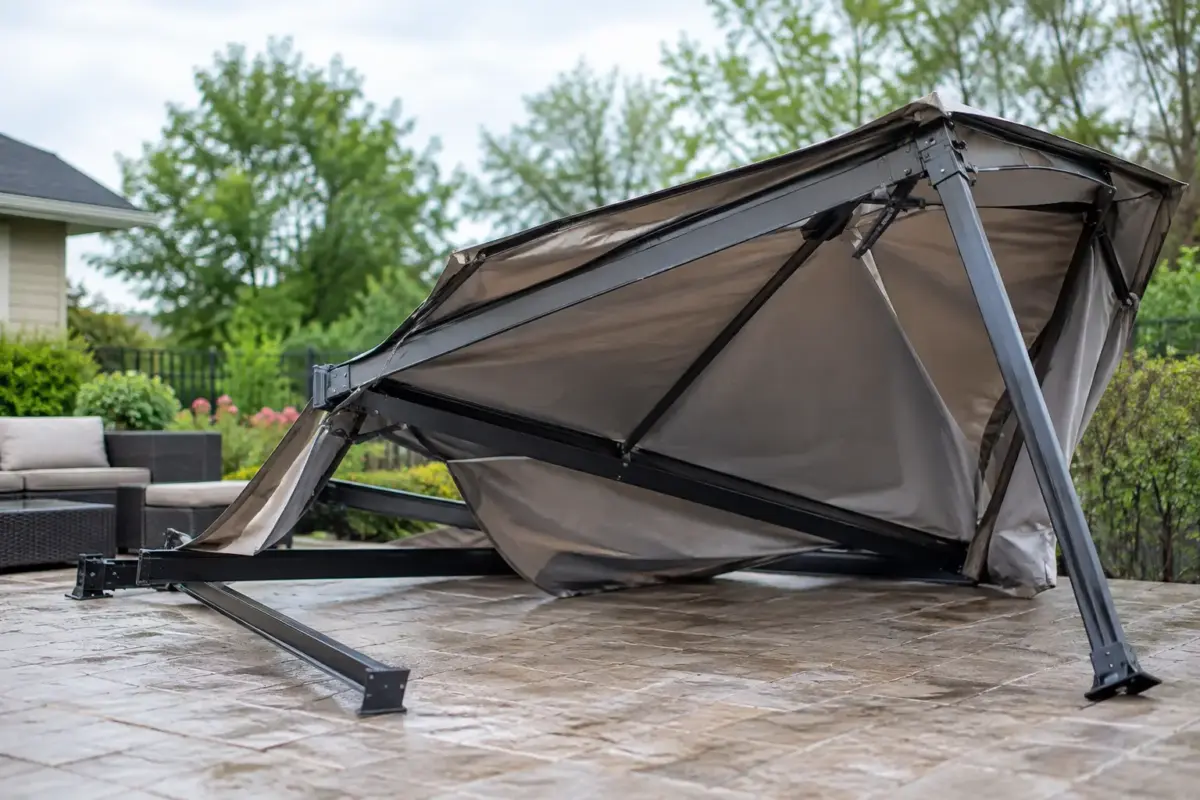
A gazebo can look perfectly secure right up until the first hard gust hits. That is why do gazebos collapse is not just a question for people replacing damaged gear – it is a safety question for event teams, market operators, clubs and businesses working outdoors. Most failures are not caused by one dramatic mistake. They come from a combination of wind, inadequate restraint, frame damage and poor setup decisions.
A commercial gazebo is a working structure, not a disposable shade item. Treat it that way and it can deliver reliable shelter, a sharp branded presence and years of repeat use. Treat it like something that can simply be unfolded and left alone, and even a good frame can be pushed beyond its limits.
Why Do Gazebos Collapse in Wind?
Wind is the main reason gazebos fail, but the issue is not always obvious. A canopy does not need hurricane conditions to become unstable. Wind flowing over and under the roof creates uplift, while side gusts push against the legs and roofline. The structure can twist, lift, slide or rack sideways.
The danger increases when wind is gusty rather than steady. A calm morning at a sports ground or market can quickly turn into sharp afternoon gusts. One side of the roof catches air, a leg momentarily lifts, and the frame is no longer carrying load evenly. Once the roof is out of square, connectors, scissor trusses and leg joints can be put under forces they were never designed to take.
Walls make this trade-off even more significant. They are useful for rain protection, privacy, product displays and creating a more enclosed activation space. But a fully walled gazebo presents a larger sail area. In windy conditions, leaving all walls down can trap air beneath the roof or turn the side of the structure into a broad wind-catching surface. Assess the weather, the site and the wall configuration together – not as separate decisions.
Wind ratings are also conditional, not a licence to leave a gazebo unattended in any forecast. A stated rating only applies when the structure is correctly assembled, properly anchored and used within the manufacturer’s specified conditions. If severe weather is approaching, pack down early. No event setup is worth risking people, vehicles, neighbouring stalls or expensive equipment.
Poor Anchoring Lets the Whole Structure Move
A heavy-duty frame helps, but it cannot do its job if the base is free to move. Many collapses begin with sliding or lifting rather than a broken leg. Once one foot shifts, the frame loses its square geometry and the load transfers unevenly through the roof.
Pegging is effective on grass or soil when pegs are driven securely and tie-down straps are tensioned correctly. On concrete, asphalt and other hard surfaces, use purpose-built weights at every leg. A single weight in the middle, a couple of sandbags or a person holding one leg is not a tie-down system.
The right anchoring method depends on the surface and forecast. On a soft oval after rain, a peg may pull out under load. On hardstanding, loose weights can creep or topple if they are not positioned securely. At exposed coastal venues, showgrounds and open car parks, extra restraint may be required because the site has little natural wind protection.
Do not assume that a roof full of stock, tables or display gear will weigh the gazebo down. Those items are not attached to the structure and can become hazards themselves. The restraint needs to be connected to the gazebo frame, ideally at the legs and designated tie-down points, so it resists both uplift and sideways movement.
Rushed Setup Creates Weak Points
A pop-up gazebo is quick to deploy, but quick does not mean careless. Frames often get damaged during setup when one person forces the structure open, drags it over rough ground or raises one side far ahead of the other. This can bend trusses, stress connectors and leave the canopy sitting unevenly.
Start on the flattest practical ground. Open the frame evenly, fit the roof cleanly and check that every truss is fully extended and every slider, pin and locking mechanism is engaged. Raise the legs in stages, keeping the frame level as you go. If something will not lock into place, stop and inspect it. Forcing a component usually creates a more expensive problem later.
A roof that is loose, sagging or incorrectly fitted can collect water. Water pooling adds concentrated weight where a pop-up roof is least able to carry it. In a downpour, that load can stretch fabric, bend roof bars and pull the frame out of shape. Keep the roof tensioned, clear pooled water safely where possible and avoid using damaged canopies that no longer fit correctly.
Frame Grade Matters More Than It First Appears
Not all gazebos are built for commercial use. Lightweight recreational models can be suitable for calm backyard occasions, but regular markets, trade events, school carnivals and field operations need a different level of engineering. The leg profile, wall thickness, truss design, connector material and locking system all affect how a frame handles repeated load and movement.
Thin steel components may be cheap at the outset, but they can bend, corrode or deform after a few tough setups. Once a frame is bent, it may still open and close, yet it is less likely to distribute load evenly. This is when minor wind or an uneven surface can cause a complete failure.
Commercial-grade aluminium and steel frames are designed around a more demanding job: repeated transport, fast deployment, regular pack-down and exposure to Australian weather. That does not make them indestructible. It means they offer a stronger margin when correctly selected, maintained and secured.
For recurring outdoor work, buy for the conditions you actually face. Consider your usual site exposure, event duration, number of people operating the setup, the need for walls and branding, and whether spare parts are available. A gazebo that can be repaired with a replacement roof, wall, leg, connector or truss is a far better long-term asset than one headed for landfill after a single failure.
Damage, Wear and Transport Take Their Toll
Gazebos commonly collapse after damage that was visible but ignored. Bent legs, cracked plastic connectors, split welds, frayed straps, missing foot plates and torn roof corners are all warning signs. A structure is only as strong as its weakest component.
Transport is another common source of hidden damage. Frames that slide around in a ute tray, get dropped from a loading area or are packed wet can develop problems long before the next event. Use a fitted wheely bag or protective storage solution, secure the load during transport and allow wet roofs and walls to dry before long-term storage. Moisture encourages mould, fabric deterioration and corrosion on metal components.
Build a quick inspection into every setup. Check the frame before it goes up, test locks as it opens, inspect tie-down straps and look over the roof seams and corners. After a windy event, inspect again before packing away. Small repairs are cheaper and safer than discovering a failed component halfway through a busy activation.
The Site Can Be the Problem
A gazebo may be well-made and well-secured yet still be in the wrong place. Corners of buildings, gaps between sheds, hilltops, waterfronts and open playing fields can funnel or accelerate wind. A seemingly sheltered position beside a structure may actually create turbulent gusts that hit the canopy from unpredictable angles.
Look above as well as around. Low branches can rub through a roof or fall in poor weather. Uneven ground can leave a leg partly unsupported. Soft verges can shift under load. Public areas also introduce pedestrian traffic, vehicles, prams and equipment that can knock weights, straps or legs.
Where possible, position the gazebo with its narrowest profile toward the prevailing wind, keep exits clear and set a practical pack-down trigger before the event begins. Your team should know who is watching conditions and who has authority to stop trading or activation activity.
Build Safety Into the Purchase, Not After It
The most reliable setups start with the right structure and accessory package. A commercial frame, correctly sized roof, purpose-built weights, pegs, tie-downs, walls and transport protection work as one system. Leaving those essentials until after purchase often leads to improvised solutions on event day.
Mountain Shade supplies heavy-duty commercial gazebo packages designed for demanding Australian use, with frame options, replacement parts and restraint accessories that support a safer long-term setup. Choose the frame grade and anchoring equipment around your actual conditions, not just the lowest upfront price.
The best time to prevent a collapse is before the first leg is extended. Check the forecast, inspect the equipment, secure every foot and give your crew permission to pack down when conditions turn. That is how your shelter keeps working – and how your brand stays looking professional when the weather does not cooperate.
