
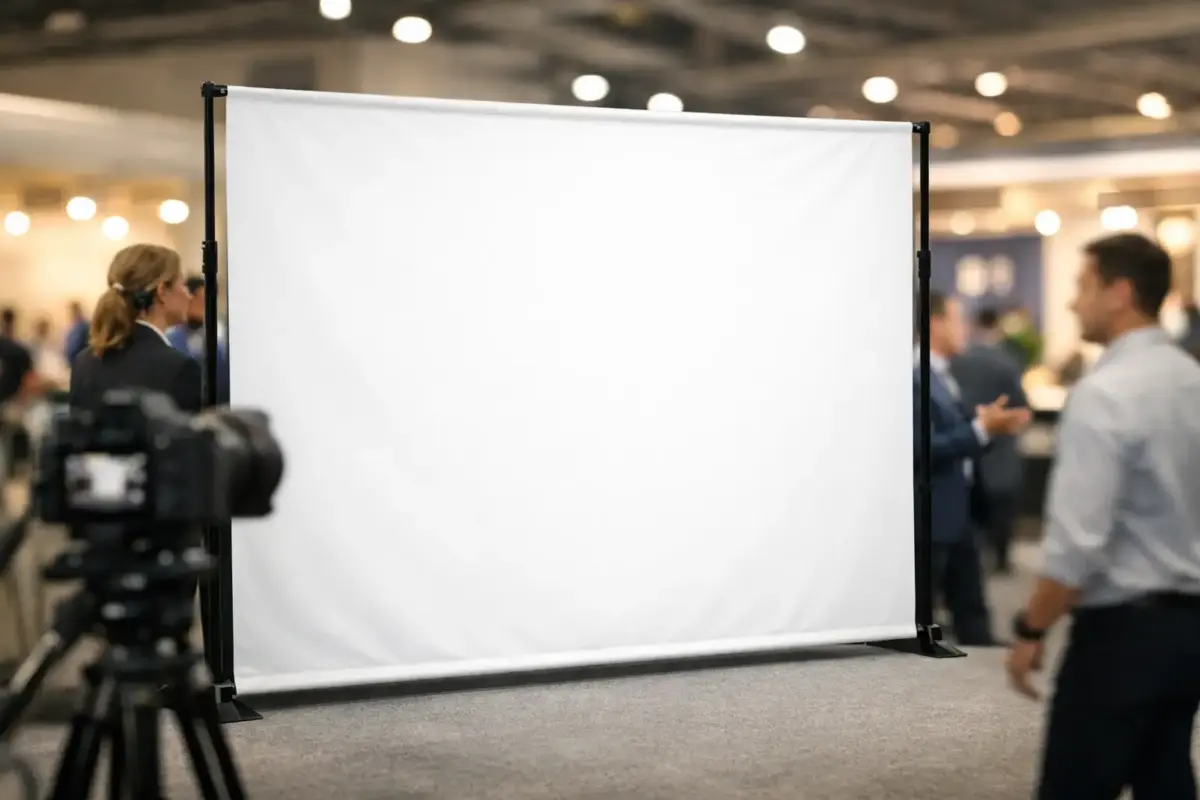
A sponsor interview is about to start, the venue lights are on and cameras are already rolling. A creased banner, visible frame or poorly placed logo can make even a well-run event look improvised. A portable media wall backdrop gives your brand a controlled, high-impact background wherever the action happens – from a trade show stand in Melbourne to a regional sporting presentation, school fundraiser or council announcement.
For organisations that attend more than one event a year, a media wall is not a one-off piece of signage. It is a reusable branding asset that puts your logo, campaign message or sponsor line-up behind the people who matter. The right wall needs to look sharp up close, read clearly in photos and survive the transport, setup and pack-down cycle without becoming another fragile item in the event kit.
What a portable media wall backdrop needs to do
A media wall has a simple job: create a professional branded setting for photos, video, interviews and guest arrivals. In practice, it needs to perform under pressure. It must be quick for staff to assemble, stable in a busy venue and easy to move between locations without taking up half the ute or storage room.
The visual side matters just as much. Repeated logos should be evenly spaced and large enough to appear in media photos. Key messages need sufficient contrast to remain visible under venue lighting, flash photography and mobile cameras. If your wall is being used for sponsor recognition, every logo requires clear space. Crowding too many marks onto the artwork usually weakens the result.
For outdoor activations, conditions add another layer. Wind, uneven ground, foot traffic and sudden weather changes can affect where and how a backdrop is used. A portable wall is primarily a visual display, not a shelter structure, so it should be positioned sensibly and secured where required. If your event needs cover as well as a branded photo area, pair the wall with a heavy-duty printed marquee rather than expecting one product to do both jobs.
Choose the right size for the camera and the crowd
Size should be determined by how the backdrop will be photographed, not just by the space available at the venue. A compact wall can work well for headshots, award recipients and one-on-one interviews. A larger format makes more sense for team photos, multiple speakers, vehicle launches, sponsor groups and busy red-carpet-style arrivals.
Think about the number of people likely to stand in front of it. If a sporting club regularly photographs a squad of 10 players, a narrow wall will leave faces and bodies outside the branded area. Likewise, a wall that is too large for a small indoor foyer may be difficult to position without blocking access or creating glare from nearby lights.
Before ordering, map out the intended photo zone. Allow room for people to stand in front of the graphic, photographers to step back and staff to move around the display. At trade shows, check the stand boundaries and ceiling height. At community events, consider where queues, tables and other equipment will sit. A good backdrop looks deliberate because it has been planned into the event layout.
Step-and-repeat artwork versus a single bold message
A step-and-repeat design uses a repeated arrangement of logos. It is the standard choice for media calls, sponsor events, presentations and any setting where different people will be photographed repeatedly. The pattern keeps a logo visible even when someone stands directly in front of part of the wall.
A single bold graphic is better suited to product launches, campaign messaging, scenic brand imagery or exhibition stands where the backdrop is part of a wider display. It can create more visual impact from a distance, but it is less forgiving in photographs. If people stand over the main message, it may disappear from the shot.
There is no universal winner. Choose the artwork approach based on what the wall needs to achieve. A council announcing a new initiative may need a clear campaign headline. A race team working with several sponsors may need a clean, repeated logo layout that delivers value in every photo.
Print quality is where the backdrop earns its keep
A portable media wall backdrop is only as convincing as its printed graphic. Small, low-resolution logos can look soft or pixelated once enlarged. Brand colours can shift if artwork is supplied without the right files, and fine details may be lost when viewed from a few metres away.
Start with the best available logo files, ideally vector artwork such as AI, EPS or print-ready PDF. If you only have raster files, supply high-resolution originals rather than screenshots pulled from a website or social post. Keep text large and avoid thin lines that may disappear under bright lighting or at camera distance.
Colour also deserves attention. Your brand colour on screen can look different when printed onto fabric, particularly with deep blacks, bright reds and subtle gradients. Dye-sublimation printing produces colour directly into the fabric, helping create a durable, professional finish that is suited to repeat event use. A properly prepared artwork file and a visual mock-up reduce the risk of finding a layout problem after production.
Mountain Shade provides free visual mock-ups so teams can check logo scale, placement and overall balance before the backdrop moves into print. That review is particularly valuable when multiple sponsors, departments or partner organisations need approval.
Prioritise a frame and fabric made for repeat use
Cheap display systems can look acceptable at the first event, then become difficult to use after a few trips. Bent sections, loose connectors, sagging fabric and worn carry bags all slow down setup and undermine the presentation you are trying to create.
For frequent events, look for a system designed around a dependable frame, fitted printed fabric and practical transport. The frame should assemble logically without an excessive number of separate pieces. The graphic should sit taut enough to present cleanly rather than hanging like a loose banner. A proper carry bag matters too – it protects the display in the boot, on loading docks and in shared storage areas.
The trade-off is simple. Lighter systems can be easier to carry, while heavier-duty structures generally provide more confidence when they are being handled constantly by different staff, volunteers or contractors. A school that uses a wall twice a year may favour portability above all else. An event company, council or marketing team running a full calendar should put durability and replacement support higher on the list.
Plan setup before event day
A professional result should not rely on one staff member who knows every trick. Give your team a quick setup plan and pack the backdrop with everything it needs. This includes the frame, printed fabric, feet or base components, carry bag and any appropriate securing equipment for the location.
Set the wall up before its first live event. This is the time to check that the artwork is facing the correct way, the fabric is fitted correctly and the full display fits the intended vehicle. It also helps staff understand how much room is required for assembly. A five-minute practice setup can prevent a rushed, crooked backdrop in front of clients or media.
At the venue, avoid placing the wall directly against a high-traffic thoroughfare where guests can bump into it. Keep it clear of food service areas, open doors and speaker stacks. For photography, watch for backlighting from windows and harsh overhead spotlights. A slightly different position can make logos far more readable on camera.
Make the backdrop work harder across your event calendar
The strongest branded assets are used repeatedly and consistently. A media wall can support far more than a formal press conference. Put it behind registration desks, presentation stages, winner announcements, sponsor lounges, recruitment displays and charity photo opportunities. It can also create a dedicated content zone where attendees and staff capture social images without a cluttered venue background.
Consistency builds recognition. When the same polished branding appears at markets, expos, award nights and outdoor activations, your organisation looks established and prepared. That matters whether you are trying to attract customers, reassure stakeholders or give sponsors better exposure.
Keep the artwork current, but do not rebuild it for every minor campaign. A core branded backdrop with a long usable life is often the smarter investment. If sponsor details change regularly, consider a design strategy that leaves room for interchangeable event signage nearby rather than putting every short-term message into the main wall.
A portable media wall backdrop should make the event team’s job easier while making the organisation look bigger, sharper and more credible in every frame. Choose it with the same care you would apply to a commercial marquee or major display asset, then give it a proper place in your event kit.
