
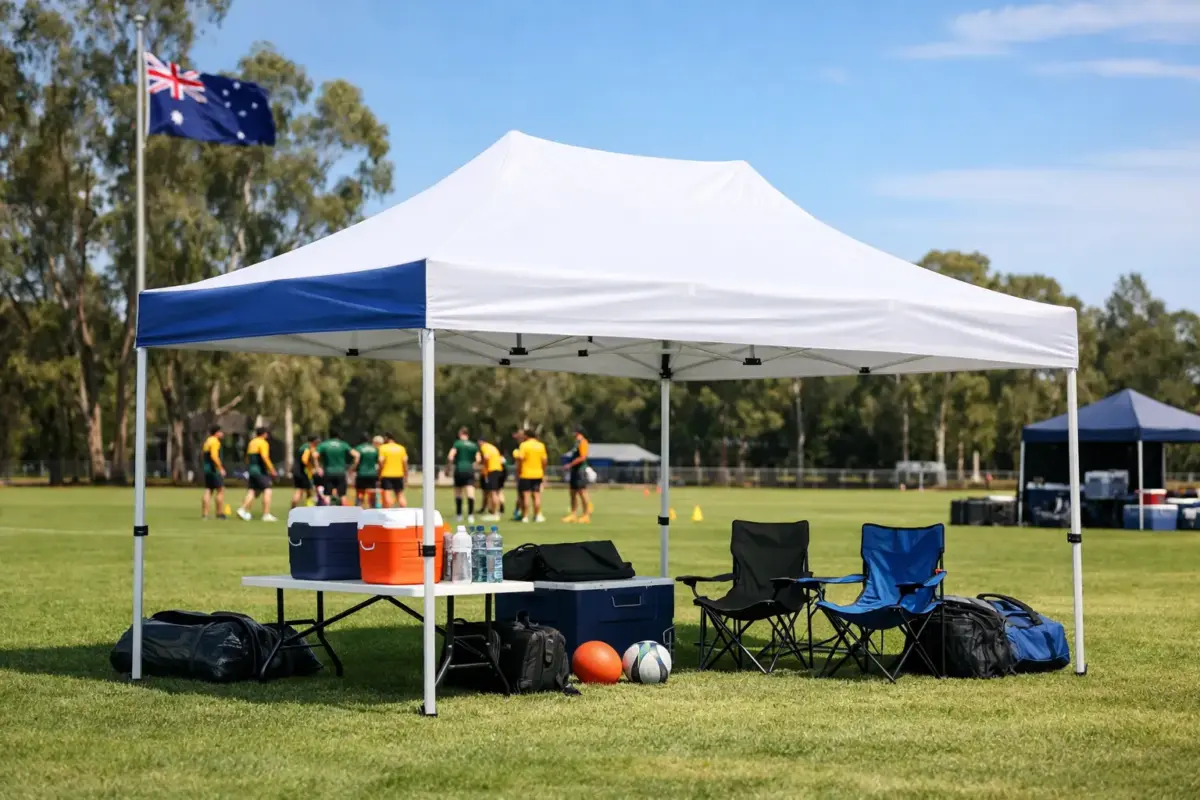
A shelter that looks sharp at 8 am but starts flexing in a gust by lunchtime is not doing its job. This outdoor event shelter guide is for Australian organisations that need more than a basic cover: they need a dependable work zone, a visible brand asset and equipment that can handle repeat use in real outdoor conditions.
Whether you are running a weekend market stall, sports registration desk, council activation, trade display or race-day pit area, the right structure comes down to five decisions: footprint, frame grade, fabric, anchoring and branding. Get these right before ordering and your shelter will work harder at every event on the calendar.
Start with the job your shelter needs to do
The first question is not, “What is the cheapest gazebo?” It is, “What happens underneath it?” A coffee vendor needs customer cover, clearance for service counters and space to move stock. A sporting club may need a shaded registration point, first-aid area or presentation zone. A marketing team needs a structure that is impossible to miss in a crowded event precinct.
A 3 x 3 m folding marquee is the practical all-rounder for many applications. It provides a compact, recognisable footprint for markets, promotions and club days, and it packs down efficiently for transport in a ute, van or trailer. If you need more frontage, stock space or room for a larger crew, 3 x 4.5 m and 3 x 6 m shelters give you a more substantial operational area without requiring a fully permanent installation.
Do not choose a larger footprint simply because it offers more shade. Bigger shelters catch more wind and need more room to set up, anchor and operate safely. Check site boundaries, footpaths, vehicle access, power leads, queues and any event organiser rules before locking in a size.
Plan for walls, awnings and traffic flow
A roof is only the starting point. Side walls can block low sun, light rain and wind-driven dust, while a half wall can create a cleaner service counter or information point. An awning can add useful customer cover at a food stall or create a welcome area without moving the main frame.
Think about access from the beginning. If customers need to enter under the marquee, avoid closing off the most natural entry point. If staff need privacy, product storage or a protected check-in desk, walls become part of the operational layout rather than an optional extra.
Choose a frame built for repeat commercial use
Frames are where a cheap event shelter usually reveals its limits. A structure may look similar in a product photo, but frame material, leg profile, connector design and wall thickness make a major difference to stability, service life and how confidently the unit performs after repeated pack-downs.
For occasional backyard use, a light-duty frame may be enough. For markets, events, community programs, trade work and branded activations, commercial-grade aluminium or steel frames are the sensible investment. Look for reinforced legs, reliable truss connections and components designed to be serviced rather than discarded.
Aluminium frames are valued for their balance of strength and manageable weight. Steel can suit applications where maximum weight and durability are priorities, though it can be heavier to move and set up. The better option depends on your crew, transport arrangement and frequency of use.
Ask for specific performance information, not vague claims. Frame dimensions, leg profiles, connector construction and stated wind ratings provide a clearer picture of the structure you are buying. Selected heavy-duty 3 x 3 m structures can carry wind ratings up to 100 km/h when correctly secured, but that figure is not permission to leave any shelter unattended in severe weather.
Wind ratings depend on the complete setup: the frame, roof, ground conditions, weights, tie-down equipment and correct installation all matter. Always follow the supplier’s instructions, event-site requirements and your own weather plan. If conditions deteriorate, remove walls where appropriate, lower or pack down the structure, and never rely on the roof alone to manage strong gusts.
Anchoring is part of the shelter, not an add-on
The most capable marquee frame still needs proper restraint. Too many shelters are bought as a roof and frame, then sent to site without the weights, pegs or tie-down system needed to secure them properly.
Your anchoring method depends on the surface. On grass or compacted ground, heavy-duty pegs and ratchet tie-downs may be suitable when installed correctly. On concrete, asphalt or indoor exhibition floors, leg weights are usually required. A mixed site may call for both weights and tie-downs, especially where wind can funnel between buildings or across open sports fields.
Use enough ballast for the actual conditions, not the calm-weather forecast at setup. Coastal sites, exposed ovals, waterfronts and open car parks can change quickly. Check the weather before departure, reassess it during the event and make one person responsible for monitoring the shelter and acting early if wind increases.
There is also a public safety issue. Keep legs visible, avoid creating trip hazards with straps, and make sure weights sit securely against the base of the frame. A tidy setup looks more professional, but more importantly, it reduces risk around staff and visitors.
Select fabric for Australian weather and your brand
A shelter roof has to do two jobs at once: protect the people and equipment underneath it, and present your organisation properly. For regular commercial use, choose canopy fabric designed for outdoor exposure, with quality stitching, reinforced stress points and a finish suitable for sun and rain.
Colour choice matters in Australia. Dark roofs can make a strong visual statement but may feel warmer underneath in full sun. Lighter colours can improve brightness and perceived openness, although they may show dirt sooner at dusty sites. For most branded setups, a considered mix works well: a strong roof colour, clear logo placement and walls that support the message without making the space feel closed in.
Custom dye-sublimation printing is the right approach when the shelter is a serious marketing asset. Unlike temporary stickers or loose banners, a fully printed roof or wall builds your colour, logo and campaign message into the display itself. It creates a cleaner result from every angle and keeps working while your team is busy serving customers or speaking with attendees.
Keep the design simple enough to read at distance. Your logo, core message, key service or event name should be clear from several metres away. Do not treat every panel as a brochure. Large graphics, high-contrast colours and deliberate placement usually outperform crowded layouts.
Build a setup your crew can run quickly
The best shelter on paper is not much use if it takes six people and a toolbox to deploy. Folding marquees are popular because they create a professional covered space quickly, but speed comes from preparation and practice.
Before the first event, run a full setup at your depot, clubhouse or office car park. Check that all walls zip correctly, the roof is seated properly, tie-downs are present, weights fit the frame and printed panels face the intended direction. Give your crew a repeatable sequence: position the frame, partially open it, fit the roof, raise the legs evenly, attach walls, then anchor every leg before setting out tables and stock.
A wheely bag protects the frame in transit and saves your staff from awkward carrying. Spare parts are equally practical. Replacement roofs, walls, connectors and carry bags can extend the useful life of a commercial shelter, particularly for organisations that operate through a busy event season. That is the difference between buying disposable merchandise and building reliable event infrastructure.
Make the shelter part of a complete event presence
A marquee gets people’s attention, but surrounding display equipment helps direct it. Teardrop and feather flags can pull attention from a distance. Table covers make registration desks and sampling stations look organised. Media walls, banners and inflatable arches can define a larger activation, finish line or presentation space.
The key is to give each item a job. Use flags to attract, the marquee to shelter and identify, and signage to explain what visitors should do next. A strong event setup does not need every possible product. It needs a consistent visual system that works from the car park to the counter.
For recurring events, standardise the kit. Keep the same colours, printed assets, anchoring equipment and pack-down process across locations. Your team will set up faster, replacement ordering will be easier and the brand will look established whether it is appearing in Melbourne, Perth, regional NSW or a local school oval.
Buy for the next 50 events, not the next Saturday
The cheapest shelter can be expensive once broken joints, faded fabric, missing components and poor presentation start costing you time. Consider how often the unit will be used, who will transport it, the exposure of your regular sites and whether it needs to carry your brand for years rather than months.
Mountain Shade can assist organisations that need a heavy-duty structure, printed finish and accessory package matched to the way they operate. Start with the conditions you face, the space you need and the message you want people to see. A properly specified shelter gives your team a better place to work and gives every visitor a clear reason to stop.
