
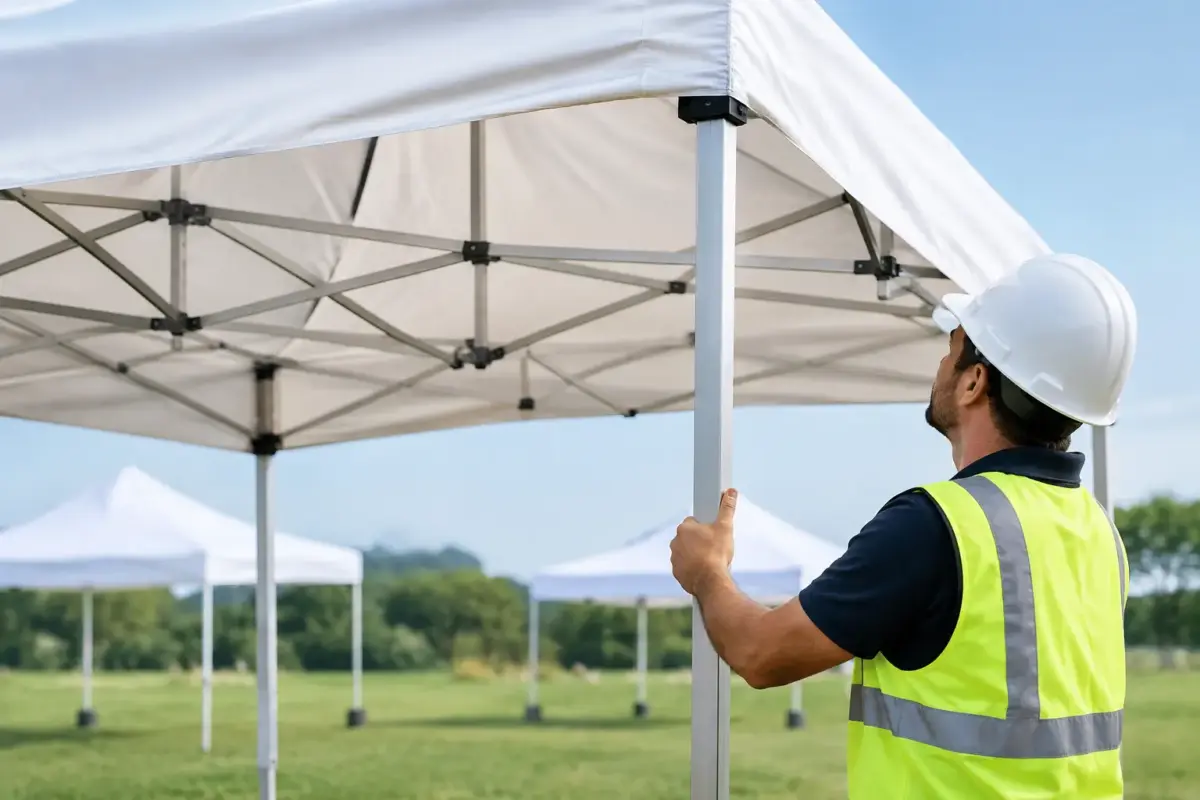
A pop-up canopy can look rock-solid in calm conditions, then become the highest-risk item on site when a gust cuts between buildings or a storm front rolls across the oval. This canopy load rating guide explains what the numbers really mean, what they do not mean, and how to specify a commercial shelter that can keep performing at Australian markets, sporting events, activations and worksites.
The short version: a strong frame matters, but frame strength alone is not a safety plan. Your canopy needs an appropriate wind rating, correctly installed ballast, suitable tie-downs, a sound site assessment and an operator prepared to pack down when conditions exceed the equipment’s limits.
What a canopy load rating actually tells you
A canopy load rating describes the load a structure or component is designed to carry or withstand under defined conditions. Depending on the manufacturer and product, this may relate to wind pressure, roof loading, frame loading or the strength of individual parts such as legs, trusses, connectors and anchor points.
For event buyers, the term is often used loosely. A frame with thick leg profiles and reinforced joints may have excellent structural capacity, yet that does not automatically mean the whole installed marquee is safe in strong wind. The roof fabric creates a large surface area. Once wind gets underneath it, uplift forces can be severe.
Always check what a stated rating applies to. Ask whether it is a wind speed rating for the complete structure, a component specification, a test result, or a general product claim. Just as importantly, check the conditions attached to it: roof fitted or removed, walls installed or open, ballast used, pegs used, ground type and whether the canopy is attended.
Wind rating versus load rating
Wind rating is the figure most customers look for, and rightly so. It indicates the wind conditions a canopy may be engineered to tolerate when set up exactly as specified. Load rating is broader. It may cover wind-related forces but can also refer to downward loads, such as rainwater accumulation, or the capacity of the frame itself.
These figures should never be treated as a licence to leave a gazebo up through whatever weather arrives. Wind is not constant across a site. A 40 km/h forecast can produce sharper local gusts around grandstands, car parks, laneways, waterfronts and open paddocks. Terrain, nearby buildings and passing vehicles can all change how wind hits the roof.
Selected commercial 3 x 3 m structures can be rated up to 100 km/h under prescribed test and installation conditions. That is a serious engineering benchmark, not a promise that any canopy can remain erected in 100 km/h weather with no action from the operator. Follow the product instructions, use the required restraint system and make conservative decisions as conditions build.
The roof changes the equation
A roof catches wind. Side walls, awnings and banners can increase the pressure significantly, especially when wind is striking a closed wall. They are valuable for shade, rain protection and branding, but they require more disciplined anchoring and active monitoring.
Rain is another concern. Water pooling in a sagging roof adds downward weight quickly and can damage fabric, trusses and joints. Keep the roof tensioned, maintain adequate pitch and clear pooled water safely before it becomes a structural problem. Do not climb on the frame or attempt to hold a lifting canopy down by hand.
Start with the frame, not the printed roof
Custom printing makes your site impossible to miss. The frame is what decides whether that branded asset will deliver season after season. For recurring commercial use, look beyond a low entry price and compare the specifications that control performance: leg profile, wall thickness, frame material, truss design, connector construction and spare-parts support.
A heavy-duty aluminium frame can provide a strong balance of transportability and corrosion resistance. Steel options may suit particular applications where mass and budget are priorities, but they also need appropriate protective finishes and handling. There is no single best material for every job. A weekly market stall, a council event program and a race-team paddock setup have different transport, setup and exposure requirements.
Commercial-grade frames generally use reinforced profiles and more substantial connectors than occasional-use units. That extra engineering is worthwhile when your shelter is deployed repeatedly, carries premium custom graphics, or needs to perform on hardstand and exposed event sites.
Before ordering, match the footprint to the operational task. A 3 x 3 m gazebo is a versatile choice for sampling, registrations, first aid, club merchandise and market trading. Larger canopies create more covered area but also present more wind surface. As the roof gets bigger, the restraint plan must get more serious.
Ballast and tie-downs are part of the rating
A canopy is only as secure as its connection to the ground. This is where otherwise capable structures are often let down. A heavy-duty frame supplied without sufficient weights, pegs or straps is not ready for an outdoor event.
On grass, compacted soil or suitable natural ground, pegging can provide a highly effective anchor when the peg length, angle and soil conditions are right. On concrete, asphalt or indoor hard floors, use purpose-built leg weights or ballast systems designed to sit securely at each leg. Sandbags can be useful where appropriate, but assess their actual filled weight, placement and ability to stay put in wet or windy conditions.
Tie-down straps add a second line of restraint by connecting the canopy to rated anchors or ground pegs. They should be tensioned correctly without distorting the frame. Never tie a structure to an unsuitable object just because it is nearby. Light fencing, moveable furniture, signage frames and vehicle components are not reliable anchor points.
Your setup should account for more than the minimum kit. If the forecast is unsettled, the site is exposed or walls are being used, increase restraint where the manufacturer allows it. It is cheaper to transport extra ballast in the ute than to replace a damaged marquee, stock display or vehicle.
A practical canopy load rating checklist
Before your next event, confirm the canopy package answers these questions:
- What wind or load rating is stated, and what test or installation conditions apply?
- What frame material, leg profile and connector design are included?
- Is the rating for the exact size and configuration you are buying?
- How much ballast is required per leg for your surface and expected conditions?
- Are pegs, ratchet straps and tie-down points included, or do they need to be added?
- Will walls, awnings, flags or banners change the wind load?
- Is the ground suitable for anchoring, and are there underground services to avoid?
- Who is responsible for weather monitoring and the decision to lower or pack down?
This is not paperwork for paperwork’s sake. It prevents the common mistake of buying a premium roof and frame, then trying to secure it with whatever weights happen to be in the boot on event morning.
Set up for the site you actually have
Site conditions should drive the final setup. At a suburban market, nearby shops may create sudden wind tunnels. At a regional sports ground, there may be no protection at all. Coastal activations bring salt air and gusty changes, while trade shows may prohibit pegs and require a neat, low-profile ballast arrangement.
Position the canopy with its strongest side facing the prevailing wind where practical, while keeping entries safe and accessible. Check overhead hazards, uneven ground, drainage paths and public movement around the legs. Keep weighted legs clear of trip hazards and use appropriate barriers or layout planning where crowds are expected.
Assign one person to monitor the weather. They should know the trigger point for stopping trade, removing side walls, lowering the canopy or packing it down completely. Waiting until the roof is lifting is too late. A professional operation protects staff, visitors and equipment by acting early.
Buy a system, not just a shelter
For businesses that attend recurring events, the best value comes from a canopy system that can be repaired, reconfigured and branded as campaigns change. Replacement roofs and walls, spare parts, wheely bags, weights and compatible tie-down equipment extend the life of the initial investment.
Mountain Shade packages heavy-duty frames, printed roofs and restraint accessories to suit commercial use, so buyers can build around the way they operate rather than settle for a generic bundle. A free visual mock-up also helps marketing teams see how their branding will work across the roof, walls and event site before production begins.
Choose the strongest setup your exposure, frequency of use and brand asset justify. Then give it the ballast, anchoring and operator attention it needs. That is how a canopy becomes dependable event infrastructure, not a disposable piece of event gear.
