
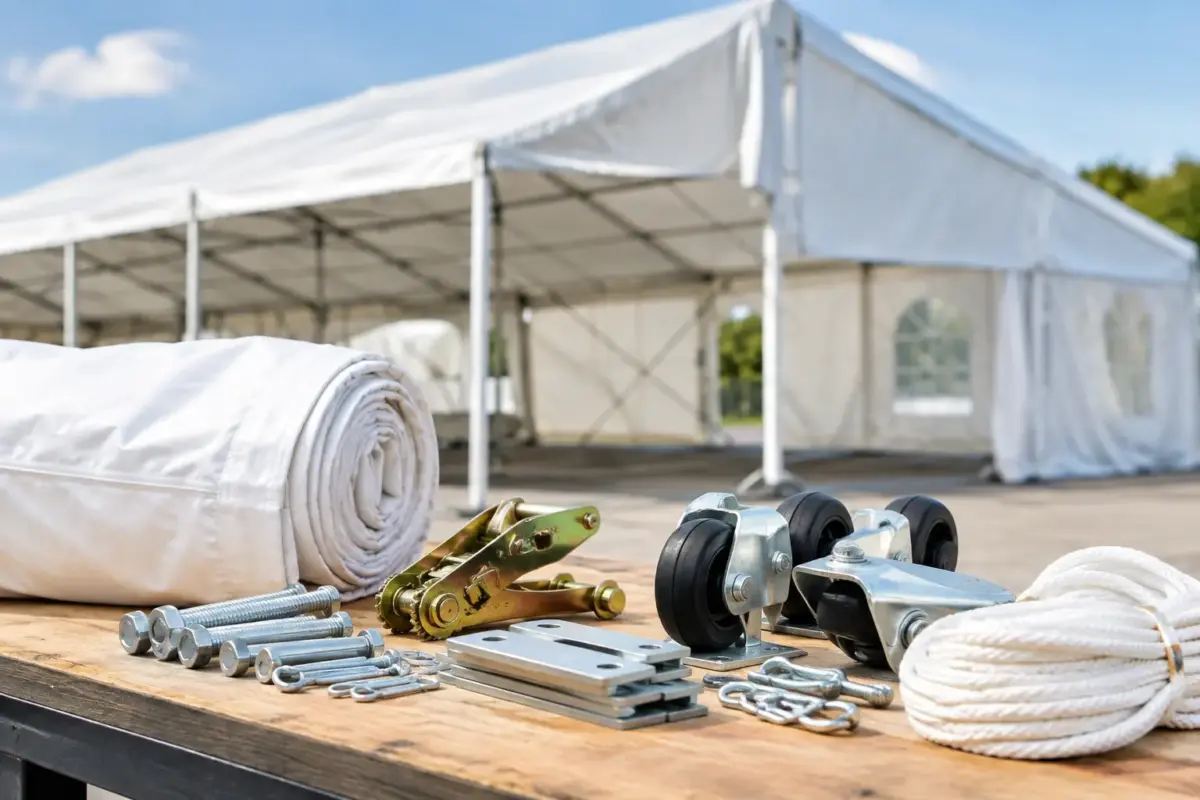
A busy event day is the wrong time to discover a cracked roof truss, missing leg pin or tired canopy. The right marquee spare parts turn a small repair into a quick fix, keeping your shelter safe, presentable and ready to work at the next market, sports carnival, activation or trade event.
For Australian operators, replacement parts are not an afterthought. They protect the value of a commercial marquee that may travel hundreds of kilometres in a ute, be packed down every weekend, or stand through heat, rain and gusty conditions. A well-maintained frame and clean printed roof keep your team covered and your branding looking sharp.
Why marquee spare parts are worth having on hand
Folding marquees are built for repeated setup, but repeated use places pressure on moving joints, leg sections, fabric connections and hardware. Market operators may open and close a 3 x 3 m gazebo several times each week. Sporting clubs shift shelters between grounds. Councils and event teams deploy multiple structures across different sites. Wear is normal. Being forced to replace an entire marquee because one component has failed is not.
Keeping compatible spares available can reduce downtime and help you make a sensible repair before minor damage spreads. A worn foot can allow a leg to move on hard ground. A damaged connector can affect how the roof frame opens and locks. A small tear left unattended can grow when a roof is tensioned or exposed to wind.
It also protects the visual side of your investment. A faded, torn or outdated roof says the wrong thing about a business or organisation, even when the frame underneath is sound. Replacing the canopy or walls can be a practical way to refresh branding, update sponsors or restore a professional event presence without buying a complete new structure.
Match spare parts to your exact marquee frame
The most important rule is simple: marquee parts are not universal. A component that looks close enough may have different hole spacing, tube dimensions, roof-truss geometry or locking design. Fitting an incompatible part can make setup difficult and compromise the structure.
Before ordering, identify the marquee size, frame grade and the location of the part. Measure the outside profile of the leg or truss if required, and take clear photos of the connection point, including pins, bolts and holes. Note whether the damaged piece sits on a corner, along a side, in the centre of the roof frame or at the base of a leg.
This matters particularly when comparing aluminium and steel frames. Commercial-grade aluminium systems may use different wall thicknesses, connector designs and leg profiles to steel models. Even marquees with the same footprint can have different internal frame layouts. A 3 x 3 m unit is not automatically compatible with every other 3 x 3 m unit.
If the marquee has been custom printed, record the roof and wall dimensions as well as how each panel attaches. Velcro positions, wall heights, gutter sections and awning fittings all need to align. The quickest path to the right replacement is accurate information from the start.
Frame components that deserve close attention
Frame parts carry the load of the roof and transfer movement through the structure. Check them after a windy event, an awkward pack-down or any incident where the marquee has been knocked or dragged.
Common replacement needs include legs, roof trusses, centre poles, corner connectors, sliding brackets, feet, pull-pin assemblies and bolts. A bent section is not always safe to straighten and reuse. Metal fatigue, distorted holes and a connector that no longer locks cleanly are warning signs that replacement is the better option.
Do not ignore a single damaged component because the marquee still appears to stand. Folding frames work as a system. One failed joint can place extra stress on surrounding trusses, prevent even roof tension and make the structure harder to close into its wheely bag.
Roofs, walls and branded fabric replacements
Fabric components face a different kind of punishment: UV exposure, dust, rain, tree sap, rubbing during transport and constant tension at setup. A replacement roof is often the right answer when the frame remains in good condition but the canopy is no longer weatherproof or visually up to standard.
For promotional teams, this is also an opportunity. New artwork, a campaign change, revised logo or sponsor update does not always require a new frame. A fresh dye-sublimation printed roof, wall or valance can put a current, high-impact brand message back in front of customers.
Choose fabric replacements that suit the work being done. A basic recreational shelter has different demands from a commercial market marquee or a touring race-team setup. Look at material weight, print finish, wall configuration and attachment method. If your operation relies on wet-weather trading, confirm how walls, gutters and door sections work together before ordering individual pieces.
Do not treat tie-down gear as an optional extra
The frame may be heavy duty, but it still needs proper anchoring. Weights, pegs, ropes and ratchet tie-downs are working parts of the marquee system, not accessories to leave in the boot until the weather turns.
Australian conditions can change quickly. A calm morning can become a gusty afternoon, particularly on open ovals, waterfront sites, car parks and regional showgrounds. The correct tie-down method depends on the surface, venue requirements and expected conditions. Pegs can be effective on suitable grass or soil. On concrete, bitumen and indoor floors, purpose-built weights are generally the practical solution.
Inspect straps for fraying, damaged hooks and worn ratchet mechanisms. Replace bent pegs and cracked weight housings. Check that every leg can be secured properly, rather than anchoring only the windward side. No spare part can make a marquee safe to use in conditions beyond its rating or when severe weather is approaching. If conditions become unsafe, pack down early.
Build a practical event-day spares kit
For organisations that use marquees regularly, a small labelled spares kit saves time and prevents the scramble for mismatched hardware. Keep it with the frame rather than in a separate storeroom where it is forgotten.
A useful kit may include:
- compatible pins, clips, bolts and nuts for your frame
- a spare foot or two for high-use legs
- approved tie-down straps, pegs and repairable hardware
- fabric repair tape for a temporary, minor field repair
- a copy of the marquee model, size and parts details.
The aim is not to carry a second marquee in pieces. It is to solve the common, fixable problems that can hold up a setup crew. For multi-site event teams, keeping a parts kit in each trailer or vehicle is often more useful than storing everything at head office.
When to repair, replace or upgrade
Repair makes sense when the damage is isolated and the remaining structure is sound. Replacing a foot, pin, truss, roof or wall can extend the life of a quality commercial marquee considerably. It is a cost-effective decision when the frame still opens smoothly, locks correctly and suits your current operational needs.
Replacement is the better call when damage affects several load-bearing parts, the frame is repeatedly jamming, or the roof and walls have reached the end of their working life. If your team has outgrown a lighter unit, an upgrade may cost less over time than ongoing repairs and missed event opportunities.
Consider how the marquee is actually used. A school running two fundraisers a year has different requirements from a market business trading every Saturday. A promotional agency travelling nationally needs pack-down speed and dependable wheely bags. A council or medical team may need greater shelter capacity, stronger frame engineering and a repeatable setup process. Buy parts and upgrades for the job, not just the footprint.
Mountain Shade can help identify compatible components for commercial marquee systems, including replacement roofs, walls, frame parts and tie-down equipment. Providing photos and frame details helps get the right part into your hands faster.
A marquee earns its keep when it can be deployed without fuss, stand securely and make your organisation look prepared. Check the parts that carry the pressure before the next event, then keep the right replacements ready for when they are needed.
