
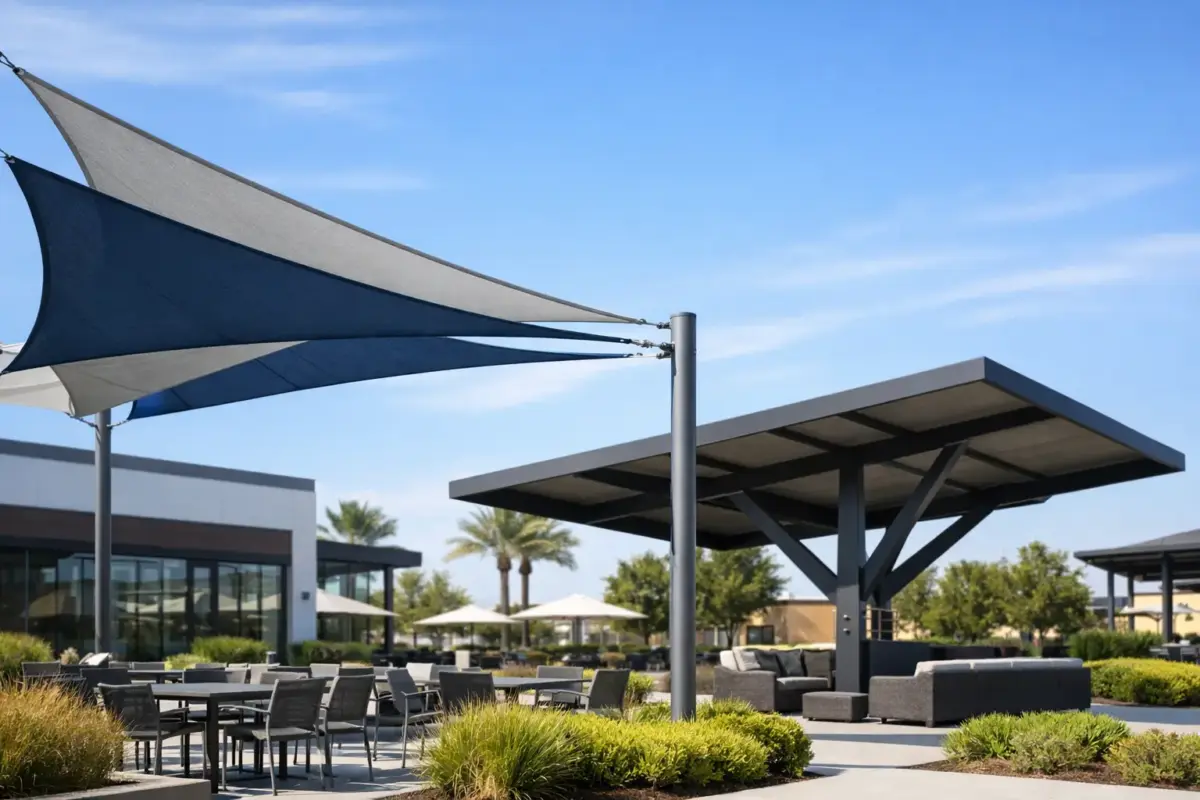
A wet oval, a blazing carpark or a windy foreshore can expose a flimsy shelter in minutes. Commercial shade structures need to do more than provide a patch of cover. They need to protect staff, customers and equipment, create a professional branded presence and keep performing through repeated setups across Australian events, worksites and community programs.
For councils, sporting clubs, market operators, trade teams and marketing managers, buying the right structure is not a minor event expense. It is a long-term operational asset. The right frame, canopy fabric, print finish and tie-down system can keep your organisation visible and working comfortably outdoors for years.
What Commercial Shade Structures Need to Do
A commercial structure has a tougher brief than a backyard gazebo. It may be packed into a ute or wheely bag every week, opened on hard concrete one day and pegged into a sports field the next. It may need to cover a registration desk, first-aid station, product display, timing crew or outdoor sales team. It also needs to look sharp in photos, in person and from across a busy event site.
That is why the frame matters as much as the roof. Commercial-grade aluminium and steel frames are designed for regular use, with reinforced legs, stronger truss systems and durable connector points. A cheap light-duty structure can look acceptable on day one, but loose joints, bent legs and torn fabric quickly turn it into a liability and a poor reflection of your brand.
There is also a safety consideration. No portable marquee should be treated as permanent infrastructure or left unattended in deteriorating weather. But a properly specified structure, matched with suitable weights, pegs and tie-downs, gives your team a far stronger starting point when conditions change.
Start With the Job, Not the Price Tag
The best size and specification depend on what happens underneath the canopy. A 3 x 3 m structure is a practical workhorse for market stalls, sign-on desks, sampling activations and small trade displays. It is compact enough to transport and quick enough for one or two people to deploy, while still creating a useful branded footprint.
Larger formats suit larger operational needs. A 3 x 4.5 m or 3 x 6 m marquee gives you more room for stock, seating, treatment tables, multiple staff or customer queues. The trade-off is clear: extra coverage means more weight, a larger packed size and a greater need for careful anchoring. Bigger is not automatically better if your crew is setting up on tight footpaths, in indoor exhibition bays or on sites with restricted access.
Before choosing a structure, map the actual space required. Allow for tables, chairs, display stands, eskies, stock tubs and people moving through the area. Then consider where the sun will sit during your operating hours. A roof alone may not stop low afternoon glare or sideways rain, which is where printed sidewalls, awnings and gutters between adjoining marquees can make the setup far more effective.
Frame Strength Is Where Value Shows Up
The frame is the working engine of a pop-up marquee. Look beyond broad labels such as heavy duty and ask for the details: leg profile, wall thickness, truss design, materials, connector construction and the accessories included with the bundle.
A commercial frame should open smoothly, lock securely and hold its shape under normal event use. Reinforced aluminium frames provide a strong balance of durability, corrosion resistance and manageable transport weight. Steel options can be useful where added mass and strength are the priority, although they may require more effort to move and set up.
Wind ratings should also be read carefully. A stated rating is only meaningful when the structure is erected correctly and secured with the prescribed tie-down equipment. Selected 3 x 3 m commercial structures can be rated for winds up to 100 km/h under defined conditions, but that does not mean every size, frame or site has the same capability. Exposed coastal locations, hardstands, uneven ground and gusty weather all demand a more conservative approach.
For Australian operators, accessories are not an afterthought. Quality base weights, ratchet straps, pegs, ropes and tie-down points should be planned as part of the original purchase. If your team regularly works on concrete, weights are essential. If you work on grass or soil, use suitable pegs as well as additional restraint where conditions require it. Do not wait until the wind picks up to work out what is missing from the kit.
Make the Canopy Work Harder for Your Brand
A commercial shelter is often the biggest visual asset on site. A plain roof may provide shade, but a custom-printed marquee tells people where to go, who is operating and why they should stop.
Dye-sublimation printing gives logos, campaign colours, sponsors and key messages a clean, high-impact finish across the roof and walls. It is especially valuable for businesses that attend recurring markets, field days, trade shows, race meetings, school events or sporting rounds. Instead of rebuilding brand recognition at every event, you arrive with a consistent, recognisable presence.
Good print design is not about squeezing every service, phone number and social handle onto the canopy. From a distance, people need to identify your organisation quickly. Use a strong logo, clear colour blocks and one simple message. Put detailed service information where customers will stand close enough to read it, such as a sidewall, banner, table cover or media wall.
Think about the viewing angles too. A roof valance is visible from a distance, while sidewalls become valuable when traffic approaches from particular directions. Full walls provide extra weather protection and create a clean backstage area for stock or staff. Half walls can define a queue or sales counter without closing off the space.
Build a Setup That Suits Real Conditions
The strongest commercial shade structures are only as capable as the setup behind them. Assigning one person to take responsibility for site assessment and anchoring avoids the common problem of everybody assuming somebody else has done it.
Check the surface, overhead clearance and likely wind direction before the frame comes out of its bag. Keep the canopy clear of power lines, unstable fencing, tree limbs and vehicle paths. Fully extend and lock the frame on level ground where possible, then secure it before fitting walls or display gear that can catch wind.
Your operating plan should include what happens if the weather turns. Staff need to know when to remove sidewalls, lower the structure or pack down entirely. A branded marquee is valuable, but it is never worth risking people, property or the frame by leaving it up in unsafe conditions.
This is also where spare-parts availability makes a genuine commercial difference. Roofs, walls, frame components, carry bags and tie-down gear experience wear over time. Being able to replace a specific part can extend the life of the whole system and protect the original investment, rather than forcing a complete replacement after one damaged component.
Choose a Supplier That Can Support the Full Package
A commercial setup often works best as a coordinated package rather than a single canopy. Your requirement might include a printed marquee, sidewalls, weights, a wheely bag, flags for long-range visibility and a table cover to finish the customer-facing area. A portable office, inflatable tent or semi-permanent pergola solution may be a better fit for longer-term operations.
Ask whether the supplier can provide clear frame specifications, printing support, replacement components and practical advice on accessories. Free visual mock-ups are particularly useful before committing to a custom print run, as they let your team confirm logo scale, colours and messaging before production begins.
Mountain Shade works with Australian organisations that need this equipment to look better and work harder, from a single branded market marquee through to multi-structure event packages. The aim is straightforward: give your team shelter that can take regular use while making your brand impossible to miss.
The structure you choose will be seen by customers, staff, sponsors and the wider community long before they speak to anyone under it. Specify it like the working asset it is, secure it properly and give your organisation a base that is ready for the next event, whatever the forecast brings.
