
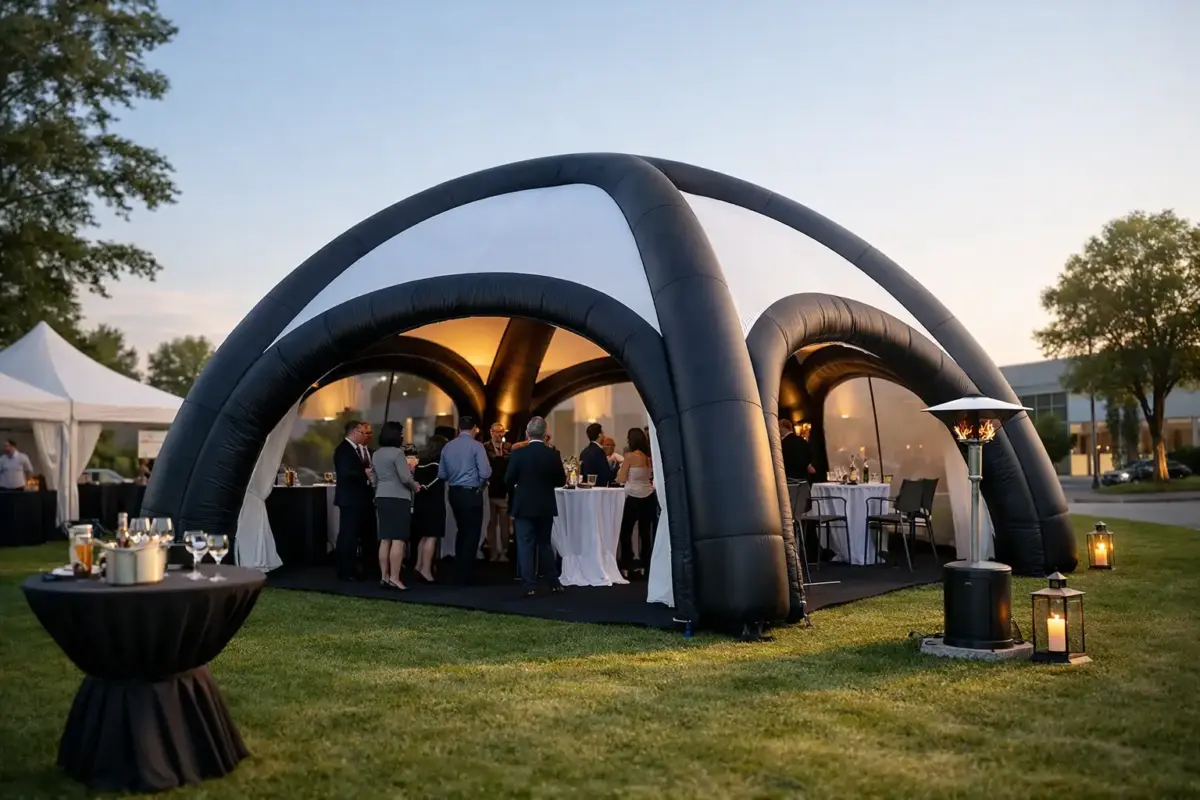
A busy event site gives you seconds to be noticed. An inflatable tent for events puts a high-impact branded structure in front of the crowd without the slow build, loose components and frame-by-frame setup of conventional shelter. For activations, sporting events, trade days and council programs, that means your team can get on site, inflate, secure and start working.
The right inflatable structure does more than look different. It creates a defined home base for staff, product displays, registrations, sampling or recovery areas. It needs to look sharp from a distance, stand up to repeated use and be properly anchored for the conditions on the day. That is where commercial-grade specification matters.
Why choose an inflatable tent for events?
Inflatable tents are built around air-filled beams rather than a conventional folding or pole frame. An electric pump inflates the structure quickly, creating a clean, modern profile with wide openings and plenty of visible printable area. Once inflated and secured, the tent is ready for branding, customer engagement and practical shelter.
This format is especially effective when your organisation needs to make an immediate visual statement. A printed canopy roof can get lost among rows of standard marquees. An inflatable tent has a distinctive silhouette, making it easier for visitors to find your team at a crowded festival, race precinct, school oval or trade show forecourt.
Setup efficiency is another major advantage. There are no metal scissor frames to extend and no collection of poles to match, connect and store. That can make a real difference for small event teams, regional roadshows and businesses working from a ute or compact event trailer. The tent still needs correct anchoring and a sensible site plan, but the core structure is fast to establish.
There is a trade-off. A traditional heavy-duty marquee may be the better choice where maximum wind performance, a very rigid frame or frequent all-day outdoor trading is the priority. Inflatable tents excel where quick deployment, standout branding and a polished activation footprint are the brief. The best choice depends on your event calendar, site conditions and how the structure will be used.
What separates a commercial inflatable tent from a novelty shelter
Not every inflatable structure is made for repeated professional use. Cheap promotional inflatables may suit a one-off indoor display, but they often fall short when they are packed, transported, inflated and exposed to Australian event conditions week after week.
Start with the fabric and construction. Commercial inflatable tents should use hard-wearing, weather-resistant material with reinforced seams and quality air-beam construction. The valves, zips, attachment points and connection areas are just as important as the roof fabric. These are the parts that take the pressure during setup, pack-down and regular transport.
Then consider the footprint. A tent that is too small becomes cramped once you add staff, stock, counters and visitors. One that is oversized can be difficult to position on a tight exhibition site or beside a sporting field. Think about the actual job it needs to do. A product sampling team may need open access on two sides. A first-aid or information point may benefit from walls and a more enclosed layout. A race team may need room for equipment, riders and a workbench.
Branding quality deserves the same attention as structure. Full-colour dye-sublimation printing gives logos, campaign graphics and photographic artwork far more impact than a basic sticker or temporary banner. It also turns the structure into a reusable brand asset. If you attend ten events a year, a properly printed inflatable tent keeps delivering exposure long after the first activation.
Design for the view from 20 metres away
Event branding often fails because it tries to say too much. Your roof, walls or side panels should lead with the logo, key colours and one clear message. Visitors need to recognise your organisation before they reach the tent.
Use large graphic elements and strong contrast. Keep detailed copy, QR codes and product information at eye level on banners, counters or internal displays, where people have time to read them. On the inflatable tent itself, clarity beats clutter every time.
A free visual mock-up is valuable before production. It lets you check logo placement, artwork scale and how the design reads across curved surfaces, doors and wall sections. It is far easier to fix a crowded layout on screen than after the tent has been printed.
Site safety is part of the setup, not an accessory
An inflatable tent is not a set-and-forget structure. Australian weather can change quickly, particularly on open ovals, foreshore sites and exposed car parks. Even a light-looking event structure can become hazardous if it is not correctly restrained.
Every installation should begin with a site check. Identify wind exposure, ground type, overhead hazards, vehicle access and pedestrian flow. On grass or soil, suitable pegs and tie-downs may be appropriate. On hard surfaces, use correctly sized weights and approved restraint points. Never rely on a few light sandbags or assume the tent is safe because it feels stable in calm conditions.
Your crew should understand the operating limits set by the manufacturer and event organiser. If wind increases, conditions deteriorate or a severe weather warning is issued, act early. Remove loose displays, close or remove walls where appropriate, deflate the structure if required and follow the venue emergency plan. A strong-looking setup is no substitute for good judgement.
It also pays to protect the public-facing edges of the site. Keep pumps, leads, storage bags and spare equipment out of walkways. Use cable covers where electrical leads cross traffic areas, and make sure entrances remain clear for prams, wheelchairs and busy foot traffic. A tidy activation feels more professional and is easier to manage.
Build the tent into a complete event package
The inflatable tent is the hero structure, but it works harder when the surrounding equipment supports the same job. A branded table cover gives staff a clean service point. Feather flags can pull attention from the footpath or entry gate. A media wall creates a useful backdrop for photos, presentations and sponsor recognition.
For outdoor activations, plan the layout as a working space rather than just a display. Place your main customer interaction point near the open side. Keep stock, personal items and pump equipment toward the rear. If your team is collecting leads, leave enough space for a queue without blocking the entrance. For sports clubs and race teams, separate public-facing branding from equipment storage so the area stays organised when the pressure is on.
This is also where buying commercial equipment pays off. Replacement parts, spare walls, weights, bags and tie-down systems extend the useful life of your event kit. Rather than replacing an entire structure after a damaged accessory or a change in campaign branding, you can maintain and adapt the asset over time.
Questions to answer before ordering
Before choosing an inflatable tent, be clear on your most common use case. How many staff and visitors need to fit inside? Will you use it mainly outdoors, indoors or across both? Do you need printed walls, open sides or a fully enclosed space? How often will it travel, and who will be responsible for setup?
Also ask what is included. A complete package should account for the pump, carry bag, anchoring equipment, repair kit and any wall or door options required for your setup. Check pack-down size and weight as well. Fast inflation is useful, but the tent still needs to fit your vehicle, storage space and event logistics.
For organisations purchasing several structures, consistency matters. Matching tents, flags, table covers and banners create a professional event presence across multiple teams, locations and dates. Mountain Shade can help shape a package around the way your crew actually works, rather than forcing a generic bundle onto every event.
A well-specified inflatable tent should make the day easier from bump-in to pack-down, while giving your brand a presence people can spot across the site. Choose the size, print treatment and anchoring system for the conditions you face most often, and it will keep earning its place at every event on the calendar.
