
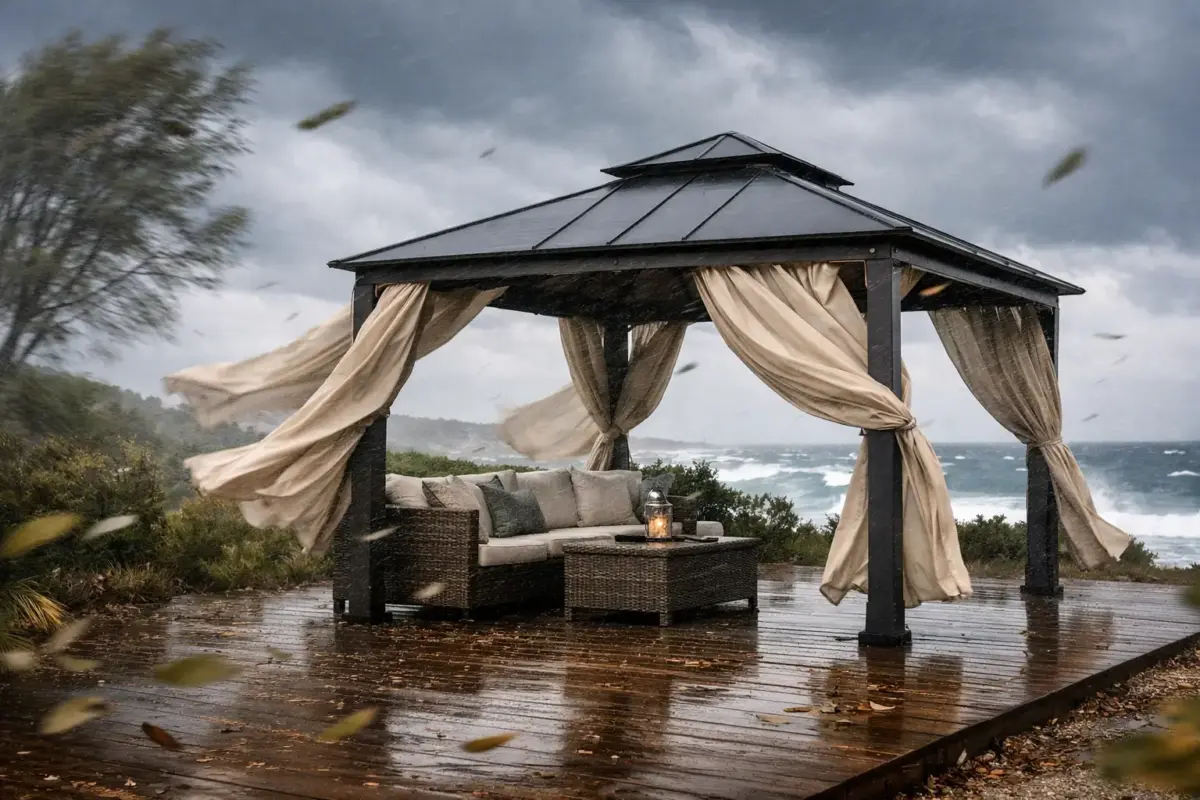
A gazebo that looks steady in a calm car park can become a serious risk within minutes when a southerly change rolls through. So, what wind speed can a gazebo withstand? The honest answer is not one universal number. It depends on the frame class, roof size, fabric tension, anchoring system, ground conditions and whether the structure is set up exactly as it was designed to be.
For Australian markets, sporting events, activations and work sites, wind performance should be treated as a system – not a number printed beside a product photo. A heavy-duty commercial gazebo with correctly fitted tie-downs and weights is built for a very different job from a light recreational unit with four loose pegs.
What wind speed can a gazebo withstand?
Most entry-level pop-up gazebos are intended for fair-weather use and should be packed down well before winds become challenging. They may appear usable in light breezes, but a large roof acts like a sail. Once gusts hit, the pressure on joints, legs and fabric rises quickly.
Commercial-grade pop-up gazebos are engineered for higher loads. Selected 3 x 3 m heavy-duty structures can carry wind ratings up to 100 km/h when they are fully secured with the specified tie-down and anchoring equipment, set up on suitable ground and used in accordance with their operating requirements. That rating does not mean the gazebo should stay up regardless of the forecast. It is a measure of tested structural capability under defined conditions, not permission to ignore severe-weather warnings.
A practical rule is simple: if wind is increasing, gusty, shifting direction or strong enough to move unsecured equipment nearby, assess the site immediately. Do not wait for a leg to lift or a roof to start pumping. Lowering or packing down early protects people, stock, signage and the structure itself.
Wind ratings are only meaningful when the whole system is in place
The frame is the starting point, but it is not the whole story. A heavy-duty aluminium or steel frame with reinforced connectors and substantial leg profiles provides the strength needed to resist movement and distortion. Yet even the strongest frame cannot perform properly if it is sitting unweighted on hardstand or tied down with light-duty straps.
Wind ratings assume a complete setup. That generally means the roof is fitted correctly and tensioned, legs are locked at the intended height, feet are positioned square, and each corner is anchored with appropriate weights, pegs or tie-downs. It also means avoiding improvised solutions such as tying one leg to a plastic table, placing a single sandbag in the middle, or relying on nearby fencing that may fail first.
A gazebo also needs to be assessed as part of its display package. Side walls, awnings, banners and flags create additional surface area. They can improve shelter and brand visibility, but they also catch wind. A fully walled marquee on an exposed oval faces very different loads from an open-sided gazebo tucked beside a building.
Gusts matter more than the average wind speed
The weather report may show a moderate average wind speed, but gusts are usually what cause trouble. A sudden gust can strike from a different direction, get funnelled between buildings or roll across an open reserve with no warning. This is why event teams should monitor live conditions rather than rely solely on the morning forecast.
Coastal sites, hilltops, waterfronts, wide car parks and open sporting grounds deserve extra caution. Wind accelerates around corners, through laneways and over temporary barriers. If the site feels exposed, build your setup plan around the likelihood of gusts rather than the best-case conditions.
Frame grade changes the equation
Not all gazebos are built for recurring commercial use. A light frame may suit the occasional backyard gathering, but it is not the right tool for a market operator who trades every weekend, a council running community events or a race team working in variable conditions.
Commercial structures use stronger leg profiles, reinforced roof trusses, more substantial brackets and engineered connectors to manage repeated setup, transport and outdoor exposure. These details matter because wind load travels through every component. A weak connector or thin leg can become the failure point, even if the canopy fabric appears intact.
The right choice is also influenced by size. A 3 x 3 m gazebo is easier to secure and manage than a larger footprint, while 3 x 6 m and 4 x 8 m structures provide more usable space but present a much bigger sail area. Larger marquees need a deliberate anchoring plan, sufficient crew and a realistic decision point for pack-down if conditions deteriorate.
Buying a heavier frame is not about overcapitalising. For organisations that attend markets, trade days, sporting carnivals and regional events, it is about protecting a reusable business asset. A well-built branded gazebo should keep working long after cheaper structures have bent, torn or become difficult to safely operate.
How to anchor a gazebo for real Australian conditions
Anchoring should be planned before the event, not solved after the wind picks up. The best method depends on the surface and the expected conditions.
On grass or natural ground, heavy-duty pegs combined with ratchet tie-downs give the structure a direct connection to the ground. Pegs should be driven at an appropriate angle and checked regularly, particularly where soil is soft, sandy or wet. On hard surfaces, purpose-made gazebo weights are essential. Weight bags, cast weights or water-fill systems need to be sized for the structure, placed at every leg and secured so they cannot shift.
For higher-risk sites, use both leg weights and external tie-downs where practical. The tie-down angle matters: lines should pull outward from the gazebo, creating resistance against lift and sideways movement. Keep them visible and managed so they do not become trip hazards for customers, players or event staff.
There are four habits that prevent many avoidable failures:
- Secure every leg, not just the windward side.
- Use rated straps, ropes, pegs and weights designed for the task.
- Recheck anchors after rain, foot traffic or a change in wind direction.
- Never leave an erected gazebo unattended when conditions are uncertain.
Avoid attaching a gazebo to cars, temporary fencing, bins or other structures that have not been assessed as anchors. If the anchor moves, the gazebo moves with it.
Side walls, printing and accessories need a wind plan
Custom printing turns a gazebo into a high-impact brand asset, making your organisation visible from across a crowded event. It also means the structure is likely to stay up for longer periods, often in busy public spaces. That makes safe installation non-negotiable.
Printed roofs do not inherently make a gazebo unsafe, but correct fit and fabric tension are critical. A loose roof can flap, wear at stress points and transfer uneven load into the frame. Check that the canopy is fully seated at each corner, roof bars are properly engaged and the fabric is not pooling water after rain.
Walls require even more judgement. Adding one wall can block a cool breeze and create a better customer-facing space. Adding several walls can dramatically increase wind pressure. In gusty conditions, consider removing walls on the windward side, opening door panels or packing walls away altogether. The goal is to reduce the sail effect before the frame is under strain.
The same thinking applies to awnings, feather flags, banners and media walls. They should be positioned so they support the site layout without creating a chain reaction if the wind rises. Separate display equipment needs its own correctly rated base or anchor point.
When should you pack a gazebo down?
The safest decision is often made before conditions become severe. Start packing down when anchors begin to loosen, fabric is snapping or lifting, the frame is moving, nearby signs are falling, or gusts are becoming difficult to predict. If a weather warning is issued for your area, follow the event organiser’s emergency plan and do not treat the gazebo as a shelter from severe weather.
Packing down in wind requires control. Remove walls and loose accessories first if it is safe to do so, clear the public area, keep the structure weighted until the roof is lowered, and use enough people to control the frame. Do not attempt to wrestle a large marquee down alone. If conditions are already unsafe, move people away and seek site-management support.
Choose a gazebo rated for the job, then set it up properly
The right gazebo is one that matches your operating reality: the size of your team, the surfaces you work on, the frequency of use, the likely weather and the importance of your brand presentation. For a busy organisation, a commercial frame, quality roof, proper weights and rated tie-down kit are not optional extras. They are what turn an outdoor display into dependable working infrastructure.
Mountain Shade can help match a heavy-duty structure, branded roof and anchoring package to your event program. Before your next setup, check the forecast, inspect every component and give your gazebo the ground connection it needs to stand out for the right reasons.

