
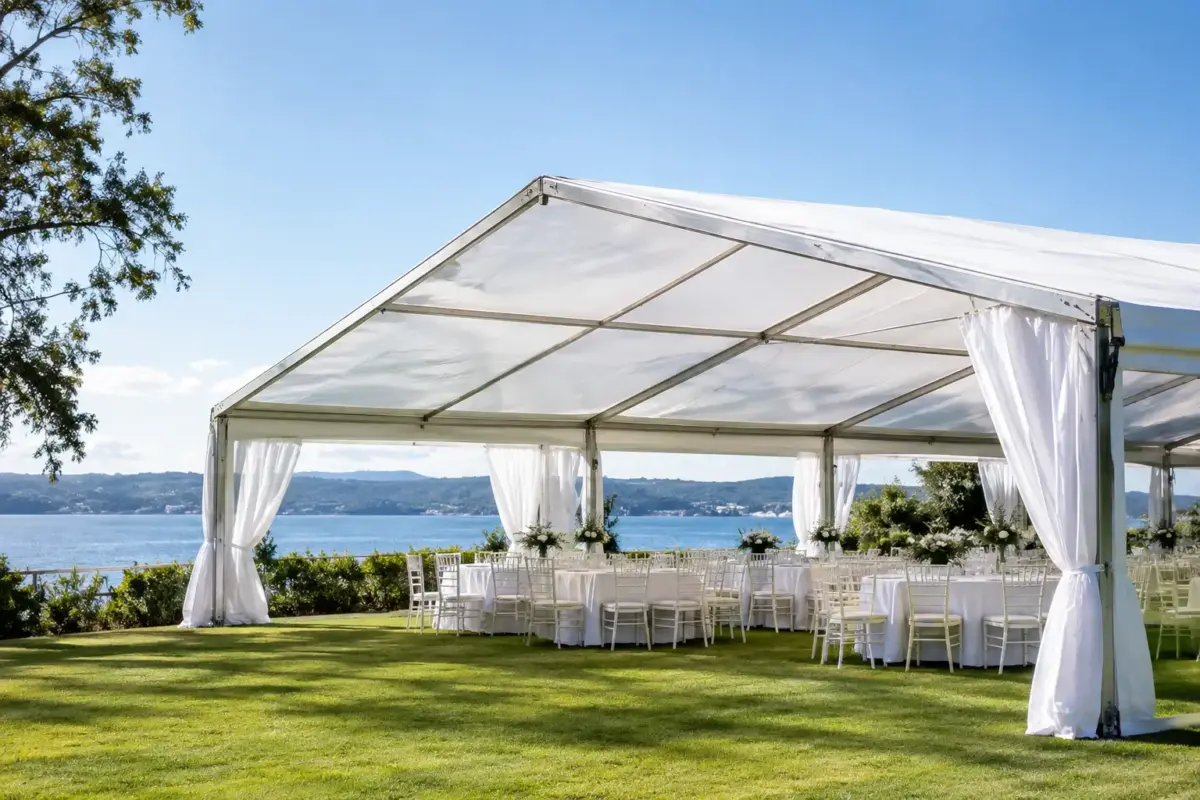
A marquee frame review should start where the real work happens: on wet ovals, windy foreshores, busy market streets and hard-packed event sites. A printed roof might win attention, but the frame carries the load. If it flexes, jams, corrodes or cannot be anchored properly, the whole setup becomes slower, less safe and harder to trust.
For Australian businesses, clubs and event teams, a marquee is not a one-day prop. It is repeat-use infrastructure that needs to travel, set up fast and keep your people, stock and branding protected outdoors. The right frame is the difference between a professional site presence and a costly replacement waiting to happen.
Marquee frame review: what separates commercial gear
The biggest mistake buyers make is treating all folding marquees as equal because they share a similar pop-up shape. They do not. Frame class determines how well a marquee handles repeated opening and closing, transport between events, gusty conditions and the weight of printed walls, awnings or wet fabric.
A lighter recreational frame can suit occasional backyard use where it stays close to home and comes down at the first sign of rough weather. Commercial users need more. Market operators, schools, councils, race teams and promotional crews should look for reinforced construction, dependable locking points and components that can be replaced rather than throwing out an entire structure after one damaged part.
The most useful way to assess a frame is to look beyond the headline size. Ask what the legs are made from, how substantial the profile is, how the trusses join together, and what is supplied to secure it. These details tell you far more than a photo of a marquee standing still on a calm day.
Aluminium versus steel frames
Aluminium is a strong choice for commercial folding marquees because it offers excellent strength without making every pack-up a heavy lift. Quality aluminium frames resist corrosion well, which matters for coastal events, early-morning dew and equipment stored in trailers or sheds between jobs. They are also practical for teams that set up frequently and need a manageable wheely bag load.
Steel frames can be a cost-effective option, particularly where budget is the main driver or the marquee is used less often. The trade-off is weight and ongoing care. Steel needs a suitable protective finish and should be dried before storage to reduce the risk of corrosion. A heavier frame is not automatically a stronger frame. Design, tube profile, connector quality and bracing all matter.
For a business using its shelter every weekend, aluminium usually makes better long-term sense. For occasional use, a well-built steel model may be enough. The key is buying for the frequency and conditions of the work, not just the purchase price.
Leg profiles, trusses and connector points
Legs are the foundation of the structure. Larger, reinforced leg profiles generally provide better stability and a more planted feel when the marquee is open. That is particularly valuable when staff are serving customers beneath the canopy, fitting printed walls or operating in exposed locations.
The frame should open cleanly without excessive wobble. Check the truss system between each leg as well. This scissor-style bracing takes repeated strain during setup and when wind pressure moves through the canopy. Thin sections, loose rivets and lightweight plastic connection points can quickly become weak points on high-use equipment.
Connectors deserve close attention. Metal connector systems are generally better suited to commercial use than basic plastic fittings, especially where the frame is opened and packed away often. You want positive locking mechanisms at the legs, secure roof peak connections and fittings that hold their shape after repeated use.
A good test is to imagine the marquee after 40 market days, not five minutes in a showroom. Will it still open smoothly? Can a damaged leg, roof rail or connector be replaced? Spare-parts availability is a practical advantage that protects your investment and keeps a small issue from taking your setup out of service.
Wind ratings are useful, but anchoring does the work
A stated wind rating gives buyers a useful benchmark, but it is not permission to leave a marquee unattended in wild weather. Ratings apply under specific conditions and rely on the correct installation, tie-down method and site assessment. They should always be read alongside the supplier’s instructions.
Selected commercial 3 x 3 m structures can be rated for winds up to 100 km/h when correctly secured, but that performance depends on more than frame strength. Ground type, wind direction, surrounding buildings, roof configuration and attached walls all change the load on the marquee. A fully enclosed marquee can catch wind very differently from an open canopy.
Every serious outdoor setup needs an anchoring plan. On grass or soil, heavy-duty pegs and ratchet tie-downs may be appropriate. On concrete, bitumen or indoor hard floors, purpose-built weight systems are the better answer. Do not improvise with loose buckets, boxes or whatever happens to be in the ute. Weights need to be suitable for the structure, positioned correctly and secured to the frame.
If conditions worsen, act early. Remove sidewalls if safe to do so, lower or pack down the marquee where required, and follow event-site rules. The strongest commercial frame is still part of a system. The roof, anchors, walls and operator decisions all affect performance.
Match the frame size to the job
A 3 x 3 m marquee is a popular all-round size for market stalls, product sampling, club registrations and trackside support. It provides a useful footprint while remaining straightforward to transport and deploy. But a larger marquee is not simply a bigger version of the same purchase. As span increases, so do wind loads, pack size, setup requirements and the need for serious anchoring.
A 3 x 6 m frame can create an effective activation space, service counter or team shelter, but it may need more than one person for safe, efficient setup. Consider where it will be used, who will erect it and how it will travel. A frame that fits the event site but will not fit in your vehicle, storeroom or operational routine is not the right frame.
Think about accessories before buying as well. Sidewalls improve weather protection and create more branding space. Awnings can extend customer cover. Gutters connect multiple marquees into a larger footprint. Each accessory adds function, but it also changes how the structure handles wind and how much setup time your crew needs.
Printed marquees need a frame worthy of the branding
Custom printing turns a shelter into a highly visible business asset. That makes frame choice even more important. A sagging canopy, crooked legs or worn connectors undermine the visual impact of even the best artwork. Clean roof tension and straight wall lines make logos, colours and messaging look sharper from across the event site.
Mountain Shade positions its commercial marquee range around reinforced engineering, custom print quality and the accessories needed to operate confidently outdoors. That combination matters for organisations running recurring events because the frame and branding need to perform as one system, season after season.
When comparing printed marquee bundles, confirm exactly what is included. A sharp package should make it clear whether it covers the frame, printed roof, walls, wheely bag, pegs, ropes, weights or tie-down equipment. Inclusions affect both the true cost and whether you can use the marquee safely on day one.
The buying decision comes down to repeat use
The right marquee frame is rarely the cheapest one on the page. It is the one that suits your event schedule, withstands the conditions you genuinely work in and can be maintained with replacement components over time. For a business that attends markets every week, a school that runs carnivals, or a council team delivering community activations, that reliability pays back quickly.
Before placing an order, be clear about your size, likely surface types, transport limits, branding requirements and the people responsible for setup. Choose a commercial-grade frame where the job demands it, budget properly for anchoring, and treat every outdoor installation as a safety decision. Your marquee should make your organisation look better while giving your team dependable cover when the weather has other ideas.
