
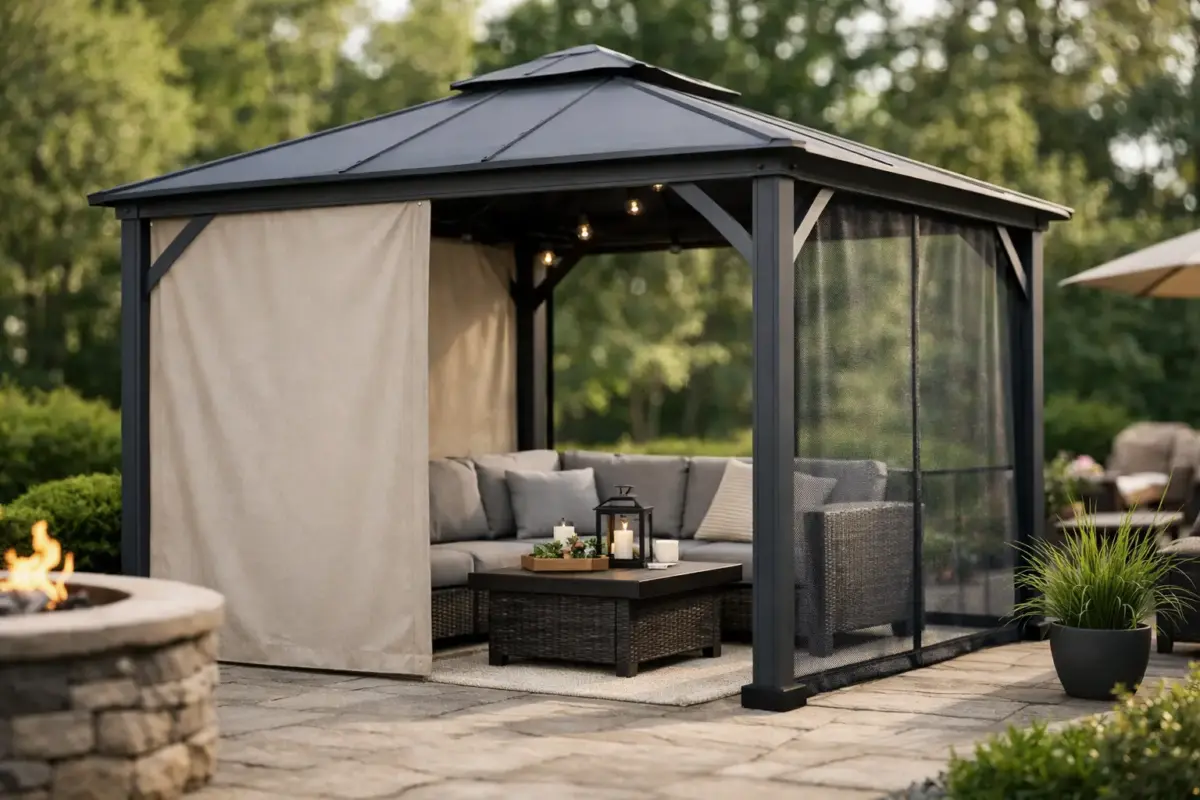
A gazebo roof gets you noticed. The right gazebo side walls turn that open frame into a usable, professional shelter when the weather changes, the crowd builds or the afternoon sun hits hard. For markets, sporting events, council activations and trade sites, they also create valuable space for bold branding that people can see from across the grounds.
The mistake is treating walls as an afterthought. A lightweight wall with poor attachment points can flap, gap and strain under wind. A wall that does not suit the job can make a busy stall feel closed-in or leave staff exposed to rain blowing in sideways. Select the wall layout with the same care you give the frame, roof, weights and tie-downs.
What gazebo side walls need to do
Commercial gazebo side walls have two jobs: improve shelter and improve presentation. The balance between those jobs changes with the event.
At a weekend market, a solid back wall can give your display a clean backdrop, hide stock and protect your point-of-sale area from sun. At a race meeting, a half wall may be the better call, keeping the team area visible while defining the pit space. For a registration desk or mobile service station, three walls can provide privacy and a calmer working environment without blocking the entry.
Australian conditions make material and fit especially important. Wind rarely arrives from one neat direction, and rain does not always fall straight down. A properly fitted wall should attach securely along the roof valance and legs, with overlapping joins or fastening systems that reduce gaps. It should look tidy when the weather is calm and stay controlled when it is not.
Walls are not a substitute for safe anchoring. A side wall increases the area exposed to wind, so every enclosed setup needs appropriate weights and tie-down equipment. If conditions become unsafe, remove walls, lower the structure or pack down according to your site plan and the supplier’s operating guidance.
Choose the right gazebo side wall layout
There is no single best configuration. Start with how people, products and weather move through the space.
Full walls for maximum coverage
A full wall runs from the roof line to the ground and is the practical choice for back-of-house areas, merchandise storage, treatment stations, food preparation zones where permitted, and spaces that need stronger protection from wind and rain. Full walls can also carry large-format custom printing, making them a powerful branding surface.
The trade-off is airflow. On a warm day, four solid walls can trap heat and make access awkward. Many operators use a full back wall and one or two side walls, leaving the front open for customers and ventilation. This arrangement keeps the gazebo welcoming while giving staff meaningful shelter.
Half walls for visibility and crowd control
Half walls define a footprint without shutting people out. They are ideal for sampling stations, information booths, sporting clubs, showrooms and event entrances where staff need a clear line of sight. They also help direct queues and create a more organised presentation than loose bollards or temporary tape.
A half wall does less to stop low-angle rain and gusty wind, but it can be the smarter operational choice for a high-traffic activation. It says where the space begins while allowing your brand, products and people to remain visible.
Door walls and zippered access
If team members need to move stock, equipment or attendees through an enclosed gazebo, a wall with a zippered doorway is worth considering. It is useful for medical response areas, portable workspaces, event offices and secure merchandise zones. A doorway should be positioned around how the site actually operates, not simply where it looks balanced in a product image.
Think about access from the ute, nearby power, pedestrian flow and emergency egress. A door wall at the rear works well when stock is replenished from behind. Side access is often better where the rear of the site backs onto fencing, a building or another exhibitor.
Clear window walls for light and connection
Window walls bring daylight into an enclosed setup and can help staff see approaching customers or changing conditions outside. They suit display areas, registration points and service counters where a full solid wall would feel too closed off.
Clear panels require care in transport and cleaning, as scratches, folds and dust show more readily than on fabric. They are a useful functional addition, but not automatically the right choice for every hard-working event kit.
Material, printing and compatibility matter
The best-looking wall is of little use if it does not fit your gazebo properly. Match walls to the exact roof size, frame type and attachment system. A 3 x 3 m gazebo wall is not a universal item simply because the roof footprint is 3 x 3 m. Leg profiles, valance height, wall rails, velcro placement and connector designs vary between systems.
For regular commercial use, look for heavy-duty fabric designed to handle repeated setup, pack-down and transport. Quality printing matters too. Dye-sublimation printing builds colour into the fabric, giving branded walls a sharper, more durable finish than temporary stick-on graphics. A strong logo, high-contrast colour palette and clear message can turn a plain shelter into an event asset that earns its place every time it goes out.
Do not crowd every panel with copy. A large logo, a short message and clean visual hierarchy are more readable from a distance than a wall full of small text. Consider the viewing angle as well. A back wall may be seen from inside the gazebo, while external side walls can face passing foot traffic, vehicle queues or a playing field.
If you are adding printed walls to an existing gazebo, request a visual mock-up before production. It is far easier to adjust logo placement, colours or panel selection on screen than after the wall has been printed.
Build a wall package around the job
Buying a full set of four walls makes sense for organisations that need flexible coverage across different locations and seasons. You can run one wall at a sunny community event, then use three or four for a wet regional show. For many businesses, however, a back wall and two sides deliver the best day-to-day value.
Think beyond the individual event. A durable gazebo system with replacement walls and spare parts available can be maintained over years of markets, campaigns, sporting seasons and field work. That is a better investment than repeatedly replacing low-grade shelter that looks tired after a handful of weekends.
For a branded setup, consistency counts. Align the roof, gazebo side walls, flags, table covers and banners so customers recognise your organisation before they reach the stand. You do not need every item printed edge to edge. You do need a clear, repeatable visual presence.
Set up safely when walls are fitted
Adding side walls changes how your gazebo behaves outdoors. Before opening the walls, secure the frame on level ground and fit suitable weights or tie-downs to every leg. Check that the roof is tensioned correctly, each wall is fully fastened and zips or joins are not carrying unnecessary strain.
During the event, inspect the setup as conditions change. Wind can funnel between buildings, across ovals and through gaps between marquees. If a wall begins to billow or pull at its fixings, deal with it immediately rather than hoping it settles down. Keep doors and openings managed, remove walls where necessary, and never leave a gazebo erected unattended in deteriorating weather.
Pack walls only when they are clean and dry wherever possible. Folding wet, muddy fabric into a bag encourages staining, mildew and premature wear. A quick wipe-down and a controlled fold protect both the fabric and the printed finish.
Get a setup that earns repeat use
Gazebo side walls should make your team more comfortable, your site safer and your organisation easier to spot. Start with the conditions you face most often, then choose the wall combination that gives you coverage without compromising access or visibility.
For heavy-duty frames, custom-printed wall packages and practical advice on matching accessories, Mountain Shade can help build a shelter system that looks the part and keeps working long after the event wraps up.
