
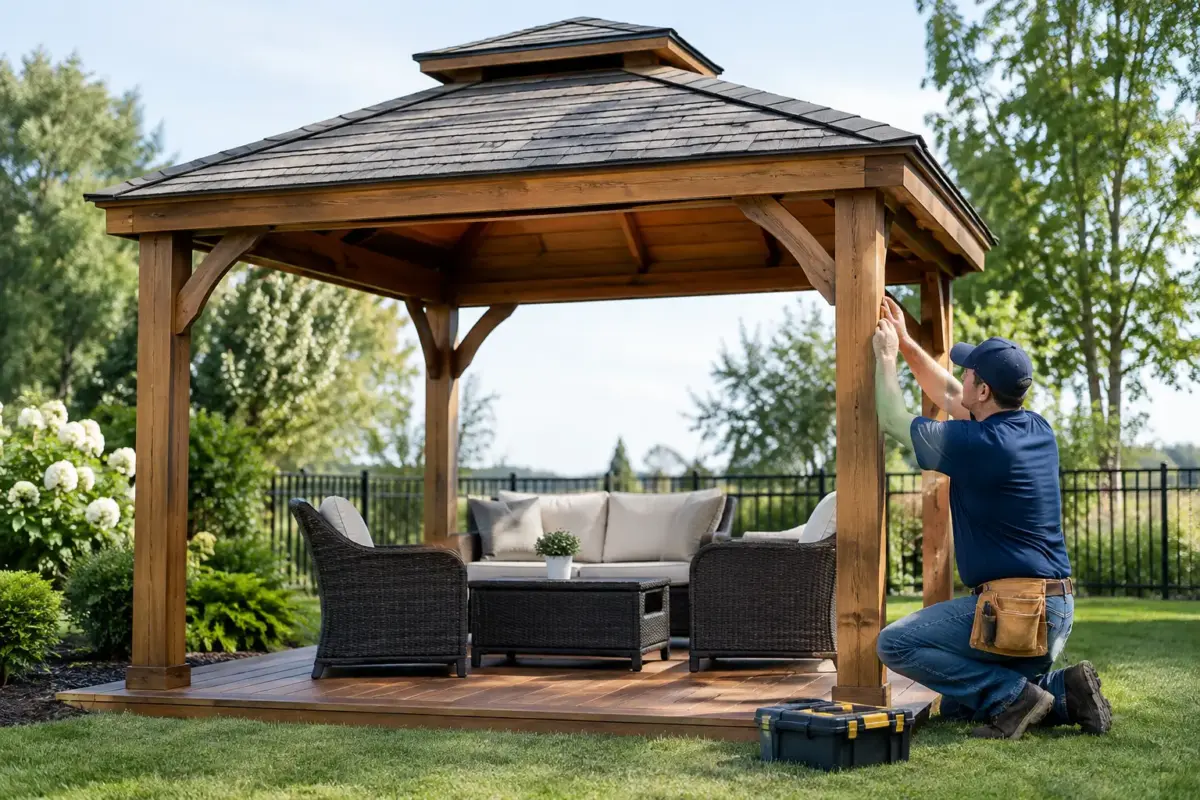
A bent leg before a weekend market, a torn roof after a windy sporting event or a missing connector in the event kit does not automatically mean the whole gazebo is finished. Can gazebos be repaired? In many cases, yes – provided the damage is isolated, the correct replacement component is available and the frame can still be used safely.
For businesses, clubs and event teams, repairing a commercial pop-up gazebo is often the smart call. A quality branded marquee is an operational asset as well as a highly visible part of your set-up. Replacing a worn roof, wall, leg or wheel can cost far less than replacing a complete structure, particularly when the frame and printed components have plenty of service left.
Can gazebos be repaired safely?
The short answer is that fabric components and individual mechanical parts are commonly repairable or replaceable. The real question is whether the repair returns the gazebo to a safe, stable working condition.
A canopy roof with a small tear may be repairable, but a roof that has stretched, split around the truss points or lost its waterproof coating is generally better replaced. A single bent leg can often be changed out. A frame with several bent trusses, distorted hubs and cracked joints may have been overloaded beyond a sensible repair.
Commercial-grade pop-up gazebos are designed as systems. Their legs, trusses, connectors, roof, walls and tie-down points work together under load. Fitting the wrong part, forcing a damaged connector into place or mixing frame grades can create a weak point that fails when the wind picks up.
Before ordering anything, open the marquee on level ground and inspect it carefully. Do not put it under tension or attempt to use it in public if a joint is cracked, a leg will not lock, or the roof cannot be tensioned evenly.
The gazebo parts most often repaired or replaced
Roofs and side walls
Roofs take the hardest hit from sun, rain, dust, tree debris and wind movement. PVC-coated polyester and similar commercial fabrics can handle regular outdoor use, but stitching, Velcro tabs, roof corners and stress points will eventually show wear.
Small punctures can sometimes be patched with a compatible repair material, especially where the patch sits on a low-tension area. That is a temporary fix, not a substitute for a sound roof on a busy site. If water is entering through seams, the fabric is brittle, or the roof has tears at the corners where it attaches to the frame, replacement is the more dependable option.
Replacing the roof also protects brand presentation. A faded, sagging or patched printed canopy can undermine an otherwise sharp activation. For regularly used branded gazebos, a fresh custom-printed roof can restore both shelter performance and visual impact without requiring a new frame.
Walls are usually simpler. Replace a wall if its zip is broken, the Velcro no longer grips, the fabric is torn or the printing no longer represents your brand properly. Check that replacement walls match the marquee size, wall style and attachment method.
Legs, trusses and connectors
Bent legs, damaged truss bars and broken nylon or metal connectors are common after rough pack-downs, loading incidents or gusts that lift an unsecured gazebo. Whether they can be repaired depends on the exact component and the construction of the frame.
A straight, undamaged frame leg with a faulty foot, pin or locking mechanism may only need that small part replaced. A leg that is visibly bowed, creased or split should not be straightened and sent back into service. Aluminium and steel can lose strength after being bent, and a leg that looks acceptable may collapse under load.
The same rule applies to scissor trusses. If a truss arm is bent, cracked or pulled away from its riveted connection, replace the part rather than trying to reshape it. Connectors should also be replaced with compatible components made for that frame profile. A 40 mm commercial aluminium leg, for example, needs parts designed for that system – not a generic fitting intended for a light-duty camping gazebo.
Feet, wheels, pins and hardware
Small parts can stop an otherwise perfect marquee from working. Missing footplates, damaged leg pins, worn locking buttons, loose bolts and broken wheely-bag wheels are all worth addressing early.
These repairs matter because they affect safe set-up. A footplate spreads load on hard ground. A positive leg lock helps prevent accidental collapse. A wheely bag that protects the frame during transport can prevent the next repair bill. Keep spare pins, bolts and compatible fasteners with your event kit, particularly if your team sets up frequently across multiple sites.
When a repair is the right investment
Repair is usually worthwhile when the damage is limited to one or two parts and the remaining structure is sound. It is particularly cost-effective for a commercial marquee with a strong frame, custom-printed fabric and a proven record of reliable use.
A repair makes sense when the roof has aged but the frame opens square, all legs lock securely and the trusses move freely. It also makes sense after a transport mishap that damages one leg or connector while the rest of the gazebo remains straight and stable.
For organisations running recurring markets, field days, school events, trade displays or race weekends, spare parts keep downtime low. Instead of writing off a branded structure over one damaged component, you can return it to service quickly and maintain a consistent professional presence.
At Mountain Shade, replacement roofs, walls and spare parts are available to support commercial structures built for repeat use. The key is identifying the frame type, size and part required before ordering, so the replacement fits and performs as intended.
When replacement is the safer choice
There is a point where repairs become false economy. If the frame has been rolled, blown over while erected, struck by a vehicle or repeatedly forced closed when misaligned, inspect the whole structure rather than focusing only on the obvious damage.
Replace the gazebo, or at minimum the complete frame, if you find multiple bent trusses, cracked hubs, damaged welds, legs that will not lock, widespread corrosion or a frame that no longer sits square. A roof that has been badly stretched by wind can also place uneven pressure on the frame, even if the fabric has no obvious hole.
Do not rely on tape, cable ties or improvised brackets to repair load-bearing components. They may hold the gazebo together in the shed, but they are not a safe answer for a public event, a windy oval or a roadside promotional site. Your team, customers and equipment are standing underneath it.
How to assess damage before your next event
Set the gazebo up in calm conditions with two people, following the normal opening sequence. Check each leg for straightness, test every locking point and look along the roofline for uneven tension. The canopy should sit evenly without sharp pulling at corners or sagging between trusses.
Then inspect the frame joints closely. Look for hairline cracks in connectors, loose rivets, enlarged bolt holes and metal rubbing where the structure has become misaligned. On fabric, pay close attention to the roof corners, centre peak, seams, wall zips and Velcro attachment points.
If you are unsure whether a component is compatible or whether damage has affected the frame’s strength, take clear photos and measure the relevant leg profile or part. That gives a supplier enough information to help identify a suitable replacement rather than guessing from a distance.
Preventing the next gazebo repair
Most gazebo damage is not caused by normal use. It happens when a structure is used without adequate anchoring, packed away wet, dragged across bitumen, forced shut or transported loose in the back of a ute.
Use weights, pegs and tie-downs suited to the surface and conditions every time the gazebo is erected. A wind rating is not permission to leave a structure unsecured. It depends on correct set-up, appropriate ballast, sound components and sensible decisions as conditions change.
Dry the roof and walls before long-term storage to prevent mould and fabric deterioration. Pack the canopy carefully so zips and printed panels are not caught in the frame. Keep the gazebo in a fitted wheely bag, and avoid stacking heavy cases or equipment on top of it during transport.
A regular pre-event inspection takes minutes. It can save a roof, protect a branded asset and stop a minor hardware issue becoming a full frame failure at the worst possible time.
A well-built gazebo should not be treated as disposable event merchandise. Repair the parts that can be returned to safe service, replace the parts that cannot, and keep your shelter ready to perform whenever your organisation needs to stand out outdoors.
