
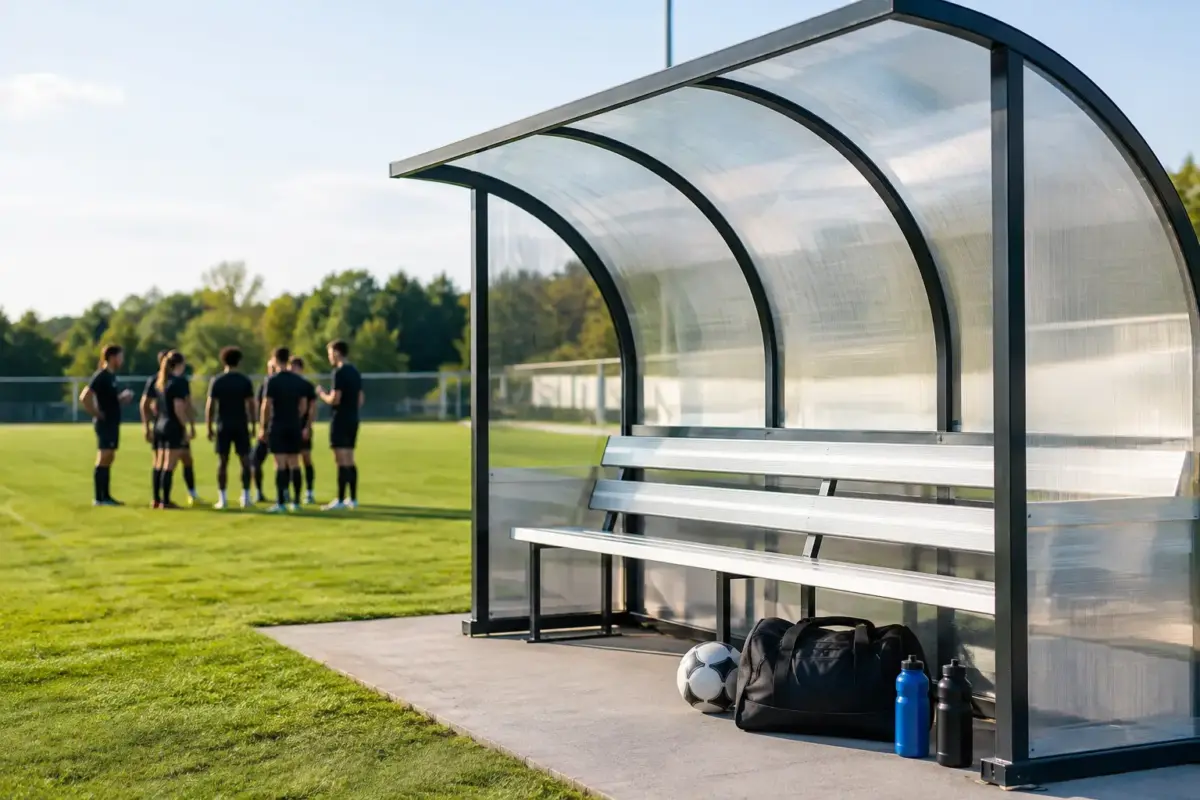
A soggy scoreboard bench, a canteen queue baking in the sun and volunteers trying to hold down a cheap gazebo are not small problems on game day. The best shelters for sporting clubs protect people, equipment and revenue while putting your club colours where everyone can see them. For clubs that operate week after week, shelter needs to be more than a throwaway pop-up – it needs to perform.
What makes a sporting club shelter worth buying?
A sporting club shelter has a tougher job than a backyard gazebo. It may be set up before first whistle and packed down after the final siren, hauled between grounds in a ute or trailer, exposed to wind and rain, and used by a rotating crew of volunteers. It also needs to look professional when sponsors, prospective members and visiting teams arrive.
That is why frame strength, roof fabric, anchoring and replacement-part availability matter as much as the price on the day you buy it. A lightweight frame may be fine for an occasional school fete, but regular club use calls for commercial-grade construction. Look for reinforced aluminium or steel legs, quality connectors, dependable locking mechanisms and a roof built from heavy-duty material rather than thin, disposable fabric.
Custom printing is not simply a nice extra. A branded marquee gives your club a fixed visual presence at home grounds, away carnivals, registrations, presentations and fundraising days. Club colours, logos and sponsor branding turn a practical shelter into an asset that works before, during and after the match.
Choosing the best shelters for sporting clubs
The right shelter depends on what happens under it. A junior football club running registrations has different requirements from a surf club managing race day operations or a cricket club serving hundreds of spectators from the canteen.
The all-round 3 x 3 m pop-up marquee
For many clubs, a 3 x 3 m marquee is the starting point because it is large enough to create a useful covered area without becoming difficult to transport or position. It suits sign-on desks, first-aid points, timekeepers, coach briefings, merchandise tables and interchange areas.
A heavy-duty 3 x 3 m commercial marquee can also be a serious long-term workhorse. When selected structures carry a wind rating up to 100 km/h under the correct conditions, with the required tie-down equipment, clubs have a far stronger platform than a basic retail gazebo. That rating should never be treated as permission to ignore site conditions or leave a shelter unattended in severe weather. Wind ratings depend on correct setup, suitable anchoring and the configuration being used.
For a small club, one branded 3 x 3 m marquee can move between the gate, canteen, player welfare area and community events. For larger clubs, several matching units create a consistent branded footprint without needing one oversized structure.
Larger marquees for canteens, officials and crowds
Where people need to queue, sit or work under cover, more space pays off quickly. Larger folding marquees can cover a barbecue and serving line, a volunteer hub, a membership desk and a growing group of spectators without forcing everyone to squeeze around the legs.
Consider how the area is used at peak time, not just during a quiet weekday setup. A canteen may need clear access on three sides, space for stock behind the counter and room for EFTPOS equipment. A race-control station might need tables, timing gear, power leads and sightlines to the course. If you are buying a shelter for a presentation area, allow room for the team, trophies, a backdrop and photographers.
Multiple connected shelters can be smarter than one large structure. They are easier to store, can be deployed separately across the ground, and give the club flexibility for different events. Add awnings and walls where they genuinely improve the setup rather than enclosing every side by default.
Inflatable tents and arches for high-visibility events
For fun runs, triathlons, regattas, cycling events and large carnivals, an inflatable tent or branded arch creates a stronger arrival point than a standard marquee alone. These structures work particularly well at start and finish lines, athlete check-in, sponsor activations and photo opportunities.
They are not a replacement for every operational shelter. An inflatable arch makes a statement, but it does not provide the same covered workspace as a marquee. Use it where visibility and event atmosphere matter, then support it with practical shelters for staff, medical teams and equipment.
Size the shelter around the job, not the catalogue
Before selecting a frame, map the activity. Measure the tables, fridges, eskies, treatment bed, folding chairs or equipment cases that must fit beneath it. Then leave room for people to move safely. A marquee that technically fits the gear but blocks access is not doing its job.
Also consider whether walls are needed. Full walls can provide privacy for first aid, protection from rain or a cleaner back-of-house look. Half walls and printed walls can define a space while keeping the front open and welcoming. On hot days, open sides improve airflow. On wet, windy days, the right wall placement makes the difference between a usable hub and a damp waiting area.
For clubs that travel, packed size and handling matter too. Wheely bags protect the frame and roof in transit, make storage tidier and reduce the chance of volunteers dragging gear across bitumen or gravel. A structure that is easy to move is more likely to be packed away properly and last longer.
Wind safety is part of the purchase
A strong frame is essential, but it is only one part of a safe setup. Every club should treat weights, pegs and tie-down systems as core equipment, not optional accessories to buy later. The correct anchoring method depends on the surface: pegs and straps may suit grass, while weighted legs are essential on hard courts, car parks and paved areas where pegging is not possible.
Do not rely on a few light sandbags or whatever happens to be in the equipment shed. Use purpose-designed weights and secure all legs as required. Tie-downs should be tensioned properly, checked through the day and positioned so they do not create a trip hazard around players or spectators.
Weather decisions need a nominated person. If wind conditions worsen, walls increase wind load, or the ground becomes unsafe for anchors, the shelter may need to be lowered or packed down. This is not a product failure. It is sensible event management. A commercial marquee gives your club more capability, but no temporary outdoor structure is immune to extreme conditions.
Build a branded game-day setup
A club shelter should be instantly recognisable from the far side of the oval. A roof printed in club colours with a clear logo does most of the heavy lifting. Branded walls, feather flags, teardrop flags, table covers and media walls then carry the identity through the whole event footprint.
This is where sponsor value becomes tangible. A professionally printed marquee gives partner logos a consistent, high-visibility place at home games, gala days and away fixtures. Rather than handing over a banner that may or may not be hung correctly, the club can offer branding on an asset used repeatedly through the season.
Keep the design readable. Large logos, strong colour contrast and simple messaging generally work better than a crowded roof full of tiny details. If several sponsors are involved, position them in a hierarchy that protects the club identity while giving major partners a clear presence. Free visual mock-ups are useful here because they let committee members see the structure before print production begins.
Buy for the next five seasons
The cheapest shelter can become the expensive option if bent legs, torn roofs or broken joints take it out of use after a handful of weekends. Sporting clubs should assess the total operating value: frame grade, roof material, print quality, warranty, availability of replacement roofs and walls, and access to spare parts when something is damaged.
This matters especially for volunteer-run organisations. If a component fails on Friday night before a Saturday carnival, the ability to replace one part is far better than scrambling to buy a complete new unit. Commercial equipment also looks after the people setting it up. Reliable locks, sturdy leg profiles and practical carry options reduce frustration at 6.30 am when the ground is still wet and the first teams are arriving.
For clubs with several locations or a busy calendar, standardising your shelter package helps. Matching marquees, flags and table covers present a cleaner image, while common frame types and accessories make training, storage and replacement simpler.
Make the shelter earn its place
A good shelter should not sit in the storeroom between finals. Use it at registration days, sponsor launches, school visits, local markets, fundraisers, awards nights and recruitment drives. That repeated use spreads the cost across more club activity and keeps your branding visible in the community.
Mountain Shade can help clubs build a package around their actual game-day needs, from heavy-duty printed marquees and walls to weights, tie-downs, flags and replacement components. Start by identifying where the pressure points are on your ground: the queue in full sun, the exposed first-aid station, the sponsor area nobody notices or the volunteers working in the rain. Fix that problem with equipment built to keep turning up every weekend.
