
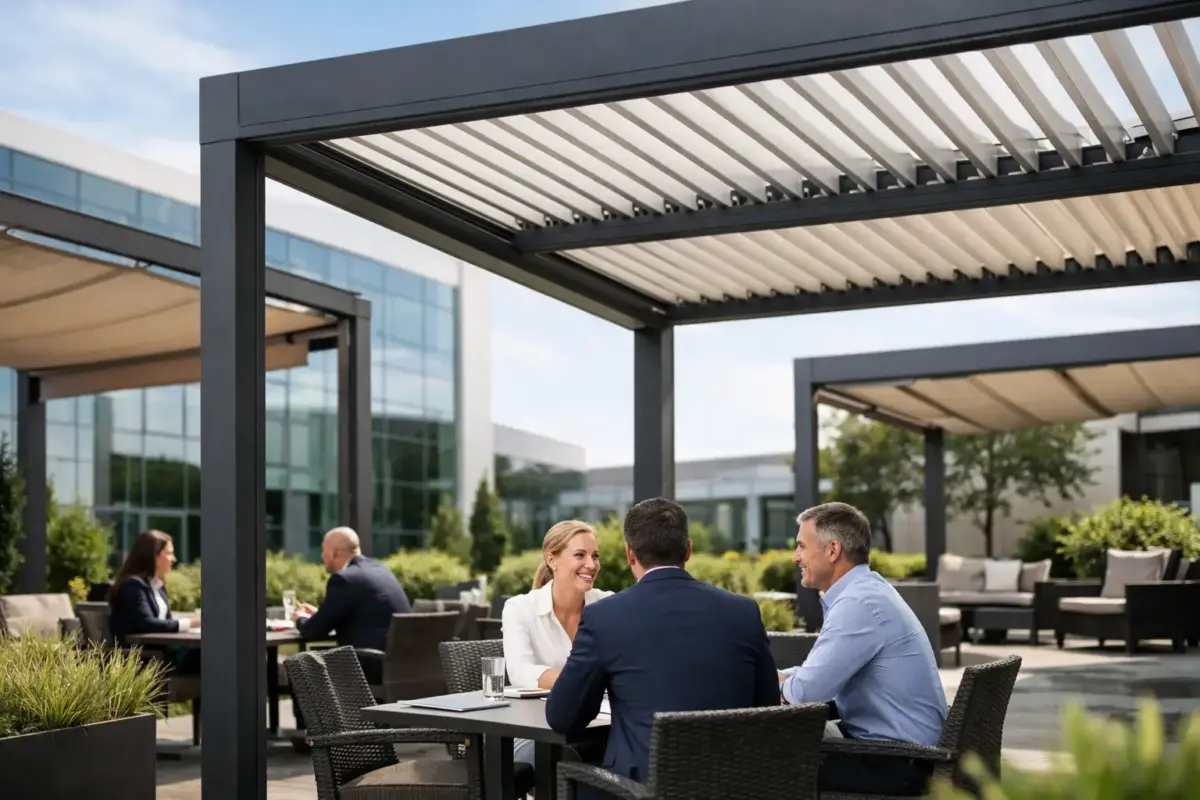
A pergola shade solution for business is not just a way to make an outdoor area look finished. It determines whether customers stay longer, staff can work comfortably, diners can use more tables and an exposed forecourt becomes a practical part of your operation. In Australian conditions, that means planning for hard sun, sudden rain, wind gusts and repeated commercial use – not simply choosing a structure that looks good in a showroom.
For cafés, pubs, wineries, schools, sporting clubs, councils and trade businesses, the right pergola can turn dead outdoor space into a revenue-producing or service-ready area. The wrong one can become an ongoing maintenance job, a safety concern or an asset that sits unused when the weather turns.
Start with the job the shade structure must do
The best starting point is not colour, fabric pattern or roof style. It is the daily job the structure needs to perform. A hospitality venue may need to protect seated guests through lunch service while keeping the area open and inviting. A school may need reliable shade over a waiting zone or outdoor learning space. A council or sporting club may need a durable, low-maintenance shelter that handles heavy public use.
These are different jobs, and they create different design priorities. Fixed roof coverage may suit a permanent seating zone, while an adjustable louvre or retractable canopy can make sense where light control and airflow matter more. Side screening may be essential on a windy site, but unnecessary where ventilation is the priority.
Think about what happens in the area at peak use. Where does the sun sit at breakfast, midday and late afternoon? Which direction brings the prevailing wind? Does water run towards entrances, tables or equipment? Will staff need clear access for cleaning, stock movement or emergency egress? A pergola should improve the way the site works, not force your team to work around it.
Why commercial pergola shade needs more than a light frame
A business-grade pergola carries a different load to a residential backyard structure. It may cover multiple tables, protect stock or equipment, carry lighting, accommodate screens, or sit in a location exposed to constant wind and public traffic. That makes frame engineering, connection points, anchoring and roof material critical.
Look closely at the construction rather than relying on a broad “heavy duty” claim. Commercial structures should use premium materials suited to outdoor exposure, with substantial posts, secure connectors and a fixing method designed for the surface beneath. A structure fixed to concrete requires a different approach from one installed over pavers, decking or compacted ground.
Wind is the issue that separates serious outdoor infrastructure from a temporary-looking feature. Wind ratings are only meaningful when they apply to the installed configuration, roof type, site conditions and anchoring method. Nearby buildings can funnel gusts, coastal locations can stay exposed for long periods, and a side screen can change the wind load on the whole structure. Ask for clear engineering information and treat site-specific advice as part of the purchase, not an optional extra.
A good-looking roof that rattles, pools water or needs constant adjustment will not support a professional customer experience. The aim is dependable cover that lets the business operate with confidence when conditions are less than perfect.
Size for circulation, not just coverage
Many businesses underestimate the footprint required because they calculate only the space directly above tables, benches or equipment. In practice, people need room to move. Chairs pull out, prams pass through, staff carry trays, customers queue and maintenance crews need access.
Map the layout before selecting dimensions. For hospitality, allow for seating, clear service paths and the point where guests naturally enter and leave the covered space. For a workplace, consider whether the area must accommodate tool storage, deliveries, break-time seating or mobile equipment. At schools and clubs, consider supervision sightlines and accessible pathways.
Height matters as much as width. A low roof can feel enclosed and trap heat, particularly over dark paving. A higher structure improves the sense of space and may assist airflow, but it can also increase exposure to wind. The right balance depends on the site, surrounding buildings and the roof system selected.
If the area is irregular, a custom solution is often the smarter long-term call. Trying to force a standard size into an awkward footprint can leave exposed gaps, poor drainage lines and wasted space. A properly planned pergola should look deliberate from every approach, including from the street, car park or adjacent outdoor area.
Choose roof and side protection around local conditions
A fixed roof offers consistent coverage and a strong permanent feel. It is a practical option where weather protection is the clear priority and the business wants to use the space every day. The trade-off is reduced flexibility: you cannot open it up when the weather is mild or when direct sunlight would be welcome.
Adjustable louvres offer greater control over light and ventilation. They can work well for venues where atmosphere changes through the day, but moving parts need quality construction and a realistic maintenance plan. Retractable canopy systems provide a more open-air feel when retracted, although they need to be managed carefully in high winds and during heavy rain.
Side protection is where commercial buyers need to be selective. Fixed walls provide stronger shelter but can make an area feel closed in. Zip screens, café blinds or removable side panels can give you more flexibility, protecting customers from low sun and wind while keeping the area open when conditions improve. The right answer is usually based on the two worst weather directions, rather than enclosing every side.
Drainage also deserves proper attention. Water should be directed away from entrances, footpaths and seating areas, with gutters and downpipes integrated into the design where required. A pergola that gives shade but sends water across the floor is not a finished solution.
Make it part of your brand environment
Your outdoor structure is visible long before a customer reaches the counter, reception desk or event area. It should support the standard your business wants to project. Clean lines, quality finishes and considered colours can make a venue feel established and capable. Poorly matched materials, faded coverings and improvised add-ons do the opposite.
This does not mean every pergola needs loud branding. In many permanent applications, the strongest approach is a structure that matches the building, furniture and signage already on site. A restrained colour palette can provide a premium backdrop for seasonal banners, flags, table covers or event signage when you need to promote a campaign.
For businesses that operate activations, markets or community events as well as permanent premises, it is worth planning the whole outdoor kit together. A semi-permanent pergola can establish the main site, while custom-printed marquees, flags and media walls carry the brand into mobile events. The visual result is stronger when every asset uses compatible colours, artwork and finishes.
Mountain Shade works with organisations that need both practical shelter and high-impact outdoor branding, which means the conversation can extend beyond one roof line. The goal is a site that performs operationally and looks ready for business.
Budget for the full installation, not the frame alone
The purchase price is only one part of the investment. A realistic budget should include site preparation, footings or anchors, drainage, electrical work for lighting or fans, installation, permits where required and any screens or accessories needed for the structure to do its job.
It can be tempting to reduce costs by selecting a lighter frame or leaving out the wind management and drainage details. That may save money at the start, but it often shifts the cost into repairs, downtime or an outdoor area that staff avoid using. Commercial buyers should weigh the expected years of use, the revenue or utility generated by the space and the cost of replacing a lower-grade structure early.
Check warranty terms carefully, particularly what they cover in relation to fabric, frame components, moving mechanisms and installation. Spare-part availability matters too. A business cannot afford to lose an entire outdoor area because one damaged component is difficult to source.
Plan approvals and safety before ordering
Depending on the structure, location and local council requirements, you may need approvals, engineering documentation or landlord consent before installation. This is especially relevant for semi-permanent structures, heritage areas, schools, public facilities and leased commercial sites.
Do the checks early. Measure boundaries, identify underground services, confirm fire exits and make sure the proposed design does not obstruct accessible access. If the structure will hold lighting, heating, fans or signage, arrange qualified advice on electrical loads and mounting points.
Safety is also a daily operational matter. Staff should know when to retract or secure movable roof systems, how screens are managed in severe weather and who checks fittings after a major wind event. Clear procedures protect people, equipment and your investment.
A well-specified pergola creates more than shade. It gives your business a tougher, more usable outdoor zone that looks the part on a busy Saturday, through a summer heatwave and when the weather changes without warning. Start with the operating conditions on your site, build in the right level of engineering, and choose a solution your team will be confident using every day.
