
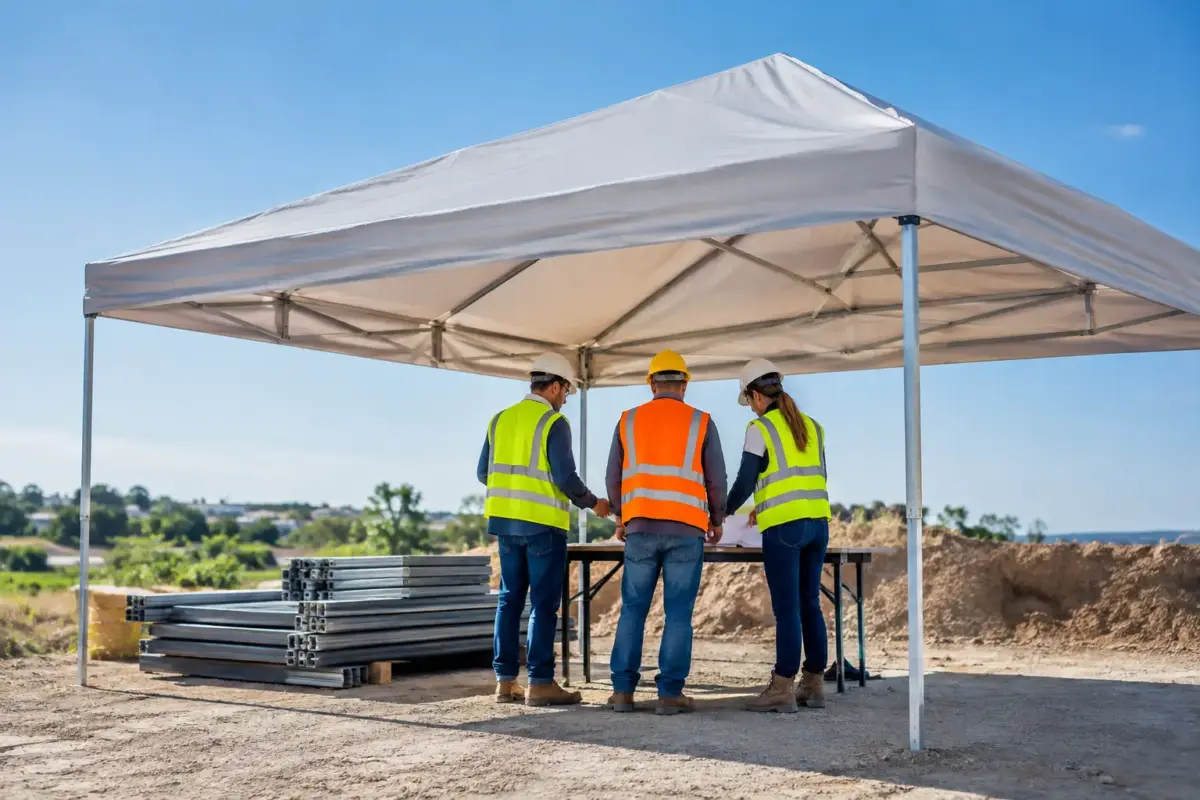
A temporary shade structure guide should start with one hard question: what happens when the weather turns? In Australia, a shelter that looks good in calm conditions can become a liability when wind picks up, rain sweeps through or a full day of UV exposure puts staff, customers and equipment under pressure. The right structure does more than create shade. It protects your operation, gives your team a clear base and puts your brand where people can see it.
For a Saturday market stall, a sporting club registration point, a council activation or a mobile work area, the best choice comes down to load, location, frequency of use and how visible you need to be. Cheap shelter has its place for occasional backyard use. Commercial outdoor work demands stronger frames, proper anchoring and fabric that keeps performing after repeated pack-downs.
Start with the job, not the price
Temporary shade covers a wide range of uses. A 3 x 3 m pop-up gazebo may be ideal for one vehicle display, a coffee queue or a compact market site. A 3 x 6 m marquee gives a larger footprint for product demonstrations, registration desks and team shelter. For larger public-facing spaces, multiple structures can be joined to create defined zones without committing to a permanent build.
Before choosing dimensions, map the space you actually need. Include tables, stock, chairs, signage, access paths and enough room for staff to move without blocking customers. A shelter that only just fits your table is rarely big enough once the crowd arrives.
Height matters too. A structure needs adequate clearance for people, display walls and airflow, while still allowing the roof to shed water properly. If you are working at a showground, market or council-managed site, check the organiser’s footprint rules and whether your setup can extend beyond the allocated bay.
Think about the shelter’s primary role. If it is mainly shade for participants, roof coverage and airflow may lead the decision. If it is a sales or promotional tool, printed roof panels, walls, flags and a clean customer-facing layout deserve equal attention. The strongest event setups do both.
Choose a frame built for repeated use
A folding marquee is only as capable as its frame, connectors and moving parts. The practical difference between entry-level and commercial equipment becomes obvious after regular transport, setup and exposure to rough weather.
For occasional, low-risk use in protected conditions, a lighter frame may be sufficient. For businesses, clubs, councils and trade crews that work outdoors often, a heavy-duty aluminium or steel commercial frame is the more sensible investment. Look beyond broad phrases such as “heavy duty” and compare the actual engineering: leg profile, wall thickness, truss design, connector construction, locking points and available spare parts.
Aluminium frames are popular where crews need strength without excessive carrying weight. Steel can suit applications where weight and rigidity are priorities, although it may demand more effort to transport. Neither material is automatically best in every scenario. The right answer depends on how often the unit moves, who sets it up and the conditions it will face.
Replacement parts are also a buying decision, not an afterthought. Pins, roof frames, legs, feet and canopy sections experience wear over time. A structure with accessible spares can stay in service for years rather than becoming expensive rubbish after one damaged component.
Wind ratings need context
A stated wind rating is useful, but it is not a promise that a marquee can be left unattended in any weather. Ratings apply to specific models, configurations and test conditions. They also depend on correct installation, appropriate ballast and tie-down equipment, and an active crew that responds to changing conditions.
Selected 3 x 3 m commercial structures can be rated to winds up to 100 km/h when correctly secured, but that does not remove the need for sound judgement. Gusts around buildings, wet ground, exposed ovals and coastal sites can create conditions very different from a forecast. Monitor the weather, follow the manufacturer’s instructions and close or pack down the structure when safe operation cannot be maintained.
Anchor every temporary shade structure properly
Anchoring is where many otherwise good setups fail. A canopy roof catches wind. Once that load transfers through the frame, insufficiently secured legs can shift, lift or twist quickly.
Your anchoring system should match the surface and the expected conditions. Pegs and ratchet tie-downs can work well on suitable grass or soil, provided underground services and venue rules are checked first. Concrete, bitumen and indoor floors require purpose-built weight systems. Water weights can be useful where transport efficiency matters, while steel or concrete weights may suit sites where maximum compact ballast is needed.
Do not assume four small weights solve the problem. The required ballast varies by marquee size, wall configuration, exposure and wind conditions. Side walls increase branding and weather protection, but they can also increase wind loading. If wind is expected, assess each wall carefully rather than enclosing the structure by default.
A good pre-event check should cover:
- every leg weighted or tied down as required for the site
- roof fabric fully tensioned and free of pooling water
- frame locks engaged and feet sitting squarely on the ground
- wall panels secured without creating loose flapping sections
- a clear pack-down trigger if conditions deteriorate.
This takes minutes and protects people, equipment and your reputation.
Fabric, walls and weather protection
The canopy fabric determines how the structure looks, sheds water and stands up to daily handling. Premium polyester canopy materials with quality coatings are designed to provide UV protection and weather resistance, but performance depends on the complete build. Seams, tension, reinforcement points and the way the roof is fitted all matter.
For hot conditions, shade is only part of comfort. Open sides encourage airflow and make a compact site feel less crowded. For rain, wind or a more controlled retail space, add side walls selectively. A full wall can provide a useful backdrop for product displays or registration desks. A half wall maintains visibility while creating a tidy counter area.
Avoid using damaged roof fabric with holes, stretched corners or compromised seams. Small faults can worsen under tension and heavy rain. Dry all components before long-term storage, especially after wet events, to help prevent mould, staining and material deterioration.
Use your roofline as a brand asset
A temporary structure often makes the first impression before a staff member says a word. Plain shelter can keep people dry, but a custom-printed marquee turns the same footprint into a visible, professional brand presence.
Dye-sublimation printing allows logos, colour blocks, messages and full roof designs to be integrated into the fabric rather than applied as a temporary sticker. It is particularly effective for organisations that attend recurring markets, field days, sporting fixtures, exhibitions and community events. Your team arrives with a recognisable base, and customers can find you again from across the site.
Keep the design practical. Strong logos, high-contrast colours and a short message generally work better than filling every panel with detail. Put the most important information where approaching visitors will see it, and consider matching flags, table covers, media walls or banners when the event needs a larger visual footprint.
Mountain Shade can provide custom production support and free visual mock-ups, which helps teams check logo scale, placement and colour balance before committing to print. That stage is worth using, particularly when multiple stakeholders need to approve the artwork.
Make transport and setup part of the purchase decision
A temporary structure is only useful if your team can deploy it reliably. Consider where it will live between events, how it gets into the ute or van, and whether the people on site can safely carry and erect it. Wheely bags protect frames during transport and reduce the drag of moving gear across car parks, ovals and exhibition halls.
Run a practice setup before the first event. Assign simple roles: two people raise the frame, one checks the roof tension and another positions weights, walls and signage. This avoids rushed decisions in front of customers and reveals whether your pack includes the accessories you need.
For frequent users, create a packing order. Keep tie-downs, pegs, weights and repair items together, and inspect them after every event. The small disciplines are what keep commercial equipment looking sharp and working when the next booking lands.
The best temporary shade structure is not the cheapest roof you can put up. It is the one that fits your site, stays secure when conditions change and keeps making your organisation look capable every time it goes up.
