
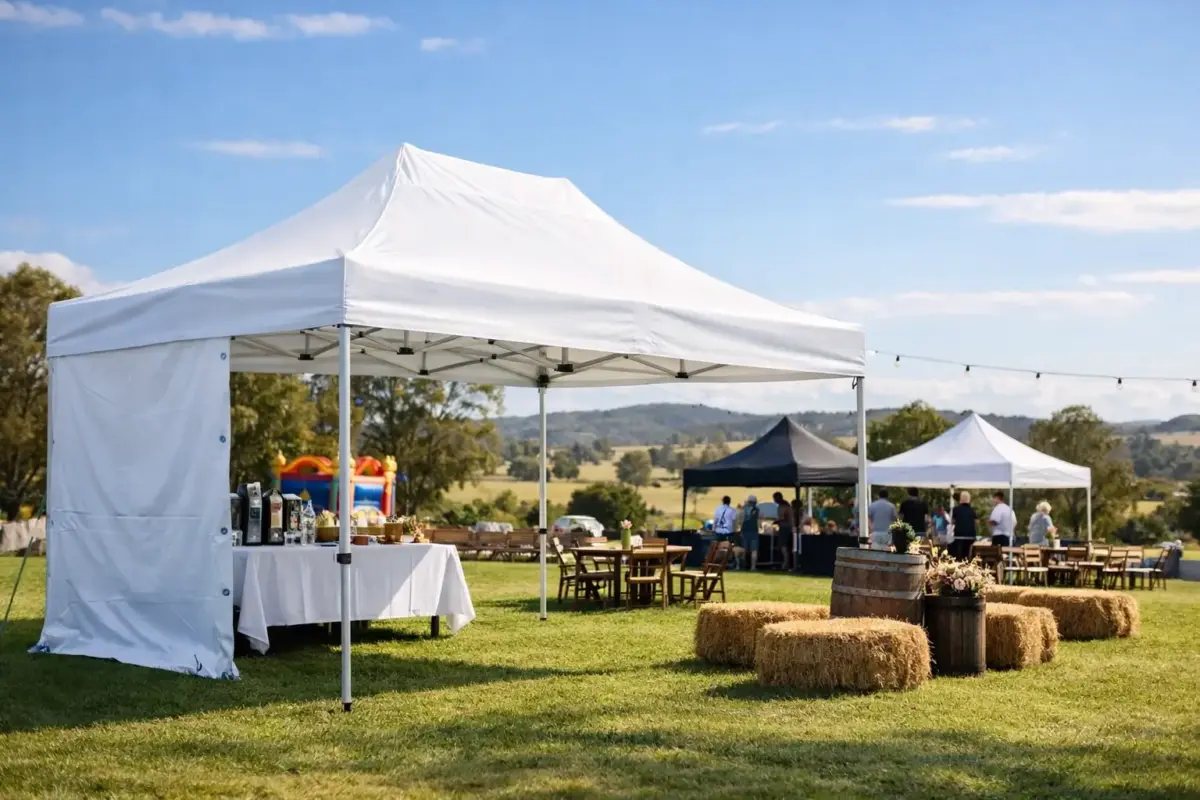
A windy oval, a packed market lane and a long day at a regional field day will expose weak equipment fast. A heavy duty gazebo is not just a place to get out of the sun or rain. For businesses, clubs and event teams, it is a working base, a safety consideration and one of the most visible parts of your brand on site.
The right structure should go up quickly, stay stable when conditions change and still look sharp after repeat use. That means looking beyond a low entry price and choosing a frame, canopy, anchoring system and print finish that suit the work you actually do.
What a heavy duty gazebo must handle
Australia is hard on outdoor equipment. UV exposure fades cheaper fabrics, sudden gusts test joints and leg sections, and frequent packing, transport and setup punish anything built for occasional backyard use. A commercial gazebo needs to deal with all of it without becoming difficult for your team to use.
Start with the frame. Heavy-duty commercial frames use stronger aluminium or steel construction, larger leg profiles and reinforced connectors to handle regular deployment. The difference is felt when the roof is under tension, the ground is uneven or your crew is setting up at 6 am before gates open. A frame that feels solid at waist height, locks positively into position and has fewer points of flex will perform better over its working life.
Material choice depends on the application. Aluminium is a smart choice when you need strength without excessive carry weight, particularly for marketing teams, market operators and sporting clubs moving equipment in and out of vehicles every weekend. Steel can suit demanding operational uses where frame weight is less of a concern. In both cases, look at the engineering of the complete system, not one feature in isolation. Strong legs are only part of the equation if the trusses, roof supports and joints are light-duty.
A stated wind rating is useful, but it is not a licence to leave a structure unattended in bad weather. Ratings apply under defined conditions and with the correct tie-down equipment fitted. If gusts build, rain pools on the roof or the site becomes unsafe, the right call may be to lower or pack down the gazebo. Good event operations always put people first.
Choose the right size before choosing the extras
A 3 x 3 m gazebo is the proven all-rounder for market stalls, school fundraisers, race teams, product sampling and event check-in points. It gives a practical 9 square metres of covered space while remaining manageable for transport and fast setup. Selected commercial 3 x 3 m structures can be rated for winds up to 100 km/h when correctly secured, making them a serious option for exposed Australian sites.
Larger sizes give you more coverage but also create more roof area for wind to act on. A 3 x 4.5 m or 3 x 6 m structure suits merchandise, catering, registration desks and larger promotional teams, provided you have the crew, vehicle space and anchoring plan to match. Bigger is not automatically better. If you regularly work in tight market sites or on crowded footpaths, two 3 x 3 m gazebos can be more flexible than one larger unit, especially when conditions or site layouts change.
Think about what needs to fit underneath. A sales team may need a trestle table, stock tubs, payment point and room for customers. A sports club needs dry bench space, first-aid access and an open view of the field. A council activation may require accessible entry, queue space and branded walls that guide people to the right place. Measure the operating footprint, not just the roof size.
Roof fabric and walls do more than provide cover
The canopy needs to offer dependable weather protection and a professional finish. Premium polyester fabrics with suitable coatings are built to stand up to regular outdoor work, while quality stitching and reinforced stress points help prevent early failure around the roof corners and truss contact areas.
Walls turn a basic shelter into a more capable event space. A full back wall gives your team a clean branded backdrop and helps block low sun or wind. Side walls can create a sheltered retail zone, a private consultation area or a practical storage section for stock and equipment. Half walls are useful where you want definition without closing off the site.
There is a trade-off. More walls can improve comfort, but they also increase wind loading. Use walls with a proper anchoring plan and adjust the setup to the forecast and venue requirements. Never treat walls as an afterthought on an exposed site.
Anchor every heavy duty gazebo properly
A commercial frame is only as secure as the system holding it to the ground. This is where many event setups fall short. A few light pegs or loose sandbags are not enough for a busy public site, particularly when the ground is hard, wet or paved.
Use the right combination of weights, pegs, straps and tie-down points for the surface. Heavy-duty weight bags are practical for concrete, bitumen and indoor-outdoor venues where pegs cannot be used. Pegs can be highly effective on suitable grass or soil, but they need to be driven correctly and assessed for ground conditions. Tie-down straps add another layer of control by spreading the load beyond the frame legs.
Your crew should know who is responsible for checking anchors during the day. Wind can rise after setup, a customer can knock a weight bag, or a rushed pack-in can leave a strap loose. Build a quick safety check into the run sheet before opening, after major weather changes and before pack-down.
Turn shelter into a high-impact brand asset
At an event, your gazebo competes with every sign, tent and vehicle around it. A plain roof may provide shelter, but custom printing makes the structure work harder. A printed canopy gives your organisation visibility from a distance, while branded walls, flags, table covers and media backdrops create a consistent space at ground level.
Keep the design purposeful. Use a clear logo, high-contrast colours and simple messaging people can read while walking past. Crowding every panel with text often weakens the result. For many teams, the strongest setup is a recognisable roof, a branded back wall and one clear call to action, such as a service name, event message or QR code supplied as part of the artwork.
Dye-sublimation printing is designed for vibrant, full-colour graphics that become part of the fabric rather than a surface layer sitting on top. That matters for repeat use, where sharp presentation helps your organisation look established rather than improvised. Mountain Shade can provide free visual mock-ups and design support, helping teams see how their artwork will work across a roof, walls and matching event gear before production begins.
Buy for repeat use, not one event
The cheapest gazebo can become the expensive option when a bent leg, torn roof or failed connector puts you out of action halfway through a season. Commercial buyers should consider the full ownership picture: frame quality, roof material, warranty, access to replacement parts, transport protection and the availability of matching accessories as needs grow.
A wheely bag protects the frame between events and makes moving it from the ute or van to the site far easier. Replacement roofs and walls extend the life of a good frame when branding changes or fabric eventually wears. Spare parts matter too. A damaged component should not force you to replace a complete structure that is otherwise fit for work.
For clubs, councils and businesses purchasing multiple units, consistency pays off. Matching frame systems simplify training, weights and accessories can be shared across the fleet, and your event presence stays professional whether you are running one stall or ten.
Make the decision with the site in mind
Before ordering, consider where the gazebo will spend most of its time. A sheltered indoor exhibition has different demands from a coastal market, a motorsport paddock or a construction-adjacent information point. Ask how often it will be used, how many people will set it up, what vehicle will carry it and whether you need printed walls, awnings, flags or tables from day one.
A well-specified heavy duty gazebo gives your team more than shade. It creates a dependable place to work, protects the presentation of your people and equipment, and puts your brand where customers can see it. Choose the frame and accessories for the hard days, not just the calm ones, and it will keep earning its place at every event on the calendar.
