
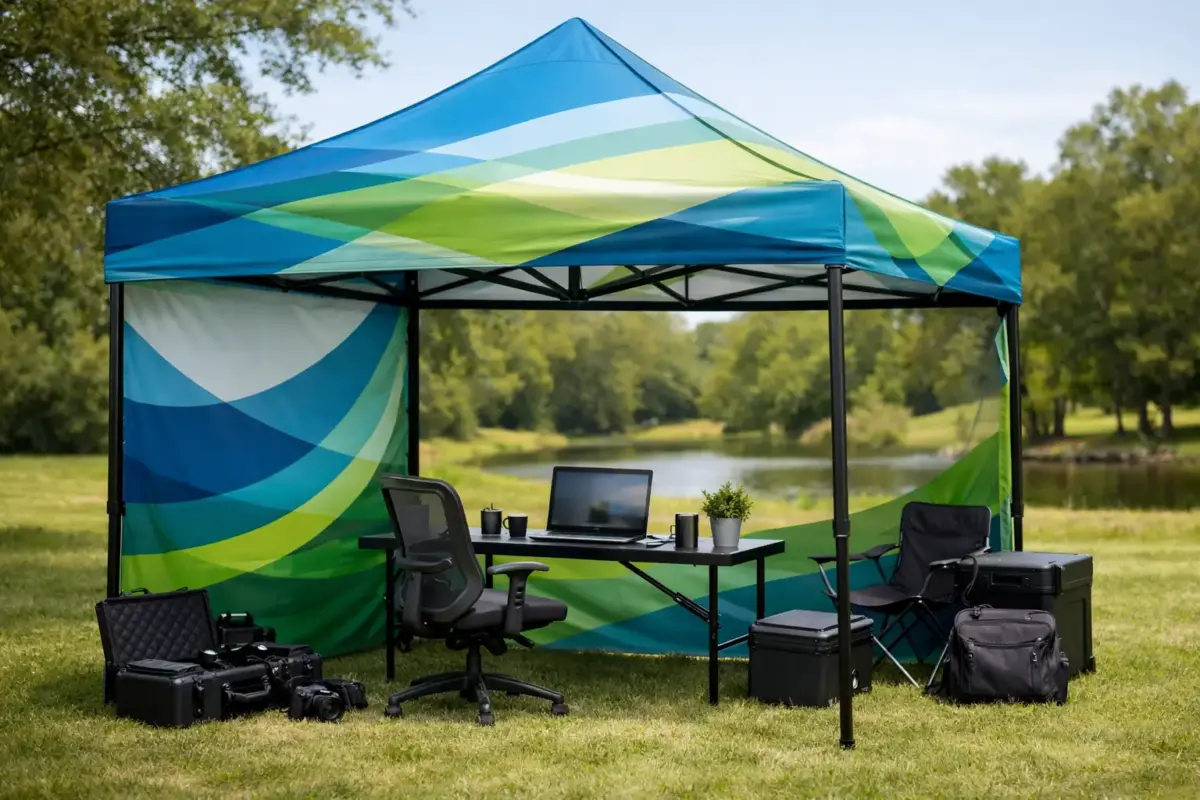
A custom printed gazebo has one job before anyone speaks to your team: make your organisation impossible to miss. The second job is just as important – provide dependable shelter when the weather turns, the crowd builds and the event day runs longer than planned. For Australian businesses, clubs and event operators, that means looking beyond a cheap canopy and choosing equipment built to work hard.
A printed gazebo is part shopfront, part meeting point and part operational base. Whether it is set up at a Saturday market, beside a sporting field, outside a trade stand or at a regional community event, it needs to carry your brand clearly while standing up to regular transport, repeated setup and genuine outdoor conditions.
Why a custom printed gazebo earns its place
A plain shelter keeps the sun off. A properly branded marquee does far more. It gives customers a clear place to find you, makes a small activation look organised and turns every event into a visible brand opportunity.
The difference is especially obvious in busy environments. At a market, visitors scan rows of stalls from a distance. At a race meeting, teams and sponsors compete for attention across an open paddock. At a school fundraiser or council event, people need to know where to register, collect information or ask for help. Strong roof printing, branded walls and coordinated flags give your setup a recognisable footprint from across the site.
That visibility has practical value. A custom printed gazebo can be reused across dozens of events, campaigns and seasons, which makes it a long-term branding asset rather than disposable event merchandise. The right frame, fabric and accessories also reduce the cost and frustration of replacing tired gear after a handful of uses.
Start with how the gazebo will be used
Size is not a styling decision. It determines how people move through the space, how much stock or equipment fits underneath and how well the structure suits your site.
A 3 x 3 m gazebo is a capable all-rounder for market stalls, sampling teams, race crews, school groups and small promotional setups. It gives enough room for a table, product display and several staff without demanding a huge site footprint. Larger formats make sense when you need customer seating, multiple service points, a portable workspace or a more commanding event presence.
Consider the operating layout before ordering. A food vendor may need open sides for service and airflow, while a sports club signing up members may benefit from a back wall and one side wall to create a defined counter area. A trade business running demonstrations may need an awning for extra coverage and a clear open frontage. The best configuration depends on the job, not just the available print area.
It is also worth thinking about where the gazebo will travel. If the team is loading it into a ute each week, a wheely bag and a manageable frame weight make pack-down easier. If it stays in one place for extended periods, greater frame strength, wall options and a serious tie-down system become even more important.
Frame strength is where cheap shelters fall short
Good printing attracts attention. Frame engineering keeps the day on track.
Lightweight promotional canopies can be tempting because of the initial price, but they are often designed for occasional, fair-weather use. Regular event operators need commercial-grade aluminium or steel frames with reinforced leg profiles, reliable connectors and components that can handle repeated opening and closing.
Ask direct questions about the frame class, leg profile, connector construction and stated wind rating. These details tell you far more about a gazebo than a glossy product photo. Selected heavy-duty 3 x 3 m structures can offer wind ratings up to 100 km/h when correctly secured, but no portable gazebo should be treated as set-and-forget equipment in changing weather.
Wind ratings are not a substitute for safe installation. They depend on the correct setup, suitable weights, pegs, tie-downs, ground conditions and the way walls or awnings are being used. A hardstand activation calls for proper weight plates or water weights. On grass or soil, pegs and straps may be appropriate, provided the ground can hold them securely. If severe weather is forecast, assess the risk early and pack down when required.
This is where a complete system beats a roof-and-frame purchase. Weights, tie-down kits, wall bars, spare parts and wheely bags are not optional extras in the real world. They are what help the structure perform reliably across a full calendar of events.
Get the print right from every angle
Custom printing should look sharp up close and make sense from a distance. The roof is usually the highest-impact area because it is visible above a crowd. Walls create more room for product images, campaign messages, sponsor logos, contact details and calls to action.
Avoid treating every panel as a brochure. A roof crowded with small text will not be read from the other side of a showground. Prioritise your logo, brand colours and one clear message. Use walls for the information people need once they are already at your stand.
Dye-sublimation printing is a strong option for full-colour, edge-to-edge branding because the colour is embedded into the fabric rather than sitting on top as a surface layer. It gives the roof a professional finish and supports bold colour blocks, detailed graphics and high-resolution imagery. The quality of supplied artwork still matters. A low-resolution logo or poorly prepared file will limit the final result, no matter how good the printer is.
A free visual mock-up is useful before production because it reveals problems that are easy to miss on a screen. You can check logo placement, confirm the reading direction of each roof valance and make sure key details will not be hidden by a wall, table or crowd. This is also the time to decide whether branded teardrop flags, table covers or a media wall would strengthen the wider setup.
Build a package that suits the site
A heavy-duty printed gazebo is more effective when the surrounding equipment supports the same purpose. For example, a market operator may need a fully printed roof, three walls, weights, pegs, tie-downs and a wheely bag. A corporate activation might place more emphasis on a printed roof, open entry points, flag banners and branded table covers. A sporting club may need a durable shelter with sponsor branding, side walls for protection and replacement parts available for long-term use.
There is a trade-off between visual coverage and flexibility. Full walls provide stronger branding and better protection from sun, wind and light rain, but they can restrict airflow and increase wind load. Open sides feel more welcoming and are easier for high-volume service, yet they offer less weather protection. Choose the wall arrangement for the conditions you actually work in, rather than buying a standard bundle that does not match the job.
The same applies to frame choice. A lighter model may suit occasional indoor exhibitions or calm suburban events. For frequent outdoor use, regional travel, sports grounds and exposed locations, commercial strength is the better investment. It is easier to justify upfront when you factor in the years of use, brand exposure and reduced risk of downtime.
Plan for repeat use, not one event
The most valuable gazebo is the one that keeps showing up in good condition. Train the people who will set it up. Make sure they know how to extend the frame evenly, attach the roof without forcing it, secure every leg and use walls safely. Keep the frame and fabric dry before long-term storage, and inspect joints, straps and fasteners before each event.
Spare parts availability matters here. A damaged roof, worn wall bar or broken connector should not force you to replace an entire structure. Equipment designed as a serviceable system gives you a practical path to repair, refresh or update the branding as your organisation changes.
For teams that need a shelter capable of carrying their name through markets, trade days, sport and community events, Mountain Shade focuses on the details that count: heavy-duty frames, premium custom print, clear configuration options and accessories made for real outdoor work. Start with the conditions you face most often, then build a custom printed gazebo package that looks the part and stays dependable when the event gets busy.
